Volcanic eruptions reshaped global history and climate, new review finds
A 2026 review synthesises how sulfur emissions from major historical eruptions, including Tambora and Samalas, triggered cooling, famines, and societal shifts across the globe.
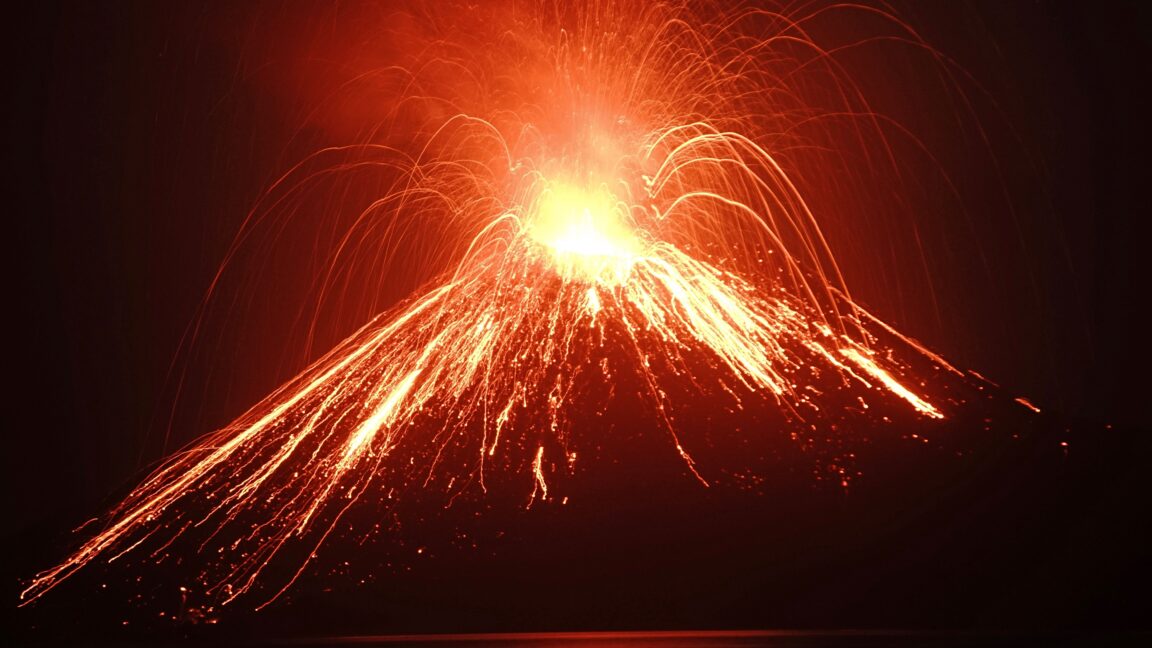
A comprehensive review published in the Annual Review of Earth and Planetary Sciences highlights how major historical volcanic eruptions have fundamentally altered Earth’s climate and global societies. Co-authored by volcanologist Clive Oppenheimer and tree-ring specialist Ulf Büntgen, the paper synthesises recent findings on the link between volcanic activity, atmospheric cooling, and human resilience. The research underscores that rapid climate shocks, often driven by sulfur emissions, have repeatedly transformed agriculture, public health, and political stability throughout history.
The 1883 eruption of Krakatau in the Dutch East Indies marked a turning point in scientific understanding, as it was the first catastrophic event documented in near real-time globally thanks to Victorian-era telecommunications. More than 36,000 people perished in the resulting tsunamis, while drifting volcanic particles circled the globe, causing average summer temperatures in the non-tropical Northern Hemisphere to fall by 0.6 degrees Celsius. This event laid the foundations for modern volcanology, demonstrating how sulfur aerosols reflect sunlight and cool the planet.
Earlier eruptions left more cryptic but equally significant marks on history. In 536 CE, a major eruption identified through ice cores from Greenland and Antarctica caused a haze that shrouded the sun for 18 months, leading to plummeting temperatures and harvest failures. Although the specific volcano remains unlocated, with Iceland as a possible site, the event preceded the first documented global plague. Similarly, the 1257 eruption of Samalas in Indonesia, confirmed by radiocarbon dating in 2013, is considered the largest in the last few millennia by sulfur output. Tree-ring data indicates this eruption caused extensive cooling across North America and Eurasia, contributing to starvation in England and rice production failures in Japan.
The connection between volcanic activity and disease is further illustrated by the Black Death. Tree-ring studies led by Büntgen confirmed that the summers of 1345, 1346, and 1347 were unusually cold and wet in southern Europe. As crops failed, Europeans imported grain from farther east, and the grain ships arrived with rats harbouring the Yersinia pestis bacterium. Researchers argue that a mystery eruption around 1345 set off a chain of events that ultimately killed tens of millions of people, highlighting the complex interplay between climate and epidemiology.
More recent eruptions provide clearer insights into societal vulnerability. The 1783 Laki eruption in Iceland killed at least one-fifth of the island’s population and livestock through toxic fog and climate-induced harvest failures. In 1815, the Tambora eruption triggered the “year without a summer” in 1816, causing famine in Switzerland and Ireland and prompting tens of thousands to emigrate to North America. The volcanic weather also kept Mary Shelley cooped up in Switzerland, where she wrote Frankenstein.
Despite these disasters, the review notes that access to trade networks can enhance resilience. Port cities like London and Hamburg enjoyed greater access to imported grains during the post-Tambora climate shock, while prices rose sharply in inland regions. Oppenheimer notes that while some climate shocks are transient, others strike when societal vulnerabilities are greatest. As Earth continues to heat up, the historical fallout of past eruptions offers a crucial clue to how humanity might respond to present-day rapid climate change.