Vivodyne opens ‘human data centre’ to fix AI drug discovery’s data deficit
With funding from Khosla Ventures, Vivodyne argues that static cellular data is insufficient for training generative AI, proposing dynamic human tissue models as the next step in pharmaceutical development.
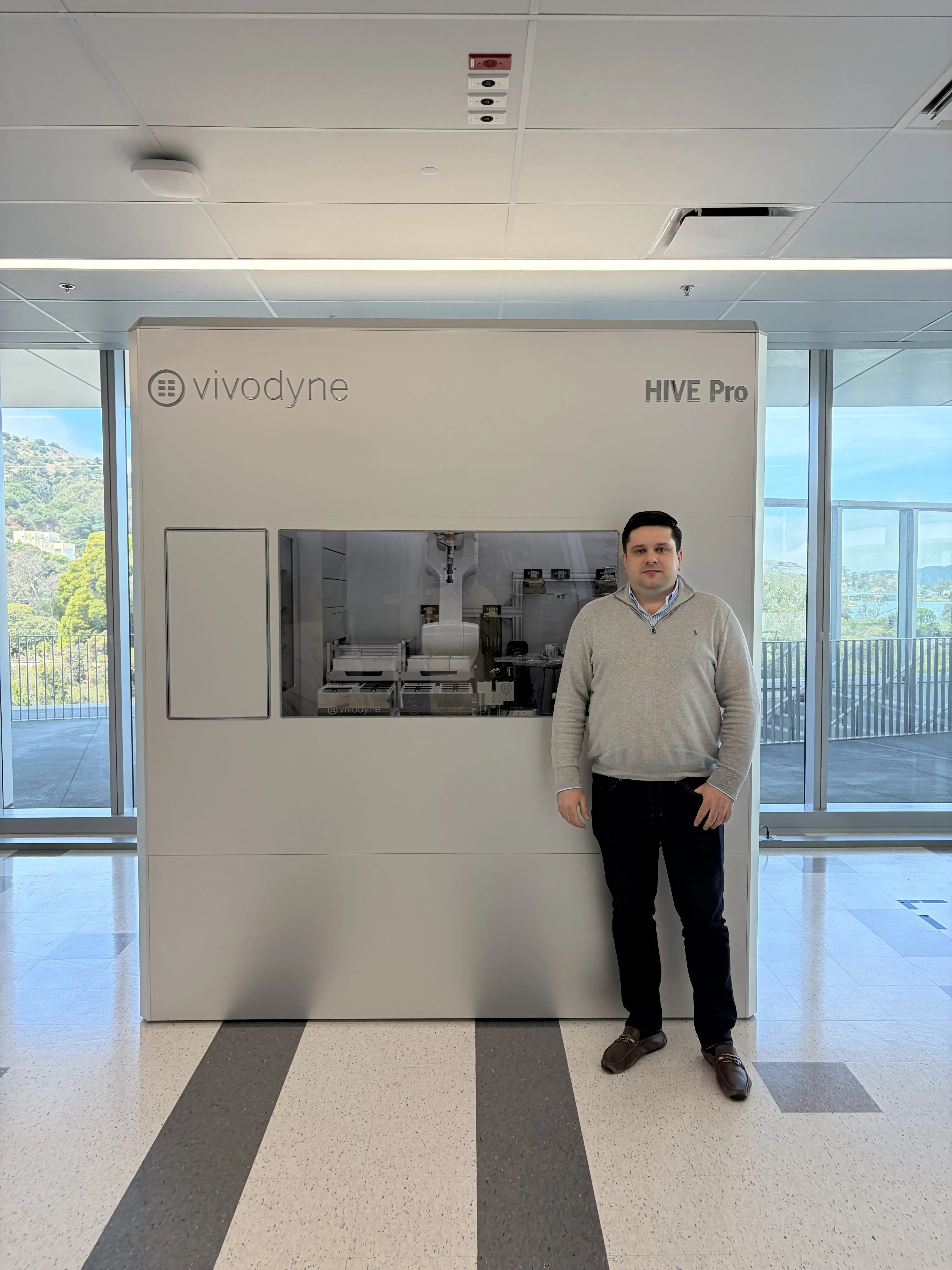
Biotech startup Vivodyne has opened what it describes as the world’s largest “human data centre” outside San Francisco, deploying modular robotic laboratories known as HIVE. The facility is designed to autonomously grow, dose, and monitor 20 types of human tissue, aiming to produce causal biological data that current artificial intelligence models lack. CEO and co-founder Andrei Georgescu argues that existing AI drug-discovery efforts are hindered by a reliance on animal testing or static cellular data, which fails to capture the complexity of human biology.
The launch comes amidst growing scepticism regarding the pace of AI in healthcare. While industry leaders such as Anthropic’s Dario Amodei, OpenAI’s Sam Altman, and Google DeepMind’s Demis Hassabis have previously linked AI advancements to the potential curing of cancer or all diseases within a decade, actual progress remains limited. Nobel-prize winning Alphafold advanced the understanding of protein structures but has yet to produce a new drug, and Isomorphic Labs, founded to build on that technology, now expects its first trials by the end of 2026.
Vivodyne’s approach seeks to address the pharmaceutical industry’s 90% failure rate, where drugs effective in animal testing rarely receive regulatory approval for humans. The company claims its tissues offer high predictive accuracy compared to human trials, with liver cells demonstrating 94% predictive accuracy for toxicity, airway tissue matching real human behaviour 96% of the time, and bone marrow achieving 100% concordance in tests of 20 chemotherapy drugs. Georgescu states the team is already achieving twice the throughput of all animal trials currently held in the United States.
Georgescu, who received a PhD in bioengineering from the University of Pennsylvania before spinning out Vivodyne in 2021, contends that current AI models are trained on static snapshots of cells rather than dynamic processes. He cites a recent study in Nature Methods indicating no clear data scaling laws when training generative AI on existing cellular data. By tracking hundreds of thousands of ongoing experiments where diseased tissue is exposed to stimuli, Vivodyne aims to provide the reinforcement learning necessary for AI to understand cause-and-effect relationships in human biology.
The startup has raised just under $80 million across two funding rounds led by Khosla Ventures. Vivodyne intends to partner with major pharmaceutical companies to accelerate drug development and reduce the tens of millions of dollars typically spent on clinical trials that often end in failure. Georgescu compares the current uncertainty in drug development to automotive crash testing, where manufacturers lack the same confidence in regulatory approval that carmakers have in safety standards.