US weighs Mali airstrikes as JNIM insurgency deepens
Analysts warn kinetic action against the Al-Qaeda-linked group will not resolve underlying governance failures, even as Washington debates a renewed security role in the Sahel.
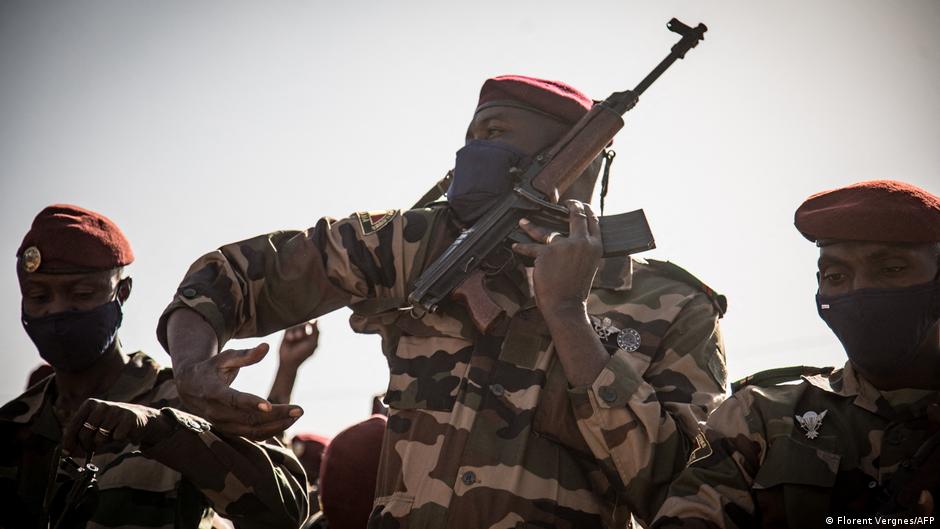
The United States is reportedly evaluating the feasibility of military airstrikes against Jama'at Nusrat al-Islam wal-Muslimin (JNIM) in Mali, a move that would mark a significant shift in American engagement with the Sahel. Reports indicate that President Donald Trump is considering the option, with internal support from National Security Council Senior Director Sebastian Gorka, who argues that halting the group’s advance is critical to regional stability.
JNIM, an Al-Qaeda-linked coalition founded in 2017, has emerged as the most powerful jihadist force in the region. According to the US National Counterterrorism Center, the group was responsible for more than 1,200 deaths in 2025, ranking it as the second-deadliest terrorist organisation globally. The group has expanded its operational footprint beyond Burkina Faso and Niger into coastal West African states, demonstrating a capability that extends beyond isolated attacks to include significant territorial control.
The Malian government has responded with caution to the emerging reports. Foreign Minister Abdoulaye Diop stated that Bamako has received no official confirmation of US plans and emphasised the country’s reliance on its own security forces. Diop asserted that Mali is not waiting for external actors to resolve its security challenges, highlighting a commitment to national sovereignty amidst a geopolitical landscape increasingly defined by competition between Western and Russian interests.
Despite Mali’s close cooperation with Russia following military coups in 2020 and 2021, experts suggest this partnership has not curbed the insurgency. Tobias Rüttershof of the Konrad Adenauer Foundation noted that JNIM now effectively controls security, collects taxes, and mediates local conflicts in many regions, often exerting more presence than the Malian state. The group’s influence was further demonstrated in 2025 through a months-long blockade of fuel shipments to Bamako and coordinated attacks on military installations in 2026.
Analysts warn that while airstrikes might degrade JNIM’s capabilities, they are unlikely to address the root causes of the conflict, including poverty, weak institutions, and ethnic tensions. Abdoulmoumouni Abbas, an expert on radicalisation, pointed to experiences in Nigeria where initial strikes failed to achieve their objectives. He cautioned that military action could lead to civilian casualties, which JNIM could exploit for propaganda and recruitment, thereby exacerbating the instability.
The potential for US intervention carries broader geopolitical implications, serving as a signal of Washington’s desire to remain a capable security actor in the Sahel. For Mali’s leaders, this presents a complex diplomatic challenge: navigating the interests of external powers without compromising political autonomy. Diop emphasised that partners should approach Mali by asking what the country actually needs, rather than imposing solutions.
Ultimately, experts argue that the conflict cannot be resolved through military means alone. In areas where the state is absent or perceived as corrupt, JNIM fills the vacuum by providing order. Sustainable counterterrorism efforts, therefore, require a focus on state-building, good governance, and economic development to address the dissatisfaction that allows the insurgency to thrive.