US Secretary of State Marco Rubio meets Pope Leo XIV in Rome to address Washington-Vatican tensions
The meeting aims to reconcile diplomatic protocol with the administration's foreign policy agenda while seeking to de-escalate friction over the conflict in Iran
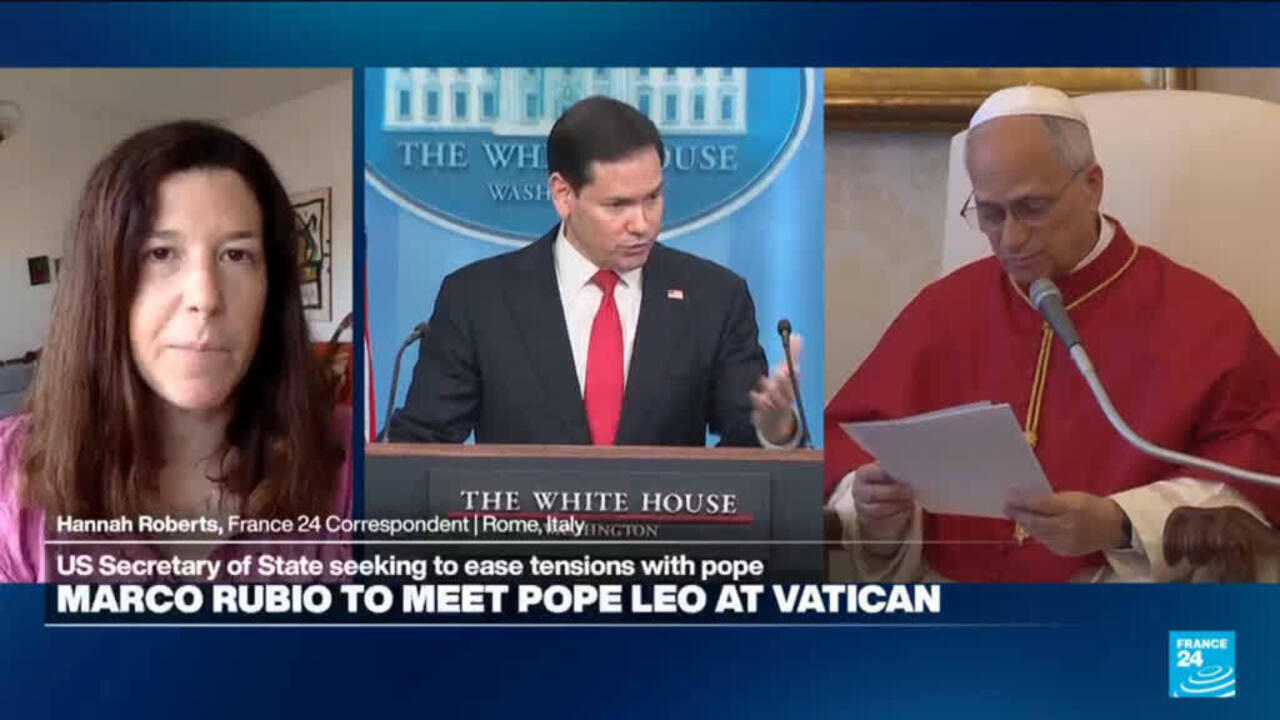
US Secretary of State Marco Rubio has arrived in Rome to meet with Pope Leo XIV, an engagement designed to address growing diplomatic friction between Washington and the Vatican. The visit marks a significant diplomatic effort to stabilise relations between the two institutions following a period of heightened tension.
The core of the dispute centres on President Donald Trump's recent public criticism of the Pope's position on the conflict in Iran. The President has taken issue with the Vatican's anti-war stance, creating a strain in relations that the administration now seeks to manage through direct dialogue. This friction highlights the challenge of aligning the Vatican's moral guidance with the aggressive foreign policy rhetoric emanating from the White House.
Pope Leo XIV, who leads the Catholic Church's 1.4 billion followers globally, is noted as the first US-born Pope. His presence in Rome during this period underscores the unique nature of the diplomatic challenge facing the US administration. The meeting represents an attempt to navigate these complex dynamics while simultaneously advancing the broader policy agenda set by President Trump.
Secretary Rubio's arrival in the Italian capital signals a shift from public confrontation to private negotiation. The specific terms of the engagement remain under discussion, with the primary objective being the de-escalation of tensions that have arisen from the President's comments regarding the Iran conflict. The administration hopes this high-level contact will pave the way for a more cooperative relationship between the state and the Holy See.
However, the extent to which this meeting will alter the President's public stance remains uncertain. The Vatican's position on the war in Iran has been a point of contention, and it is unclear whether the dialogue will result in a moderation of the Pope's views or merely serve as a procedural step to restore diplomatic norms. The outcome of these discussions will likely determine the future trajectory of US-Vatican relations in the coming months.
The engagement serves as a critical test of the administration's ability to balance its foreign policy objectives with established diplomatic protocols. As Rubio facilitates the talks, the focus remains on finding common ground that respects both the sovereignty of the Vatican and the strategic priorities of the US government. The success of this initiative will depend on the willingness of both parties to move beyond the current impasse.