US President Trump Rejects Iran Proposal; Tehran Signals Countermeasures
Administration confirms ongoing blockade of Iranian ports as regional powers brace for escalation.
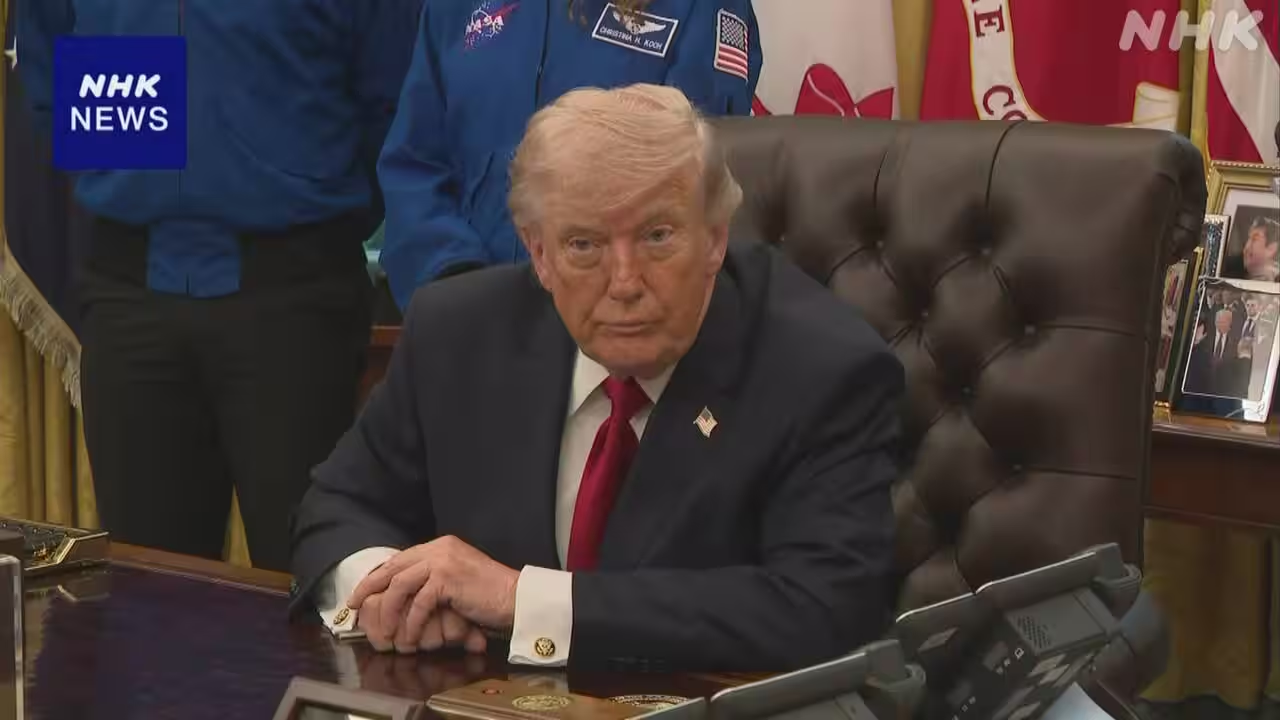
US President Donald Trump has indicated he will not accept a new proposal tabled by Iran, a development that has hardened the stance of Washington regarding maritime access in the region. According to a report by the US news site Axios, the President stated that the maritime blockade on vessels entering and leaving Iranian ports will continue despite the latest diplomatic overtures. This refusal marks a significant rejection of recent efforts to reset relations between the two nations.
In response to the American position, Iranian officials have suggested implementing countermeasures, raising concerns about a potential escalation of the ongoing geopolitical conflict. The dispute centres on the strategic importance of the Hormuz Strait and access to Iranian ports, issues that have long complicated negotiations over nuclear agreements and broader regional stability. While the specific details of the rejected proposal remain unelaborated in current reporting, the decision to maintain the blockade signals a firm policy direction from the White House.
The situation unfolds against a backdrop of heightened uncertainty in the Middle East, where maritime security and diplomatic negotiations often intersect with wider regional instability. The continuation of the blockade by US forces creates a persistent friction point, with the potential for further retaliation from Tehran remaining a significant risk. Without concrete details on the nature of the proposed countermeasures, the trajectory of the conflict remains unclear, though the immediate outlook appears more confrontational than previously anticipated.
Sources for this reporting include the US news site Axios, which provided the initial account of the President's remarks, alongside NHK News Japan, which aggregates and translates the international report for an Australian audience. While official US government statements or direct communications from Iranian leadership would provide further verification of the full scope and intent behind these moves, the current reporting from Axios offers the primary insight into the administration's decision-making process.
The implications of this standoff extend beyond bilateral relations, potentially affecting global energy markets and security dynamics in the Persian Gulf. As the maritime blockade persists and diplomatic channels appear strained, the focus shifts to how both nations will manage the immediate fallout of this rejection. The refusal to accept the new proposal suggests that the current policy framework under President Trump prioritises the continuation of pressure over renewed engagement at this stage.