US President Trump Rebukes German Chancellor Merz Over Iran War Stance
The exchange underscores deepening friction between the United States and European allies regarding their reluctance to fully participate in the ongoing military campaign
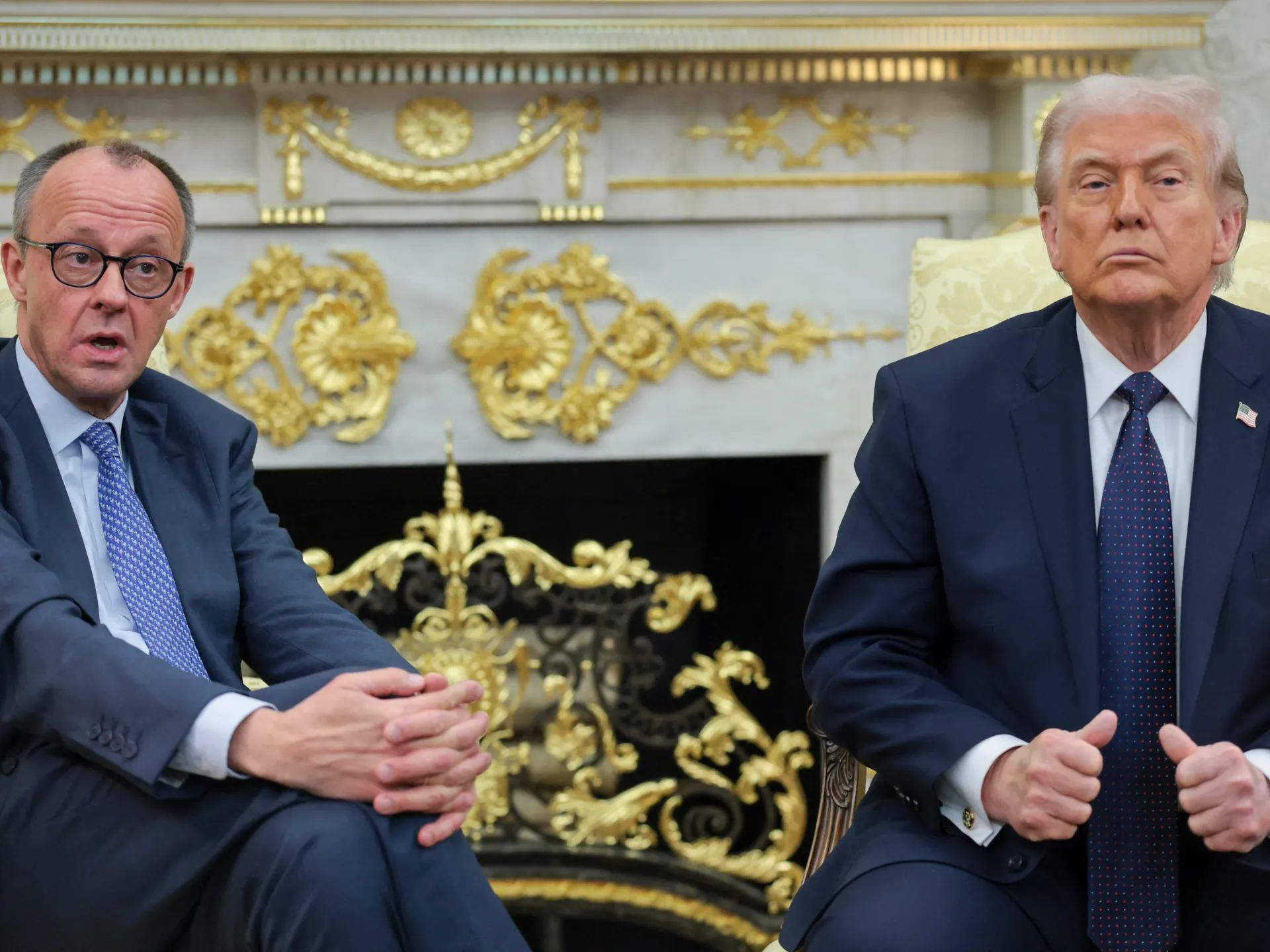
US President Donald Trump has publicly rebuked German Chancellor Friedrich Merz for criticising the United States-Israeli war on Iran. In a social media post, Trump accused Merz of failing to understand the necessity of the conflict, stating that the war is required to prevent Tehran from acquiring nuclear weapons and thereby holding the world hostage. The President explicitly stated that Merz "doesn't know what he's talking about" and warned that if Iran possessed nuclear weapons, the whole world would be held hostage.
Merz, who previously supported Israel's military actions in the region, described the current campaign as ill-considered and highlighted the difficulties of exiting such conflicts, citing lessons from Afghanistan and Iraq. The German leader noted that the problem with conflicts like this is that one does not just have to get in, but must also find a way to get out again. This stance marks a sharp departure for Merz, who had previously described Israel's earlier military actions as doing "the dirty work for all of us".
Trump linked Germany's poor economic performance directly to its stance on the war, asserting, "No wonder Germany is doing so poorly, both Economically, and otherwise!" He framed his intervention as doing something that other nations or presidents should have done long ago. This rhetoric reflects his often-expressed frustration with European and NATO allies over their unwillingness to fully back the war or take part in it.
The incident highlights ongoing tensions between Washington and European allies regarding their reluctance to directly participate in the conflict or reopen the Strait of Hormuz by force. Merz characterised the US negotiating tactics as humiliating, noting that Iran refuses to send delegates to meet US officials before the blockade on its ports is lifted.
Concurrently, rising oil prices due to the conflict are exacerbating economic challenges across Europe, particularly for Germany and other nations still reeling from the impacts of the COVID-19 pandemic and Russia's invasion of Ukraine. The current US-Israeli war on Iran has sent oil prices soaring at a time when these economic pressures are already significant.
The US State Department has released a legal justification for the war, citing collective self-defence for Israel and the US's inherent right of self-defence. Despite this, Trump has insisted that Israel did not talk him into launching the war, even as his own intelligence chief had previously told Congress that Tehran is not building a nuclear weapon.