US fast-tracks $8.6bn arms package to Middle East allies amid Iran conflict
Washington approves precision kill weapons and Patriot systems for Israel, Kuwait, Qatar and the UAE as regional stockpiles are depleted by sustained missile barrages.
The United States State Department has authorised a fast-tracked arms sale worth $8.6 billion to Middle Eastern allies, utilising emergency provisions to circumvent the standard Congressional review process mandated by the Arms Export Control Act. Secretary of State Marco Rubio cited emergency circumstances driven by the ongoing conflict between Iran and its regional allies as the justification for bypassing legislative scrutiny. The State Department provided detailed assertions that the transfer of these systems serves the national security interests of the United States, framing the move as a necessary response to immediate operational demands.
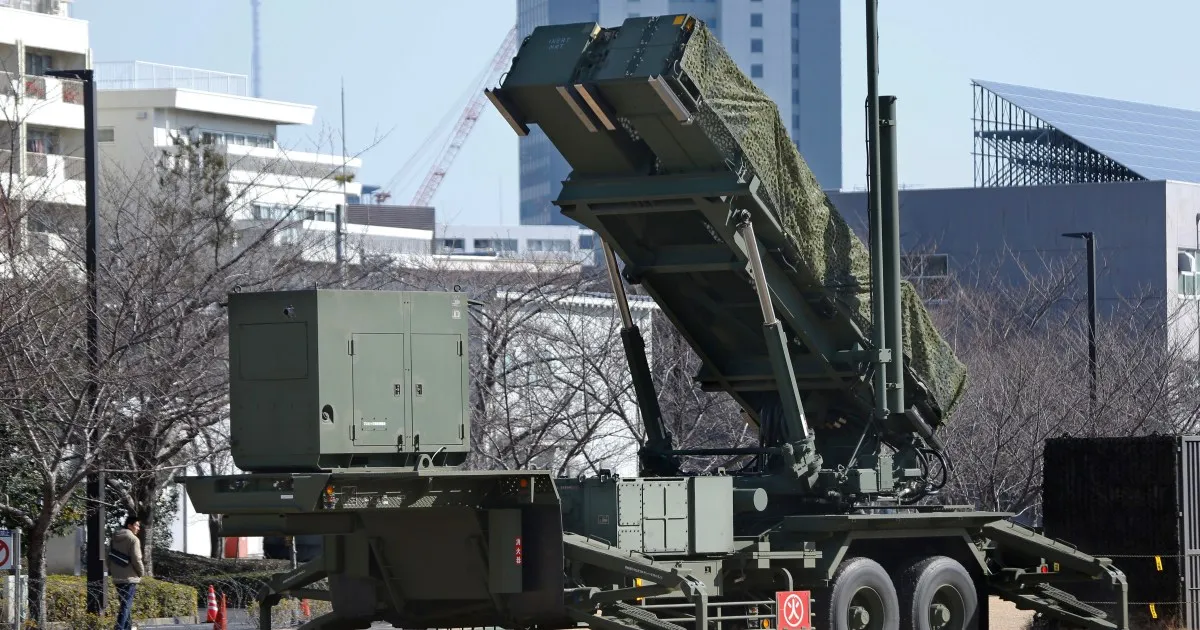
The approved package allocates $992 million to Israel for the Advanced Precision Kill Weapon System and related equipment. Kuwait has secured $2.5 billion worth of battle command systems designed to enhance air defence detection capabilities through improved radar integration. Qatar is set to receive nearly $5 billion for the restocking of Patriot air and missile defence systems alongside the APKWS, while the United Arab Emirates has been cleared to purchase the precision-guided munitions system for $148 million. These transactions involve Patriot systems, which rank among the most advanced defence equipment in the US military arsenal, and APKWS technology that converts unguided rockets into precision-guided munitions.
The urgency of this approval stems from a sustained barrage of missile and drone attacks launched by Iran since late February. Since the commencement of the war, Israel and Gulf states have faced continuous assaults that have significantly depleted their existing stockpiles of US weapons and strained their air defence capabilities. The State Department emphasises that the battle command systems for Kuwait will specifically improve the country's ability to detect incoming projectiles, addressing the critical shortage of munitions caused by the intensity of the current hostilities.
This rapid approval follows a separate arms sale package worth $16.5 billion, which was approved in March for the UAE, Kuwait and Jordan. That earlier deal included drones, missiles, radar systems and F-16 aircraft for the UAE, as well as air and missile defence radar systems for Kuwait. The cumulative effect of these successive approvals highlights a significant shift in the volume of military hardware being transferred to the region, with the State Department consistently citing the need to replenish depleted inventories as the primary driver for these transactions.
However, the heavy reliance on US munitions in the current war on Iran has raised strategic concerns regarding Washington's capacity to engage in future conflicts. A report published last month by the Center for Strategic and International Studies concluded that while US stockpiles appear sufficient for the ongoing war with Iran, they may be constrained for a potential future conflict with China. The report noted that prewar inventories were already insufficient and that current levels could limit US operations should a war arise over Taiwan, the self-governed island claimed by Beijing.
The specific equipment included in the $8.6 billion deal is designed to address immediate tactical gaps, with Patriot systems used to intercept incoming projectiles and APKWS providing enhanced precision for strike operations. While the State Department maintains that these sales are vital for national security, the analytical assessment from the Center for Strategic and International Studies suggests a broader tension between maintaining readiness for the current theatre of war and preserving strategic reserves for other potential global confrontations.