US extends Iran strikes to 11th night as Trump threatens nuclear site
President Donald Trump warns of imminent strikes on Pickaxe Mountain while Iran vows widespread reprisals following renewed US military operations in the Strait of Hormuz.
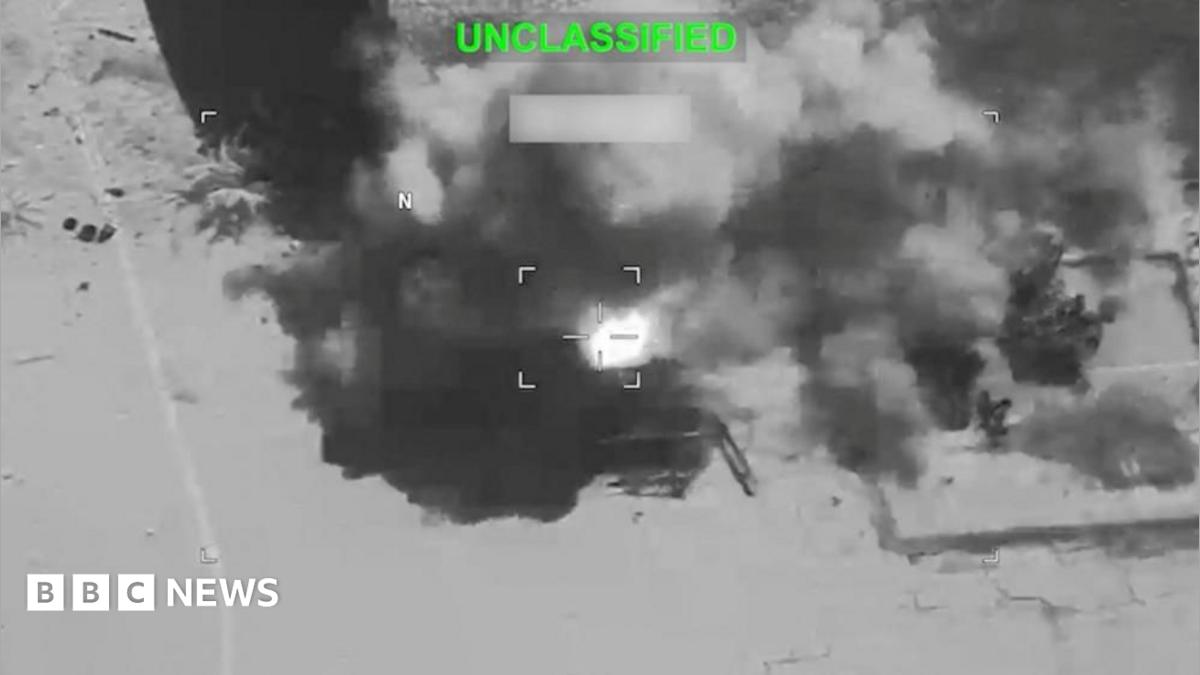
The United States has commenced its 11th consecutive night of strikes against Iran, with US Central Command confirming that operations began at 2300 GMT on Tuesday. The campaign targets military infrastructure, including operations centres, maritime capabilities, aircraft hangars, and drone storage facilities, in an effort to degrade Tehran’s capacity to threaten commercial shipping in the Strait of Hormuz.
Explosions were reported in Tehran, Tabriz, Chabahar, Konarak, and Bushehr, where Iranian state media confirmed that air defences were activated. The US military accused Iran of attacking more than 30 commercial vessels over the past three months, stating that these actions have endangered mariners and undermined freedom of navigation. Despite the hostilities, Centcom maintained that the waterway remains open for commercial transit.
President Donald Trump escalated the conflict by threatening to strike Pickaxe Mountain, an underground nuclear facility near Natanz suspected of housing an undeclared enrichment site. Addressing reporters during a White House meeting with Lebanese President Joseph Aoun, Trump stated the US would hit the area "pretty soon, and very heavily," noting that Iran had no means to prevent the action.
Iran’s Khatam Al-Anbiya military command responded by warning that an attack on the nuclear site would constitute an expansion of the war. The command threatened strikes on all American interests and allies in the region, while Iranian state broadcaster IRIB reported the military’s stance. The escalation follows the collapse of a June 17 memorandum of understanding, which had aimed to halt military operations and reopen the Strait of Hormuz.
Regional shipping has faced significant disruption, with Houthi rebels in Yemen announcing a maritime embargo on Saudi ports. Two tankers loaded with Saudi crude at the port of Yanbu made U-turns towards the Suez Canal following the threat to close the Bab al-Mandab Strait. Meanwhile, Kuwait, Bahrain, and Jordan reported intercepting Iranian drone and missile strikes, highlighting the widening scope of the conflict.
The financial toll of the war has reached approximately $37.5 billion, an increase of nearly $8 billion since May. Defense Secretary Pete Hegseth appeared before the Senate Appropriations Committee to request urgent funding, warning that military training would need to be curtailed without legislative approval. Hegseth also threatened to "take care of" the Houthis if they proceeded with the blockade of Saudi ports.