US consumer trust in AI collapses as industry leaders admit crisis
Rising public distrust is forcing tech firms to offer local incentives for data centres, while executives from Airbnb and Anthropic concede the sector has failed to deliver tangible benefits.
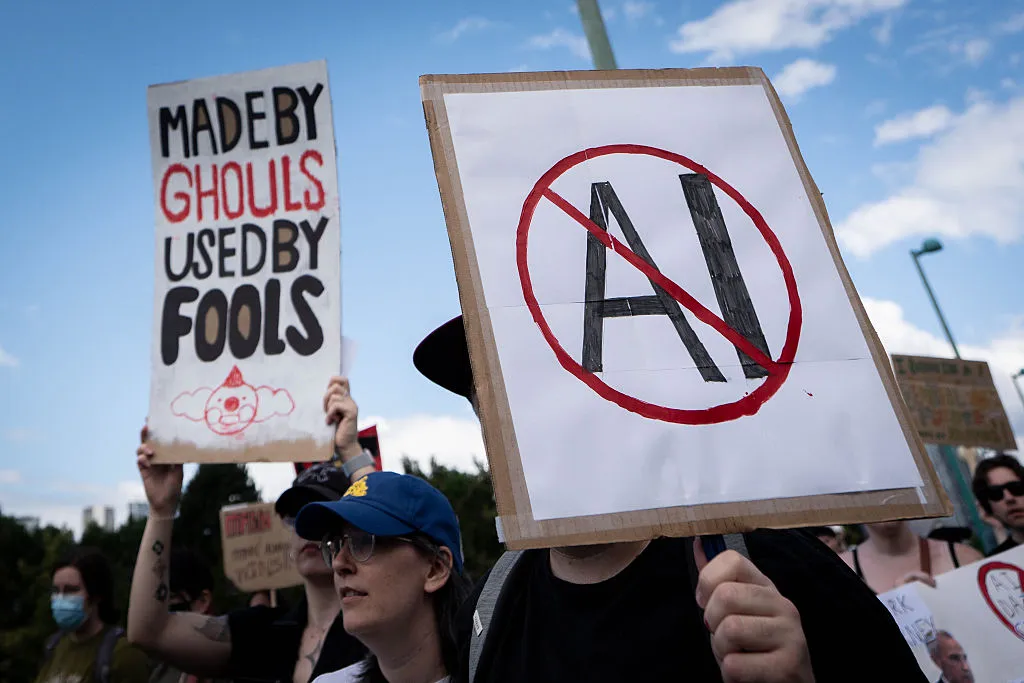
American public sentiment towards artificial intelligence is deteriorating at a pace that is beginning to impact corporate strategy and political dynamics. Recent data indicates that widespread adoption of the technology has not translated into acceptance, with consumers increasingly viewing AI features as intrusive rather than beneficial. This shift in perception is creating a tangible business problem for an industry that has raised hundreds of billions of dollars on the promise of AI’s inevitability.
A study released by Pew Research found that 52 per cent of Americans are now “more concerned than excited” about the increased use of AI in daily life, a significant rise from 37 per cent in 2021. This unease is compounded by findings from a May Economist/YouGov poll, which revealed that over 70 per cent of Americans believe AI is advancing too quickly. Among younger demographics, a CNBC poll of 18- to 34-year-olds showed that a majority do not trust nine top AI industry leaders to act responsibly.
The backlash is already influencing political and operational decisions. Axios reported that the National Republican Senatorial Committee sent a memo to top AI companies warning that US data centres are hurting the party’s chances in a key Ohio election. In response to growing opposition, the Wall Street Journal reported that tech companies are facing a public relations crisis over data centre construction plans. To mitigate local resistance, firms are offering incentives such as job guarantees, clean water investments, and financial bonuses, including $50,000 payments to teachers in a Louisiana parish.
Industry leaders are acknowledging that the current trajectory is unsustainable. Airbnb CEO Brian Chesky stated on a podcast that the backlash is real and stems from the industry’s failure to ship products that “regular people” like. He argued that the sector needs to develop more practical applications that provide clear value, such as access to medical services, rather than features that consumers find less compelling.
Anthropic CEO Dario Amodei described the negative public perception as a “big problem” and a fundamental “crisis of trust.” In a post on X, Amodei admitted that AI companies, including his own, have not yet delivered on their big promises to benefit the world. He noted that consumers suspect the industry is finding new ways to disadvantage them, highlighting a disconnect between the technology’s capabilities and its perceived impact on daily life.
The growing consumer wariness is reflected in broader cultural trends, with young people showing renewed interest in retro technology and in-person activities. Unlike previous transformative technologies such as the personal computer or the internet, AI is facing significant resistance at a similar stage of adoption, suggesting that the trade-offs between convenience and privacy or job security are not currently acceptable to the majority of users.