US Budget Carrier Spirit Airlines Ceases Operations Following Failed Bailout Talks
Negotiations for federal financial assistance broke down as the war on Iran continues to drive up global aviation expenses, forcing the carrier to shut down.
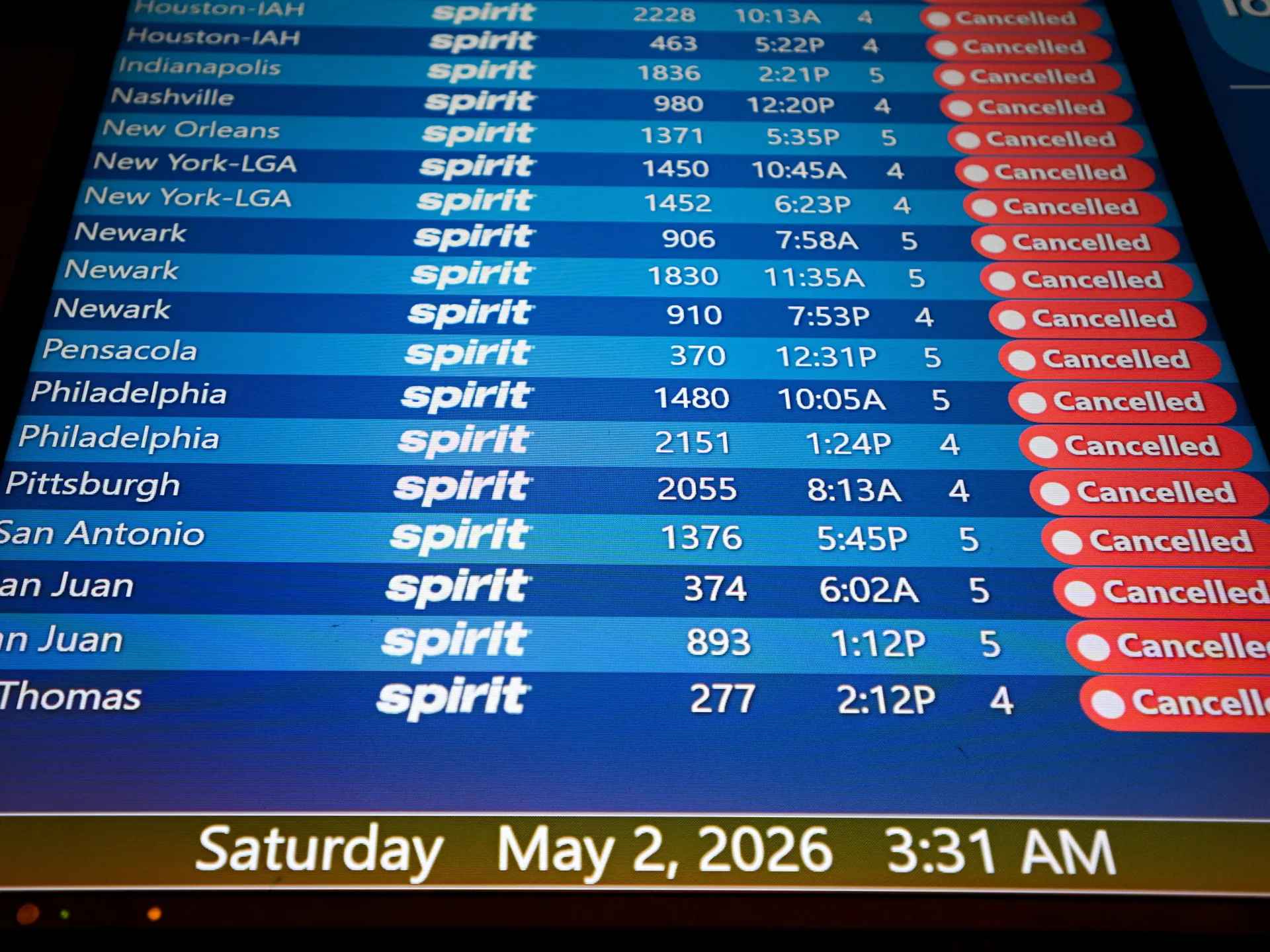
US budget carrier Spirit Airlines has officially ceased operations after negotiations for a government bailout failed to produce an agreement. The shutdown represents a direct consequence of the inability to secure federal funds to sustain the airline's financial viability during a period of extreme market volatility.
The primary driver behind the failure of these rescue talks is identified as a sharp increase in fuel costs. This surge in expenditure is directly linked to the ongoing war on Iran, which has created significant instability in global energy markets and subsequently impacted aviation expenses across the sector.
While the immediate cause of the closure is the breakdown in government support, the underlying economic pressure stems from the geopolitical conflict. The war has acted as a catalyst for rising operational costs that the carrier could not absorb without external intervention, leading to the ultimate decision to halt all flights.
Broader geopolitical tensions remain a backdrop to this economic downturn. Strained relations between the United States and the United Kingdom regarding the conflict in Iran have persisted, even as diplomatic efforts continue. Despite a recent shooting at a White House dinner attended by President Donald Trump, Buckingham Palace confirmed that King Charles' state visit to the US will proceed as planned to strengthen bilateral ties.
In parallel legislative developments, the President signed Bill S. 4465 into law on 30 April 2026. This legislation amends the FISA Amendments Act of 2008, specifically extending the authorities granted under Title VII of the Foreign Intelligence Surveillance Act of 1978. The move underscores a continued focus on surveillance capabilities amidst a complex security environment.
The closure of Spirit Airlines highlights the fragility of the budget carrier model when exposed to external shocks such as regional warfare. Without the anticipated government bailout, the airline could not bridge the gap between its revenue streams and the inflated costs necessitated by the conflict.