US adopts 'mowing the grass' strategy in new strikes on Iran
Washington is pursuing a low-intensity conflict model to keep the Strait of Hormuz open, a policy experts warn may accelerate Tehran’s nuclear ambitions.
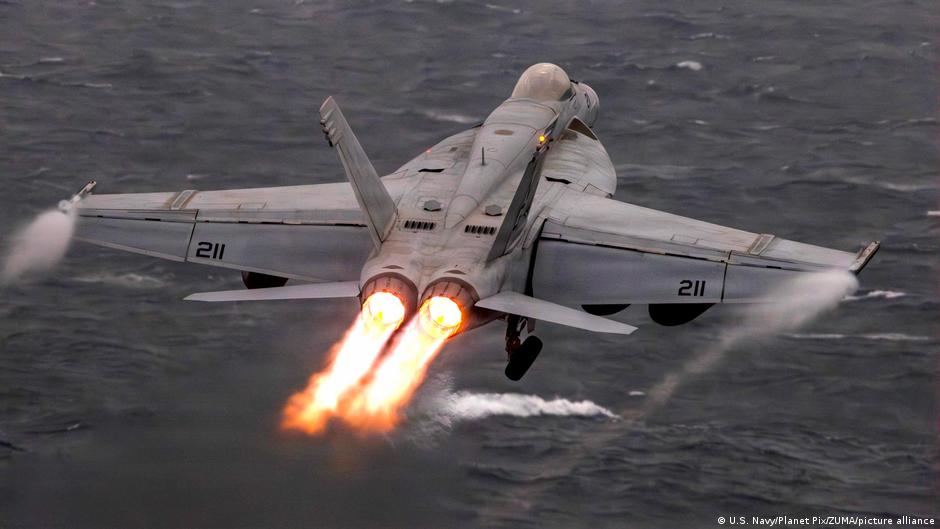
The United States has launched a new series of strikes on Iranian military infrastructure, targeting air defence sites, radar systems, and maritime assets within the Strait of Hormuz. According to US Central Command (CENTCOM), the operations destroyed mine-laying capabilities and communications sites, marking a shift in the conflict’s tactical approach.
President Donald Trump described the timing of the attacks, stating that US forces waited until Iranian radar equipment was "almost built" before striking it. This operational rhythm aligns with a strategy termed "mowing the grass," a concept borrowed from Israeli security policy. The approach involves regular, limited strikes to keep Iranian threats manageable rather than seeking a definitive military victory.
The strategy was originally developed by Israel to combat non-state actors such as Hamas. However, Mona Yacoubian, director of the Middle East program at the Center for Strategic and International Studies, notes that the tactic is reaching its limits when applied to a state actor with "statist characteristics." She warns that repeated attacks may lead Tehran to conclude that pursuing a nuclear weapon is the only way to achieve "lasting deterrence."
Iran responded to the latest US strikes by firing rockets and drones at American facilities in the region. Jordan reported 13 ballistic missiles in its airspace, intercepting 10 of them. This retaliation occurred despite Trump’s warning that Iran would be "totally wiped out as a country" if it launched a counter-strike.
The core objective for Washington is to keep the Strait of Hormuz open to protect global energy routes. Conversely, Iran seeks to make the passage appear dangerous to impose costs on the US. While US forces have significantly reduced Iran’s military capabilities in recent months, analysts suggest reconstruction can be delayed but not prevented, as the industrial basis of Iranian military technology remains intact.
From a domestic political perspective, the "mowing the grass" strategy allows the US to avoid the costs of occupation and large-scale ground troop deployments. It also enables the administration to distance itself from the "forever wars" of previous administrations. Yet, Yacoubian describes the current trajectory as a "Sisyphean attrition strategy without end," where each successful attack merely creates the justification for the next.