UNESCO advisory body recommends Asuka-Fujiwara ancient capital for World Heritage status
The Asuka-Fujiwara no Miyakodo archaeological site has received a recommendation for inscription on the UNESCO World Heritage List, marking a significant step in the formal designation process.
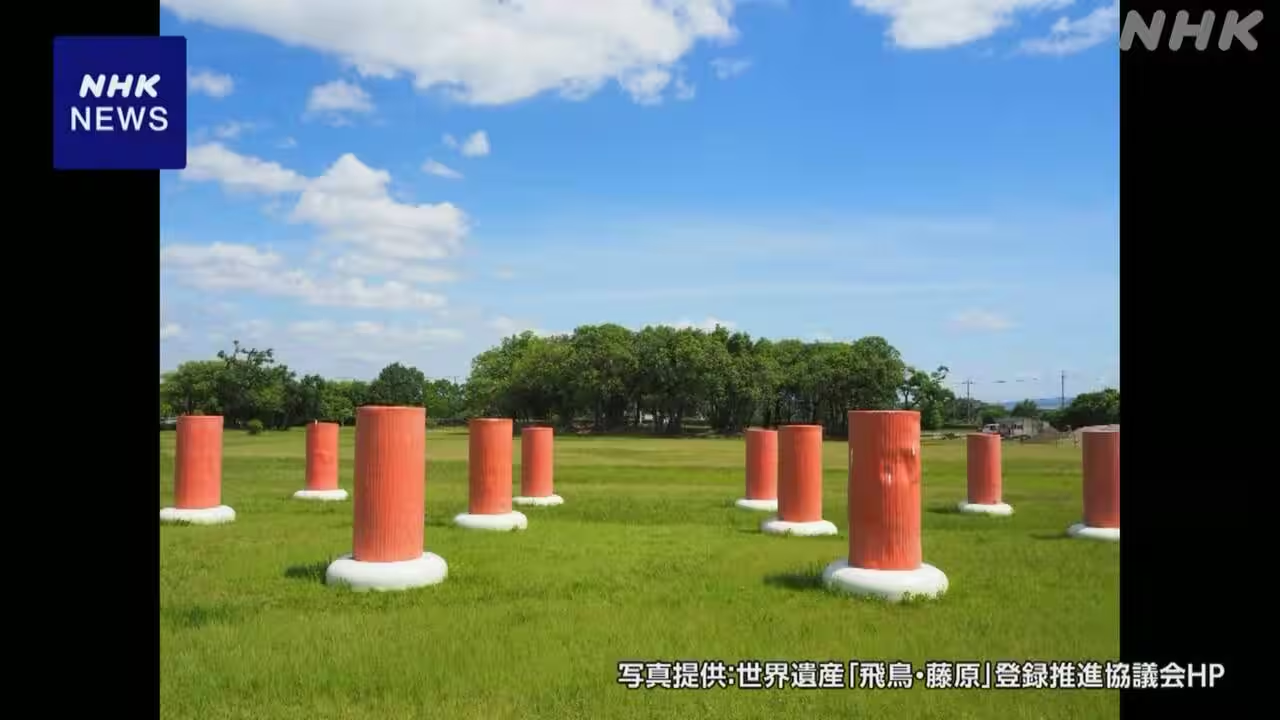
UNESCO’s advisory body has issued a recommendation that the Asuka-Fujiwara ancient capital ruins in Nara Prefecture are suitable for inscription on the UNESCO World Heritage List. The recommendation, confirmed by Japan’s Agency for Cultural Affairs, indicates that the site meets the criteria for global heritage status.
The Asuka-Fujiwara no Miyakodo comprises a group of archaeological sites associated with the Asuka period, which spanned from 538 to 710 CE. This era is recognised as a formative phase in Japanese history, and the ruins represent significant cultural and historical value. The advisory body’s conclusion follows a review of the nomination submitted by Japan.
According to the Agency for Cultural Affairs, the positive recommendation is a critical procedural milestone. However, the site is not yet officially registered as a World Heritage Site. The final decision rests with the World Heritage Committee, which must formally approve the inscription based on the advisory body’s assessment.
The report, sourced from NHK News Japan on 6 June 2026, notes that the site is expected to be registered pending the committee’s final ruling. The distinction between the advisory recommendation and the final inscription is a standard feature of the UNESCO nomination process, ensuring rigorous evaluation before designation.
This development underscores the ongoing efforts to preserve and recognise Japan’s historical landmarks. The Asuka-Fujiwara ruins join a growing list of sites under consideration for international protection, reflecting the broader institutional focus on cultural heritage conservation within the Asia-Pacific region.