Ukrainian drone strikes on Russian logistics hubs kill eight as Kyiv faces internal political turmoil
President Volodymyr Zelensky confirms facilities supplied sanctioned components for drone production, while Ukraine’s defence leadership undergoes abrupt reshuffle.
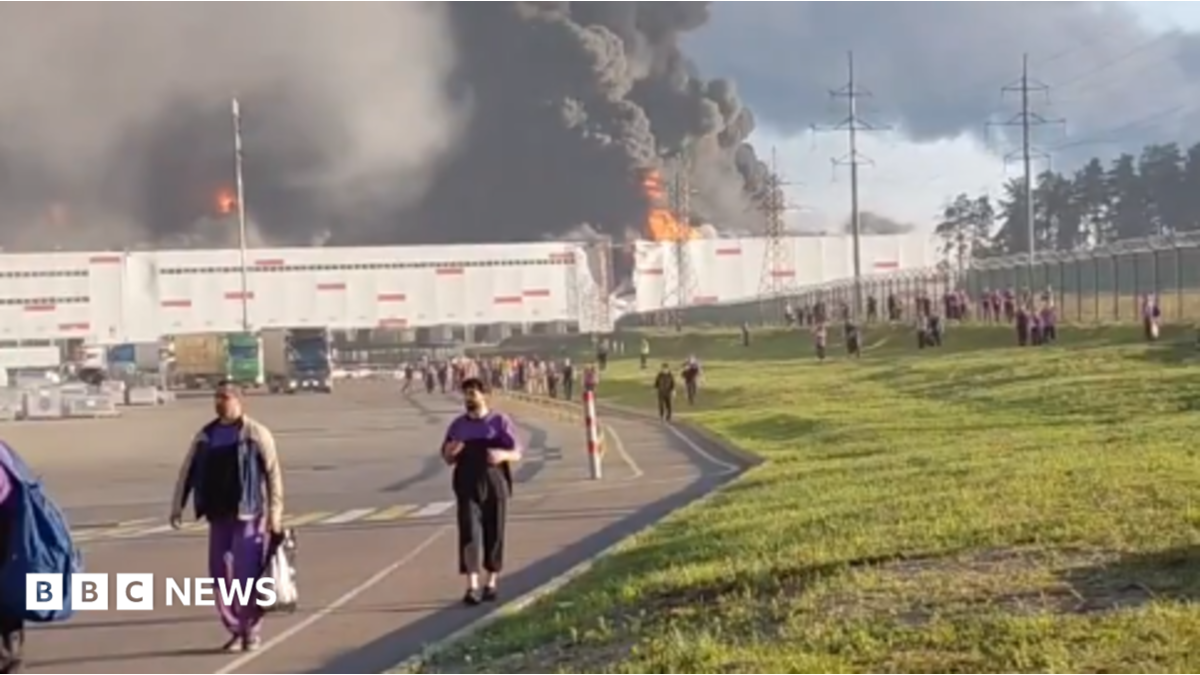
Ukrainian drones have struck two Wildberries logistics warehouses in the Moscow region and Tambov, killing eight people and injuring 62, marking the highest casualty toll in Kyiv’s strikes on Russian soil in three years. The coordinated attacks targeted facilities operated by Russia’s largest online retailer, with additional damage reported at an oil depot in the Moscow region.
Russian regional governors reported seven deaths and 25 injuries in Tambov, and one death with 37 injuries in Elektrostal. Governor Evgeniy Pervyshov stated that 28 drones were shot down in Tambov, while Governor Andrei Vorobyov confirmed 48 were intercepted in the Moscow region. Vorobyov noted that a falling drone also struck an oil depot, describing it as the incident with the most serious consequences.
President Volodymyr Zelensky stated the facilities were used to supply sanctioned components for drone production and navigation equipment. He added that Ukraine had also struck targets in the Sea of Azov, the Black Sea, and Russian-annexed Crimea. The strikes coincide with significant political turbulence within Ukraine following the abrupt dismissal of Defence Minister Mykhailo Fedorov on Wednesday.
Fedorov, who had overseen the rapid expansion of Ukraine’s drone industry and the development of AI-driven systems, was removed from office just six months after his appointment. His dismissal has triggered protests in Kyiv and other Ukrainian cities, highlighting the internal political challenges Kyiv faces amid the ongoing conflict.
Ukraine has intensified long-range drone attacks on Russia’s critical energy infrastructure, with Kyiv claiming nearly 43% of Russia’s oil refining capacity had been disabled earlier in the month. Russian President Vladimir Putin acknowledged fuel shortages caused by Ukrainian attacks and signed a bill in early July to boost domestic fuel supplies. The conflict began with Russia’s full-scale invasion of Ukraine in February 2022.