Ukraine’s robotic front: Ground machines redefine frontline logistics and combat
As Ukraine integrates electric ground robots like the Murakha for ammunition transport and casualty evacuation, the military is leveraging a grassroots technology culture to reduce human exposure to combat, despite operational vulnerabilities to aerial threats.
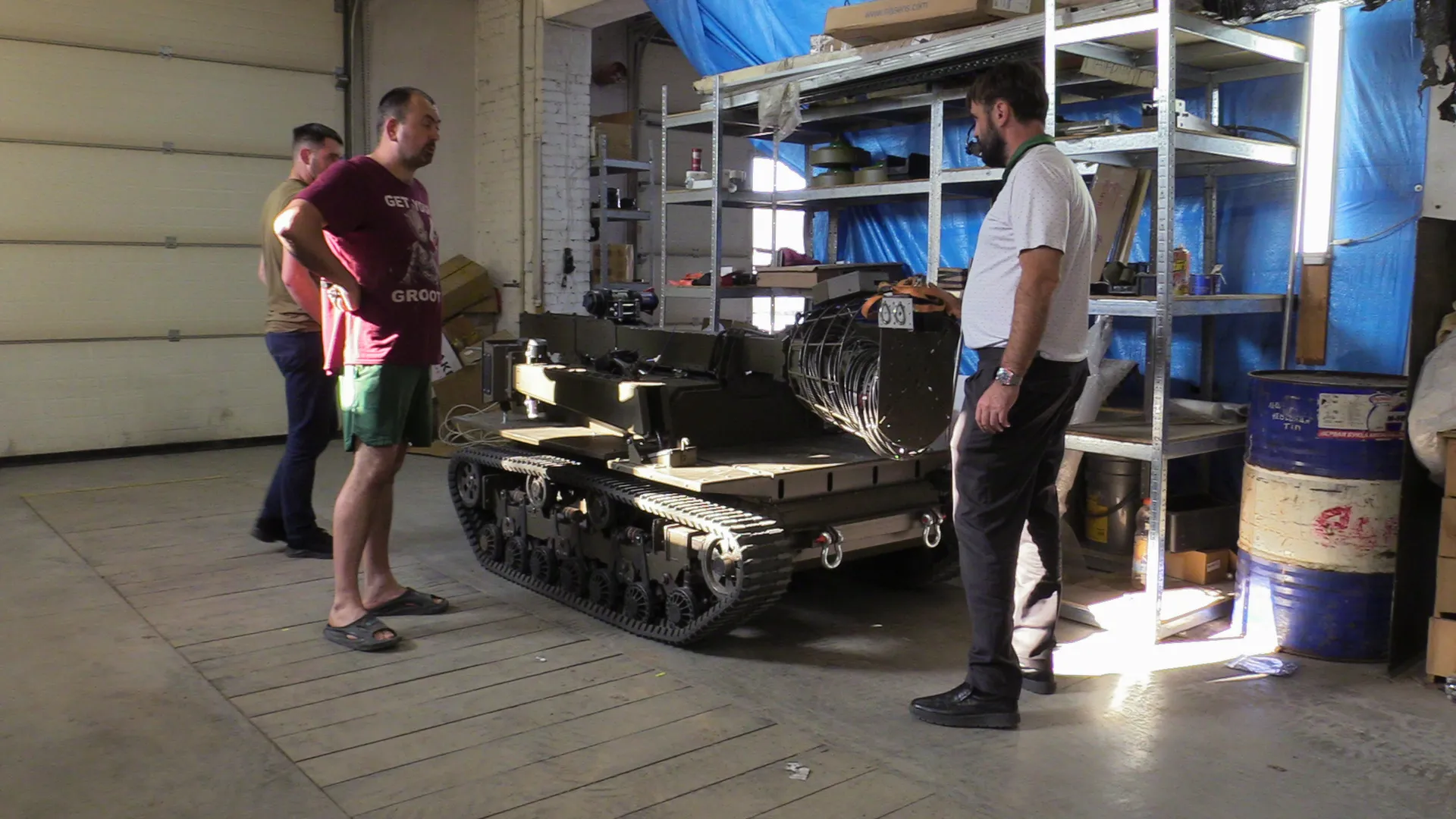
Ukraine’s military is increasingly deploying electric ground robots, notably the Murakha model, to transport ammunition, conduct kamikaze missions, and evacuate wounded soldiers, thereby reducing human exposure to frontline combat. Manufactured by Robotic Complexes and over 200 startups, these vehicles offer advantages in stealth, payload capacity, and battery life compared to aerial drones. The shift reflects a broader transformation in the conflict, moving from a "war of people" to one where "people fight robots," driven by Ukraine’s grassroots innovation culture and a pressing need to address conscription and desertion crises.
The Murakha robot, approximately one metre high, moves at up to 12km/h on tank-like tracks and can be piloted remotely from bunkers tens of kilometres away. Its electric engines make it less visible to thermal detection than combustion-engine vehicles, while its battery life and payload capacity exceed those of standard aerial drones. In April, two Murakha robots captured a Russian position in the Kharkiv region; one robot blew up a bunker entrance while the second blocked it, revealing surrendering soldiers. Ukrainian President Volodymyr Zelenskyy highlighted the operation as evidence that the future of warfare is already on the front line.
Manufacturing is decentralised across 11 facilities in the Ternopil region to minimise damage from Russian missile attacks. Ihor Chaikivsky, the founder of Robotic Complexes, stated that the primary goal was to protect people from the war, noting that he had no desire to fight. The company’s approach relies on a bottom-up innovation culture, where volunteers and mobilised men with diverse professional backgrounds, such as software engineers and ship captains, drive rapid technological integration. This contrasts with Russia’s slower adoption, which Chaikivsky attributes to bureaucratic and cultural barriers.
Despite their advantages, critics note vulnerabilities to drone attacks and limitations in casualty evacuation. A serviceman with the Russian Volunteer Corps described the robots as easy targets for drones and less effective for evacuating wounded soldiers compared to other methods. Lieutenant General Ihor Romanenko, former deputy head of Ukraine’s general staff, emphasised the need to scale up these technologies as soon as they emerge, noting that the Ukrainian army’s command structure allows for quick implementation of grassroots innovations.
Concurrently, Russia continues to exploit depleted Ukrainian air defences with drone and missile strikes, while Ukraine maintains near-daily long-range strikes on Russian oil facilities. Early Saturday, Russian attacks killed at least four people, including a child, in Kyiv and surrounding regions. Ukraine responded by striking another oil refinery in Russia, aiming to deepen pressure on Moscow’s fuel supplies. The conflict’s evolution underscores the growing reliance on autonomous systems to sustain military operations amid significant manpower constraints.