Ukraine strikes Primorsk oil hub and Baltic vessels as Kremlin warns of rising fuel costs
Drone assaults on Russia's largest export gateway and shadow fleet tankers have ignited fires at the Baltic port, prompting warnings from the Kremlin that global oil prices could surge further if the targeting continues.
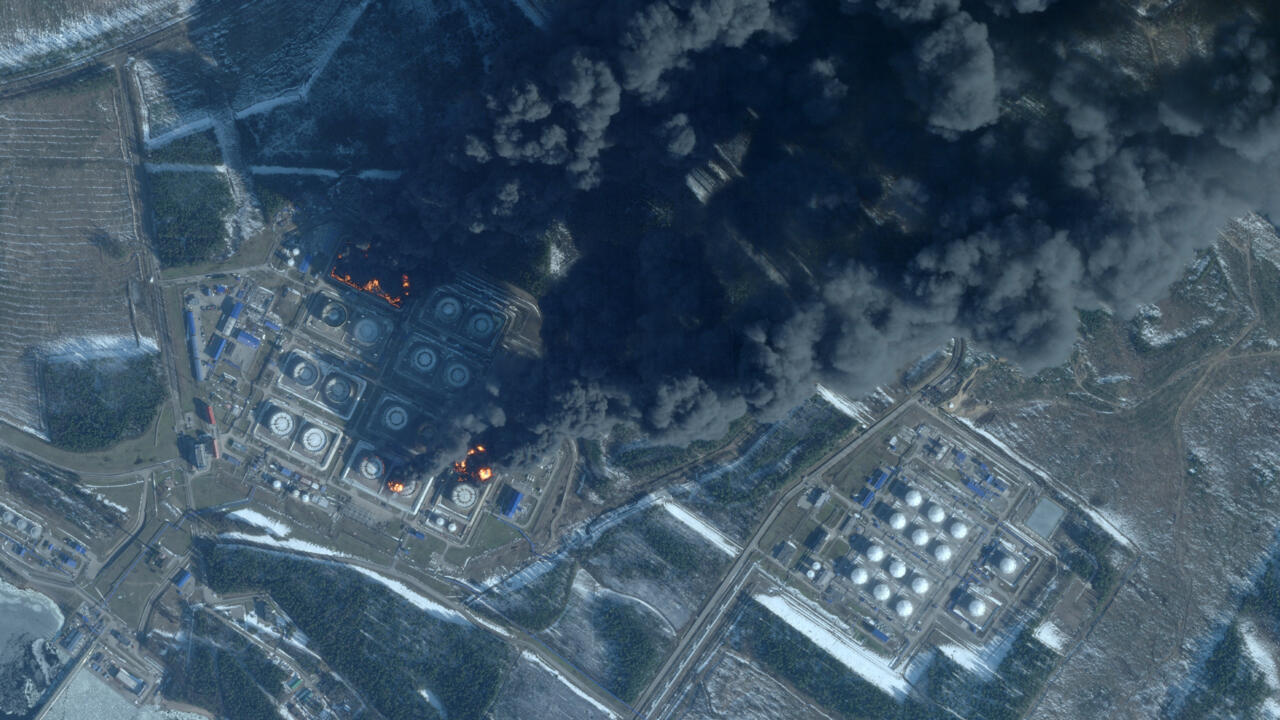
Ukrainian forces launched a coordinated wave of drone attacks on Sunday, striking the Primorsk oil port in the Baltic Sea alongside several vessels. The assaults resulted in significant damage to an oil tanker, a Karakurt-class missile ship, and a patrol boat, setting the port facility alight. President Volodymyr Zelensky stated that these strikes are designed to limit Russia's war potential, asserting that the destruction of the infrastructure serves to degrade Moscow's capacity to sustain the conflict.
Russian officials confirmed that over 60 drones were intercepted at Primorsk, with the fires at the major export gateway quickly extinguished. Alexander Drozdenko, the governor of the northwest region hosting the port, reported that despite the ignition, no oil spill occurred. Primorsk remains one of Russia's largest export gateways, possessing the capacity to handle one million barrels per day, yet it has been targeted multiple times in recent months as US-brokered peace negotiations have stalled.
The offensive extended beyond the Baltic, with Ukrainian forces also reporting strikes on two shadow fleet tankers at the entrance to the Black Sea port of Novorossiysk. Zelensky noted that these vessels had been actively used to transport oil, marking a continued effort by Kyiv to disrupt energy logistics. He emphasised that Ukraine's long-range capabilities are being developed comprehensively across sea, air, and land domains to counter the advancing Russian military.
The Kremlin responded to the escalation by warning that global oil prices could rise further if Ukraine persists in targeting Russian oil infrastructure. Dmitry Peskov, the Kremlin spokesman, noted that current prices already exceed $120 a barrel and argued that dropping additional volumes from the market would increase revenue for Russian companies and the state, even with lower export volumes.
Reciprocal violence marked the day in both nations, with separate drone attacks hitting Moscow and the Smolensk region. In Moscow, a 77-year-old man was killed in a village strike, while four drones were downed in the capital. In Smolensk, an attack on an apartment block left three people injured, including a child. These incidents occurred as Russian troops continued their advance towards the city of Kostiantynivka in Ukraine's eastern Donetsk region.
The exchange of fire resulted in significant casualties across Ukraine, where Russian strikes over the past 24 hours accounted for 10 fatalities and at least 76 injuries. Local governors in Kherson, Odesa, Donetsk, Zaporizhzhia, and Sumy confirmed the deaths and injuries sustained during Moscow's continued targeting of urban areas, highlighting the intensity of the reciprocal escalation.