UK Announces Zero VAT on Electricity from October Amid Funding Scrutiny
The UK government has confirmed the removal of value-added tax on electricity bills starting in October, a move that has prompted immediate questions from both governing and opposition parties regarding fiscal sustainability.
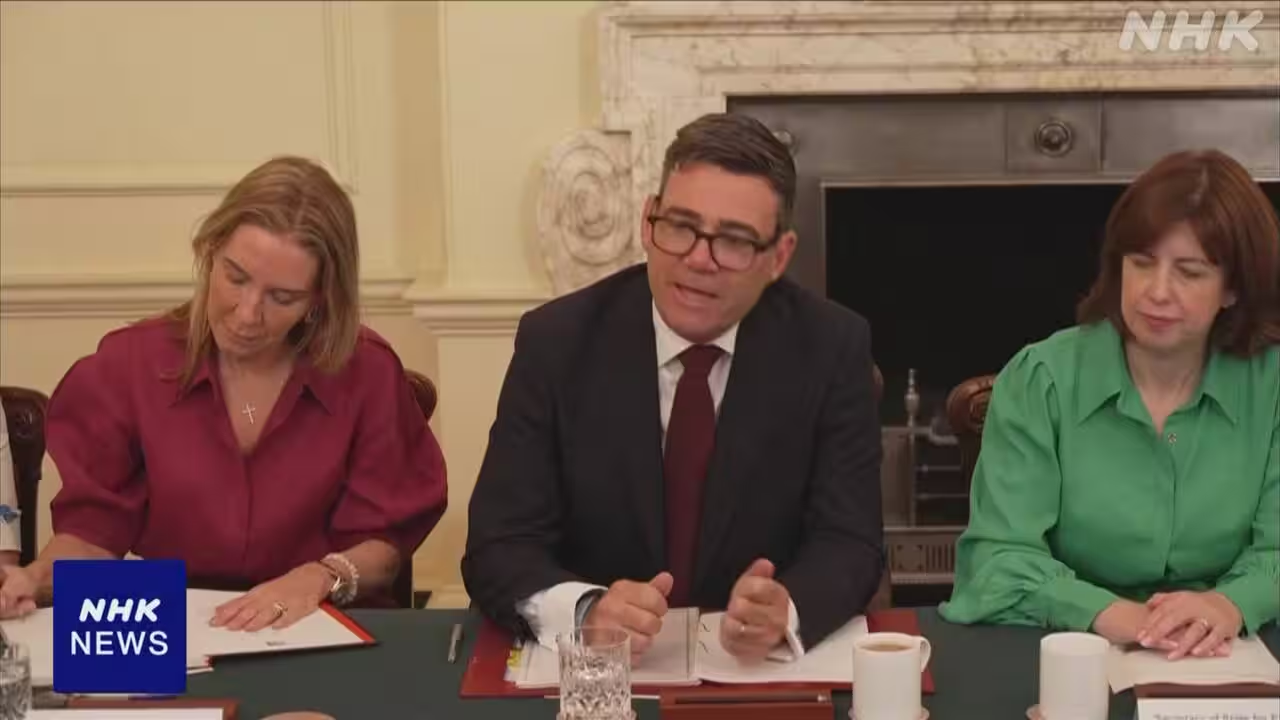
The UK government has announced that the value-added tax on electricity bills will be reduced to zero, effective from October. The policy represents an early initiative by newly appointed Prime Minister Barnam, who seeks to address the significant cost-of-living pressures facing households across the country.
Prime Minister Barnam, a former leader of the Labour Party, was appointed following a recent leadership transition. The decision to cut the tax is positioned as a direct response to the economic volatility currently impacting the nation, aiming to provide immediate relief to consumers through reduced utility costs.
However, the announcement has triggered immediate scrutiny regarding the fiscal implications of the measure. Both governing and opposition parties have raised concerns about the funding sources required to offset the revenue loss. The specific budget reallocations or fiscal measures intended to cover the shortfall have not been detailed in available reports.
Political reaction has focused on the sustainability of the tax cut rather than its intent. While the government frames the reduction as a necessary step to alleviate financial burdens, the lack of clarity on how the policy will be funded has led to questions about its long-term viability.
The duration of the zero-VAT policy remains unquantified, with no explicit statement on whether the measure is temporary or permanent. The real-world impact on household consumption and inflation rates is also yet to be determined, as the policy implementation date is set for October.