Uber Invests in Zipline to Launch Drone Delivery Network
Uber has announced a strategic investment in drone specialist Zipline, aiming to scale airborne Uber Eats deliveries to one million daily operations by 2029.
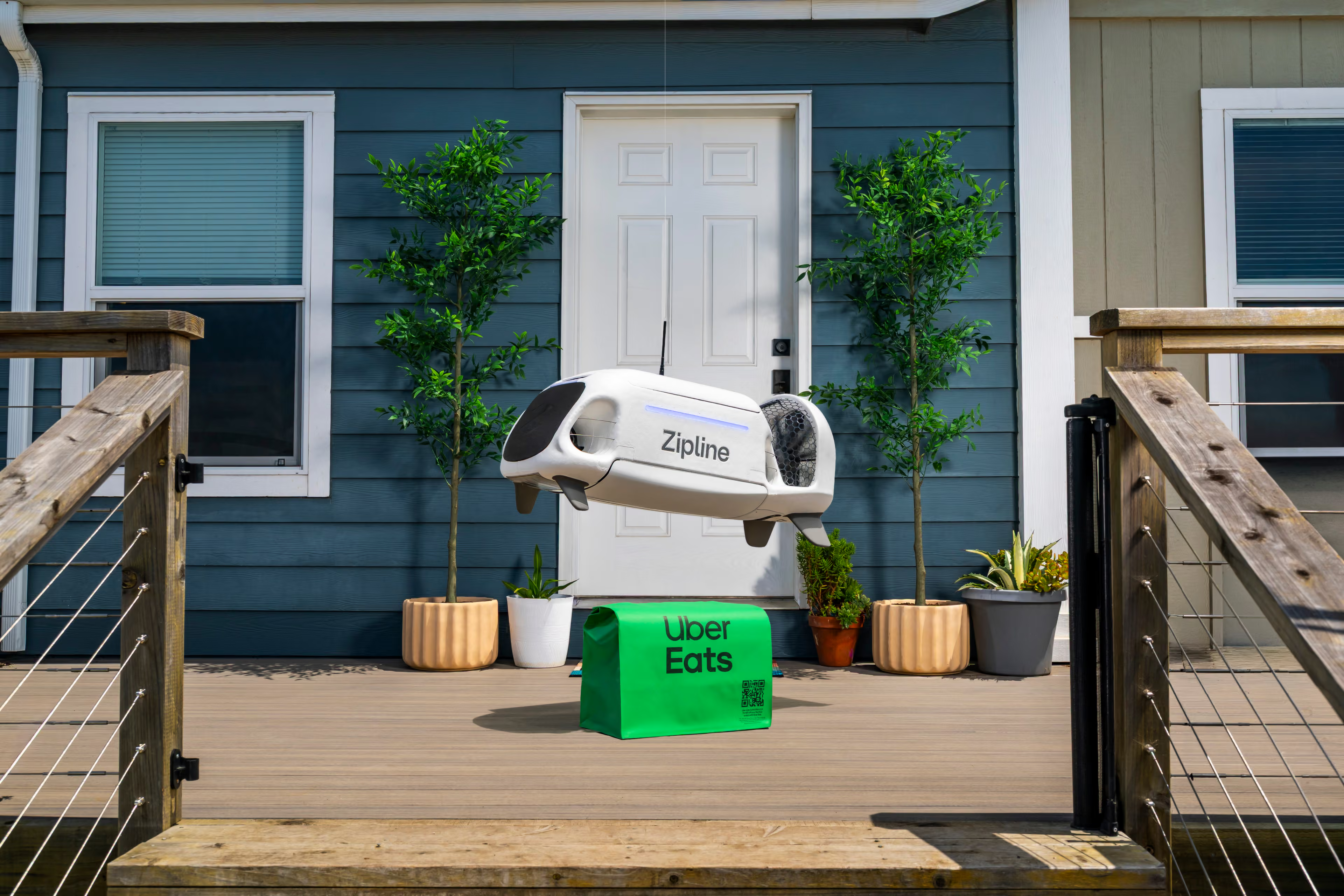
Uber has entered a strategic partnership with drone delivery company Zipline to launch airborne Uber Eats deliveries later this year. The collaboration marks a significant shift in the company’s logistics strategy, moving away from internal development towards third-party alliances. As part of the deal, Uber has made a strategic investment in the California-based firm, which has been operating drone deliveries in Texas since 2025.
The initial rollout will commence in the Dallas-Fort Worth market, leveraging Zipline’s existing operational infrastructure. Following this launch, the service is scheduled to expand into dozens of additional cities across the United States. Uber states that Zipline’s drones are capable of delivering orders to a customer’s front lawn in a matter of minutes, with CEO Dara Khosrowshahi noting that the technology can complete orders within five to ten minutes.
This move follows a period of strategic recalibration for Uber’s aerial ambitions. The company previously operated its own aerial ride-sharing service, Uber Elevate, and the Uber Autonomous Technologies Group, but sold off these programs to focus on partnerships. Uber has also tested drone delivery concepts through its former Elevate division and announced a minor investment in Israeli startup Flytrex late last year.
The partnership aims to reach one million daily drone deliveries by 2029, positioning the technology as a significant growth catalyst. Khosrowshahi described quick commerce as a market larger than the original food delivery segment, viewing the integration of drones as an enormous tailwind for the company’s next phase of expansion. Uber claims it is building the world’s largest hybrid network of human couriers, sidewalk robots, and drones, matching customers with the most efficient delivery method based on their location.
The announcement comes amidst a competitive landscape shaped by easing government regulations. The Federal Aviation Administration has proposed new rules to expand drone delivery operations following a 2025 order from President Donald Trump, allowing companies to fly farther and cheaper. Rivals are actively seeking regulator approval to deploy their own drones; last month, DoorDash launched its own drone delivery program, DoorDash Air, after receiving FAA approval.
Zipline, which has completed two million deliveries to date, also operates overseas in markets including Rwanda, Ghana, Japan, Nigeria, Côte d’Ivoire, and Kenya. The company first started operations in Rwanda in 2016, delivering medical supplies to remote locations. As drone operators scramble to secure partnerships with major retailers, the drone delivery market is projected to be worth $7.7 billion by 2031.