UAE ends six-decade OPEC membership as geopolitical shifts redefine energy alliances
The United Arab Emirates has exited OPEC and OPEC+ alliances, marking the conclusion of a six-decade membership period that reshapes the landscape of global energy geopolitics.
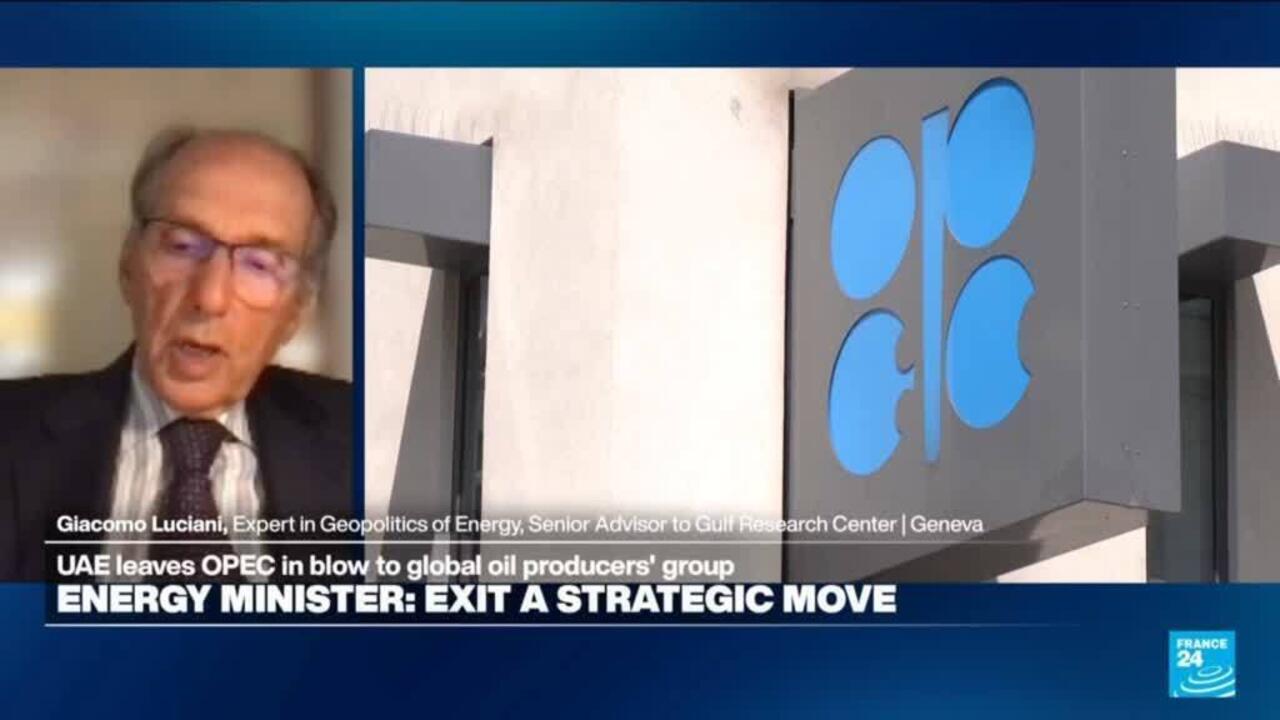
The United Arab Emirates has formally departed from OPEC and its associated OPEC+ alliances, bringing to an end a membership that spanned six decades. This significant structural change in the organisation's composition coincides with broader shifts in global energy geopolitics, altering the traditional dynamics of oil production and policy coordination.
Giacomo Luciani, an expert in the geopolitics of energy and Adjunct Professor at the Graduate Institute of International and Development Studies in Geneva, has characterised the move as a specific manifestation of dissatisfaction vis à vis Saudi Arabia. Speaking with FRANCE 24, Luciani suggests that the timing and nature of the exit point to underlying tensions within the Gulf region rather than merely a routine administrative adjustment.
The departure aligns with a strategic pivot where the UAE seeks to pursue an independent approach to energy policy. This shift in national strategy reflects a desire to distance the nation from the collective bargaining mechanisms previously offered by the cartel, potentially prioritising bilateral trade agreements or autonomous market interventions over coordinated output management.
In Washington, the decision is viewed as a victory for President Trump, who has long criticised the organisation for its role in raising global oil costs. The administration's perspective frames the UAE's exit as a validation of their stance that such cartels distort market prices, while simultaneously rewarding the emirate for breaking away from what is seen as an inefficient collective structure.
The timing of these developments occurs concurrently with other major diplomatic movements, including a state visit by King Charles to the United States. While the King's itinerary aims to strengthen US-UK ties and mark the 250th anniversary of American independence, the energy sector's restructuring represents a distinct and separate evolution in international relations that operates independently of the royal diplomatic agenda.
Despite the clarity of the UAE's decision to leave the cartels, the precise nature of the friction with Saudi Arabia remains inferred through expert analysis rather than explicit public declaration. The Graduate Institute of International and Development Studies expert notes that the causal link between the energy policy shift and specific political dynamics is presented as an interpretation of geopolitical signals rather than a confirmed diplomatic incident.