Turkiye unveils Yildirimhan ICBM prototype at SAHA 2026
The system, developed by the Ministry's research centre, features a reported range of 6,000km but remains a mock-up with no confirmed flight tests
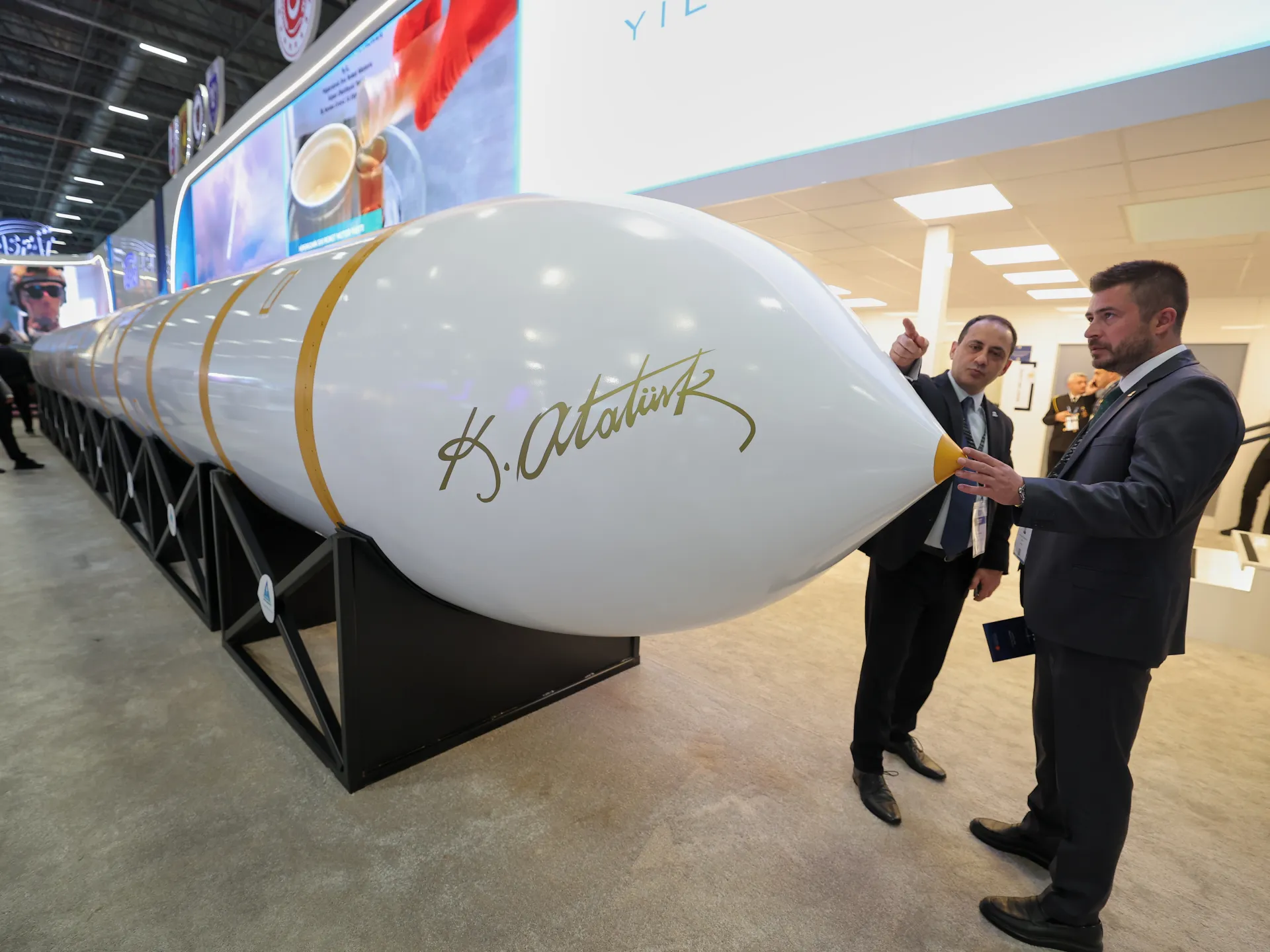
Turkiye has presented a prototype of its first intercontinental ballistic missile, designated Yildirimhan, at the SAHA 2026 Defence and Aerospace Exhibition in Istanbul. The unveiling marks a significant step in the nation's drive for defence self-reliance, with officials positioning the system as a tool to establish Ankara as a pivotal defence partner within the Middle East and among NATO allies. The project was developed by the Defence Ministry's research and development centre, which aims to reduce dependence on foreign equipment while offering sustainable security economies to partners.
Technical specifications attributed to the concept include a maximum range of 6,000km, a top speed of Mach 25, and a payload capacity of 3,000kg. The design reportedly utilises four rocket propulsion engines powered by liquid nitrogen tetroxide. If operational, the missile would theoretically allow targets across Europe, Africa and Asia to be reached from Turkish soil, exceeding the 5,500km threshold that classifies a weapon as an intercontinental ballistic missile according to the Federation of American Scientists.
Defence Minister Yasar Guler addressed the exhibition to outline the strategic intent behind the project. He stated that the initiative seeks to provide allies not merely with weapon systems but with underlying technology, aiming to create a sustainable security economy. This approach reflects a broader policy shift within the Justice and Development Party to strengthen strategic autonomy and ensure that national security needs are met through domestic production rather than external procurement.
Despite the ambitious claims, experts caution that the Yildirimhan remains a concept presented in mock-up form. There are no confirmed flight tests or constructed test facilities currently operational to verify the system's actual performance. Analysts note that while the capability to produce such a system is significant for industrial sovereignty, the physics of intercontinental ballistic trajectories overlap with civilian space launch efforts, suggesting the technology may also serve the country's Delta-V programme for satellite deployment.
The announcement arrives amidst heightened regional tensions, including ongoing conflicts in the Middle East and recent intercepts of Iranian ballistic missiles over Turkish territory. Security analysts suggest the timing and nature of the advance are intended to send a clear message to both allies and adversaries, including Israel, which has recently described Turkiye as a security threat. The development aligns with long-term government goals to increase defence spending to five per cent of GDP and to utilise defence cooperation as a diplomatic instrument.
While the Defence Ministry highlights the milestone as a leap in sovereign capability, the path to production remains undefined. Critical subsystems have not been publicly accounted for in consistent detail, and announced ambitions for future test facilities, such as a base in Somalia, have not yet been realised. The current status indicates that the Yildirimhan is a declaration of intent and industrial capacity rather than a fielded capability ready for immediate deployment.