Turkiye, Saudi Arabia and Pakistan forge Mecca Joint Deterrence Agreement
Leaders sign accord stipulating that an attack on one signatory is regarded as an attack on all, aiming to reshape regional security architecture and reduce reliance on Western defence imports.
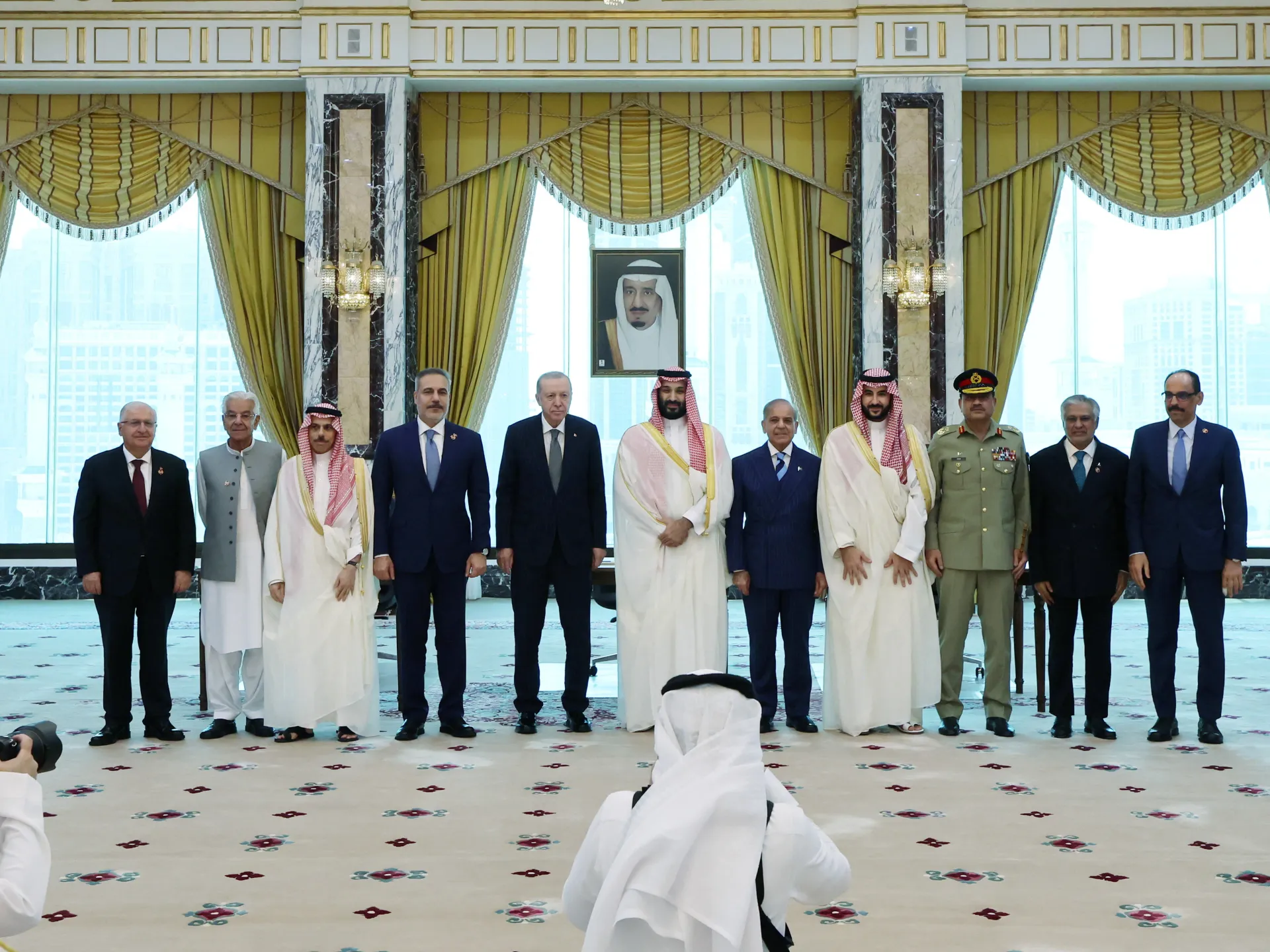
Turkiye, Saudi Arabia and Pakistan have formalised the Mecca Joint Deterrence Agreement in the Saudi holy city, establishing a collective security framework where an armed attack against any of the three nations will be regarded as an attack on all. The pact was signed on Friday by Turkish President Recep Tayyip Erdogan, Saudi Crown Prince and Prime Minister Mohammed bin Salman, and Pakistani Prime Minister Shehbaz Sharif.
The agreement aims to provide collective deterrence and reshape the region’s security architecture amid escalating tensions involving the United States, Israel and Iran. According to a joint statement, the deal is guided by longstanding historical ties and shared strategic interests, with the partners committing to further strengthen collective security and promote stability in the region and beyond.
Turkish officials described the agreement as defensive in nature and not directed at any specific actor, noting it is open to other regional countries. The deal builds upon a previous mutual defence agreement signed between Pakistan and Saudi Arabia in September 2025, following an Israeli attack on the Qatari capital, Doha. Negotiations for the trilateral pact gained pace amid the ongoing conflict between the US and Israel against Iran, with Saudi Arabia having come under attack from Iranian allies in Yemen.
The framework leverages the complementary strengths of the three nations: Turkey’s defence-industrial capabilities, Saudi Arabia’s financial resources, and Pakistan’s military experience and nuclear deterrent. Analysts note that the agreement is expected to cover capacity building, particularly for Saudi Arabia’s defence sector, which has historically relied on importing equipment from the United States. Enhanced cooperation is also anticipated in intelligence sharing, energy, defence expenditure alignment and manufacturing.
Iranian MP Ebrahim Rezaei criticised the pact on X, stating that a paper agreement would not bring security and urging Saudi Arabia to reform its policies rather than relying on external partners. No official statement has been issued by the Iranian leadership, Israeli Prime Minister Benjamin Netanyahu’s office, or the Israeli Ministry of Foreign Affairs.