Tunisia protests mark five years of Saied’s emergency rule with calls for resignation
Opposition groups and civil society figures converge on Habib Bourguiba Avenue to demand the president’s departure, citing a reversal of democratic gains and the imprisonment of political leaders.
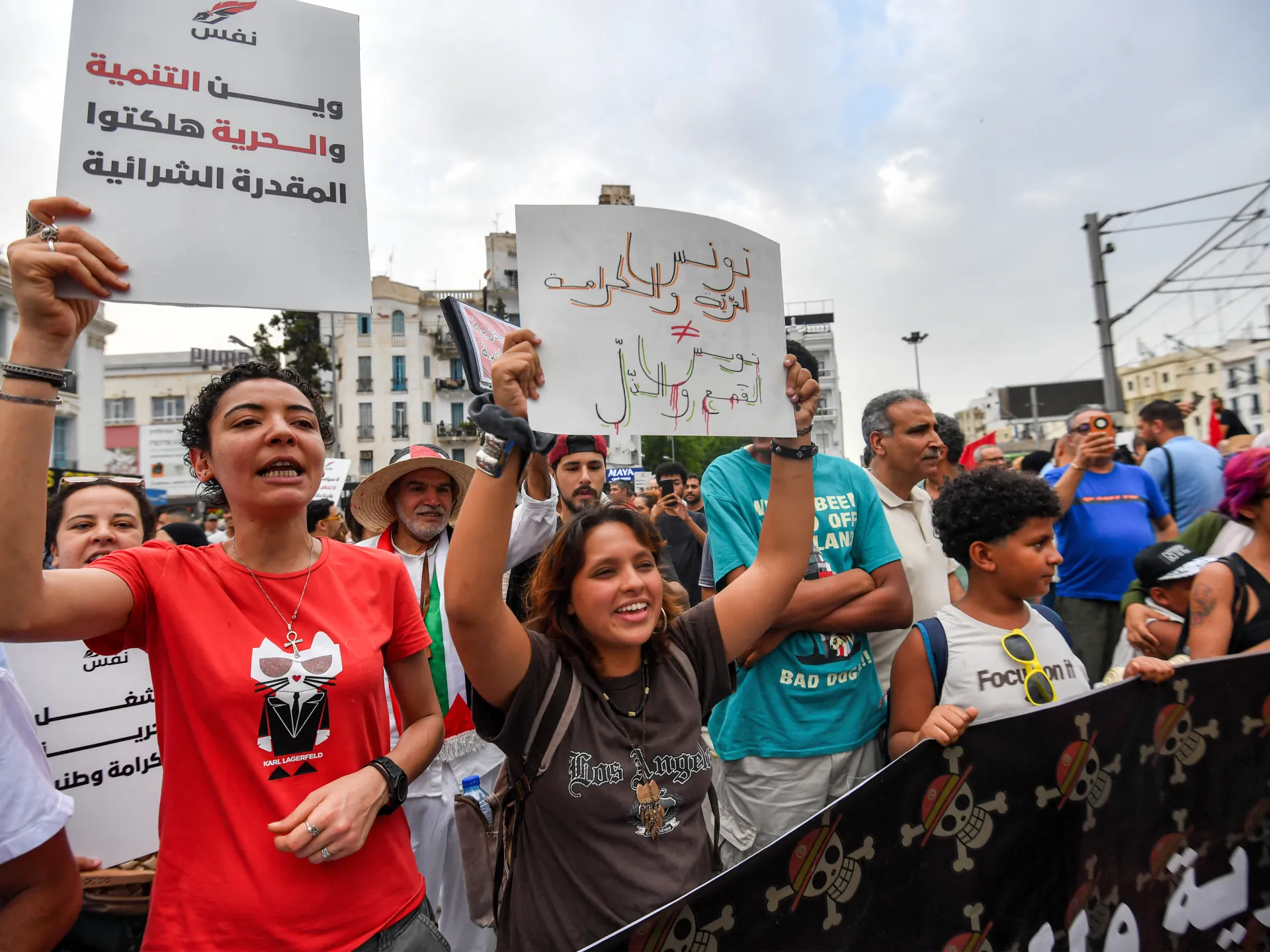
Thousands of demonstrators marched down Habib Bourguiba Avenue in central Tunis on Saturday to mark the fifth anniversary of President Kais Saied’s declaration of a national emergency and the suspension of parliament. Organised by the Nafas umbrella initiative, the gathering brought together opposition parties and independent figures to demand Saied’s resignation, citing worsening living conditions, democratic backsliding, and state mismanagement.
The march began at Republic Square and proceeded towards the Municipal Theatre, with participants carrying flags and banners rejecting the national programme Saied refers to as the “July 25 path”. Demonstrators revived the slogan “the people want the fall of the regime,” a chant that echoed through the same avenue during the 2011 democratic revolution that ousted longtime President Zine El Abidine Ben Ali.
Wissam Sghaier, spokesman for the Jomhouri opposition party, described the protest as an effort to hold the system of governance to account. He stated that participants were prepared to face fabricated legal cases and imprisonment, asserting that “prisons are welcome” if it means challenging the current administration. “We are not tenants of this country, we are its owners,” Sghaier told Al Jazeera, adding that the opposition was ready to pay the price for their stance.
Imed al-Khamiri, spokesman for the Ennahdha party, reported that the protests had expanded beyond traditional opposition circles to include a wider segment of citizens disaffected by the government’s handling of economic issues and public services. The gathering highlighted a broad coalition united by dissatisfaction with the current political trajectory and the consolidation of executive power.
Since instituting rule by decree five years ago, Saied has dismissed dozens of judges, criminalised the spread of media deemed false by the government, and arrested major opposition figures. Among those imprisoned is former parliament speaker Rached Ghannouchi, who was sentenced in June to life imprisonment plus 30 years on “terrorism” charges. Ghannouchi, 85, reportedly suffers from deteriorating health and recently fainted due to prison conditions.
Saied maintains that his measures are necessary to combat corruption and prevent chaos, denying that rights and freedoms have been curtailed. However, opponents argue that the emergency powers have reversed the democratic transition established after 2011, which included Tunisia’s first free elections and a constitution guaranteeing political liberties.