Tunisia orders Human Rights League to halt operations for one month
The Human Rights League (LTDH) joins other prominent organisations suspended in recent months as President Kais Saied's consolidation of power continues to draw sharp warnings from rights advocates.
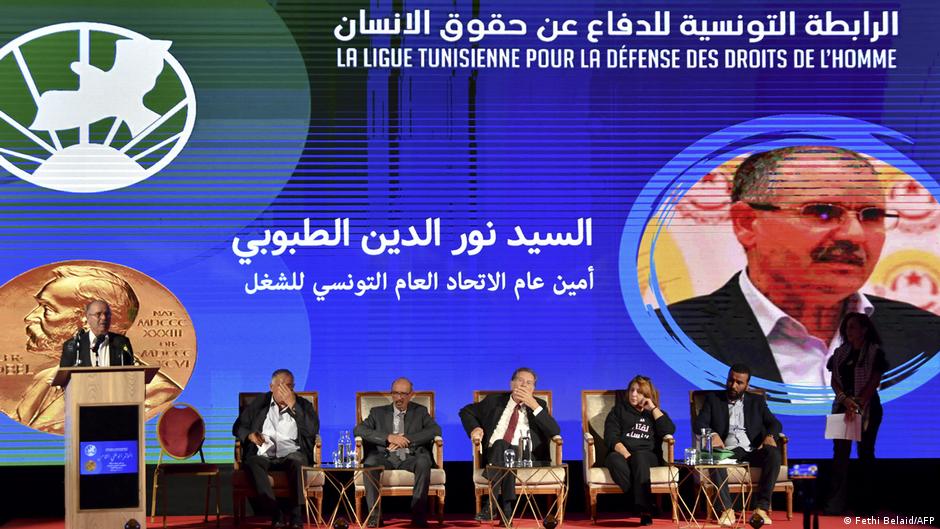
Tunisian authorities have issued an order requiring the Human Rights League (LTDH) to cease all activities for a period of one month. The directive targets one of the oldest rights organisations in the Arab world, founded in 1976, and a co-winner of the 2015 Nobel Peace Prize. This latest restriction marks a significant escalation in the government's engagement with civil society, occurring as critics warn that the country is sliding toward authoritarian rule.
The suspension comes against a backdrop of growing tension between the state and independent voices. The LTDH, which was part of the Tunisian National Dialogue Quartet awarded the Nobel Peace Prize, has long been an outspoken critic of President Kais Saied. Prior to this ban, the group had already been barred from visiting prisons in several cities to inspect conditions for several months. The organisation condemned the new order as part of a wider pattern of increasingly systematic curbs on civil society and on free and independent voices.
President Kais Saied, who has ruled by decree since suspending parliament in 2021, has denied accusations that he is seeking to establish a dictatorship. In response to the mounting pressure, the President stated that freedoms are guaranteed in Tunisia and that no one is above the law, regardless of their name or position. He has frequently cited foreign funding, which rights groups sometimes rely on, as a threat to the nation, using this justification to restrict the operations of organisations linked to external donors.
The move against the LTDH is not isolated but rather part of a broader trend of restrictions on the opposition, media, and civil society organisations. In October, Tunisian authorities suspended several other prominent groups, including the Democratic Women and the Economic and Social Rights Forum. These actions have drawn sharp criticism from rights advocates who argue that Tunisia, once hailed as a democratic success story following the Arab Spring fifteen years ago, is now under fire for its growing limitations on political space.
While the government maintains that its actions are necessary to protect national interests, the suspension of such a high-profile institution signals a deepening of the political climate. The LTDH's decision to halt operations highlights the increasing difficulty for independent bodies to function within the current governance framework. As the country navigates this period of consolidation, the gap between official narratives of guaranteed freedoms and the reality of restricted civil society continues to widen.