Trump Orders Cut to US-South Korea Drills, Sparking Alliance Alarm
President cites costs and North Korean overtures, but experts warn move undermines deterrence and benefits adversaries like Russia and China
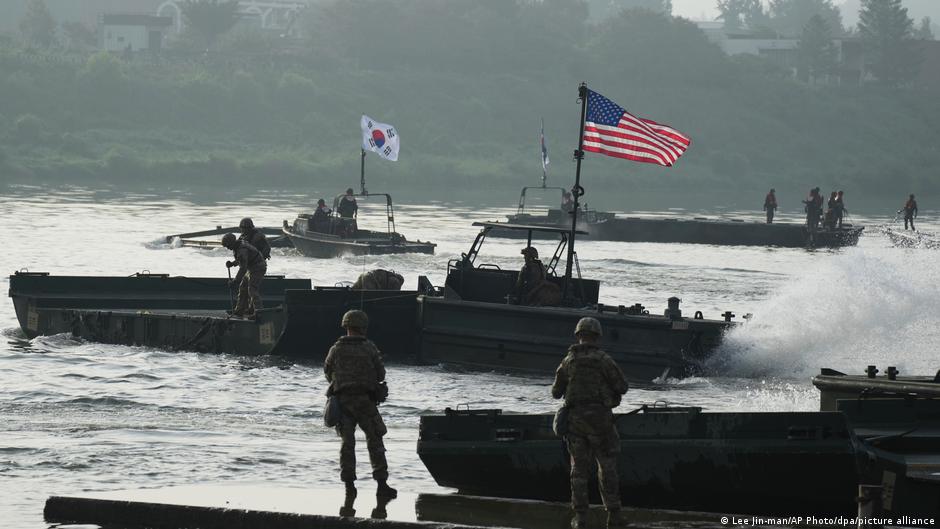
US President Donald Trump has instructed the Pentagon to substantially reduce American participation in the annual 'Ulchi Freedom Shield' joint military exercises with South Korea, a move that has triggered significant alarm among Seoul officials, US lawmakers, and security experts. The decision, announced without prior consultation with the South Korean government, comes as the 11-day drills commenced on 17 August 2026.
Trump cited the high cost of the exercises and a desire to avoid sending a "hostile" signal to North Korea as primary reasons for the reduction. In social media posts and subsequent remarks at the White House, the US president claimed that North Korean leader Kim Jong Un had responded positively to overtures for renewed dialogue, describing Pyongyang as "unthreatening and respectful." This assessment stands in stark contrast to recent North Korean missile tests and threats of a "new level" of nuclear deterrence, which state media had labelled the planned drills as a "rehearsal for an invasion war."
The White House also hinted that South Korea’s refusal to assist in the "denuclearisation" of Iran influenced the decision to scale back the exercises. This geopolitical linkage has drawn sharp rebuke from critics who argue the move rewards North Korean aggression and potentially benefits adversaries. Senator Thom Tillis, a Republican, warned that reducing the drill scope could enable North Korea to send more troops to support Russia in Ukraine, thereby benefiting Moscow.
South Korean President Lee Jae Myung responded by affirming Seoul’s commitment to the alliance. In a regular Cabinet meeting, Lee called for bolstering South Korea’s own forces to maintain a firm combined defence posture, stating that building national strength would enhance the country’s value as an ally. His office expressed optimism for "meaningful dialogue" between Trump and Kim, though it emphasised continued close coordination on joint training.
Security experts and US lawmakers have pushed back against the policy shift. Senator Jack Reed, the top Democrat on the Senate Armed Services Committee, described the order as an "inane, haphazard decision" that punishes a key ally without cause. Leif-Eric Easley of Ewha Womans University noted that the cost savings are marginal while the diplomatic benefits are doubtful, warning that the move could damage alliance coordination and slow South Korea’s assumption of greater defence responsibility.
David Silbey of Cornell University pointed out that the reduction may reflect inevitable US military overstretch, with naval forces already being redirected to the Middle East amid the Iran conflict. He cautioned that the move signals a continuing neglect of American allies in the region, including Japan, Taiwan, and the Philippines, all of whom are monitoring developments closely.
Analyst Kim Sang-woo highlighted that Kim Jong Un is currently in a strong position due to a deepening alliance with Russia and outreach from China, reducing his need for US engagement. While the Lee government maintains a policy of seeking friendly relations with the North, Kim Sang-woo noted that ordinary South Koreans remain deeply concerned, citing a fundamental lack of trust in Pyongyang’s belligerent posture.