Trump holds private talks with anti-Zionist rabbis amid Israeli conscription protests
The US President met with six religious leaders during ongoing demonstrations over military service, a move occurring against a backdrop of recent US withdrawals from key international bodies.
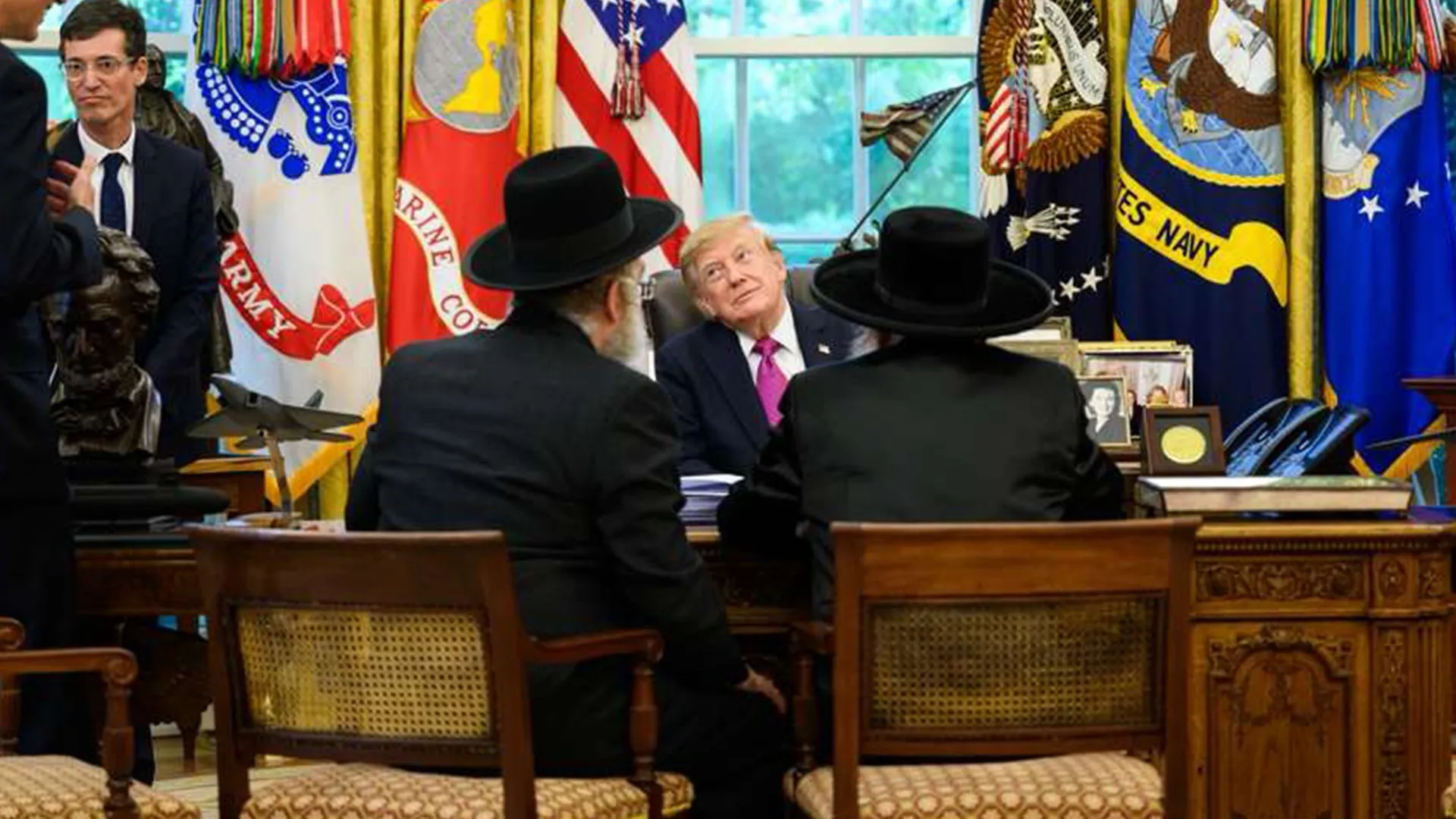
US President Donald Trump has held a private meeting with six anti-Zionist rabbis, according to Al Jazeera Global News. The engagement took place during a period of active public protest concerning Israeli military conscription.
The specific nature of the discussions was not detailed in the initial reporting, but the timing of the meeting suggests a direct intersection between domestic political pressure in Israel and US diplomatic engagement. The term "anti-Zionist" was used to describe the group of rabbis, a political descriptor that highlights the specific ideological stance of the attendees.
This development occurs within a broader landscape of shifting US international relations. The Trump administration has recently withdrawn from several prominent international bodies, including the UN Human Rights Council, UNESCO, and the World Health Organization. These moves have been part of a wider pattern of the United States ending participation in numerous UN agencies and halting funding to organisations such as UNRWA.
Geopolitical tensions have also escalated in other regions. A 60-day ceasefire between the US and Iran collapsed in June 2026, adding to the complexity of the current diplomatic environment. Simultaneously, trade disputes are intensifying, with the US announcing a 50 per cent tariff increase on Canadian auto imports effective from 1 January 2027.
The private nature of the meeting with the rabbis contrasts with the public visibility of the conscription protests. While the causal link between the two events is implied by the timing, the administration has not explicitly stated whether the meeting was a direct response to the demonstrations.
For observers of US foreign policy, the engagement represents a nuanced approach to the Israeli-Palestinian conflict. It signals a willingness to engage with diverse religious and political voices within Israel, even as the administration pursues a more insular strategy in multilateral forums.