Trump claims Iran truce deal 'quite close' as diplomatic tensions persist
Diplomatic progress is reported alongside broader geopolitical friction, including a recent US-China summit and disagreements at the Non-Proliferation Treaty review conference.
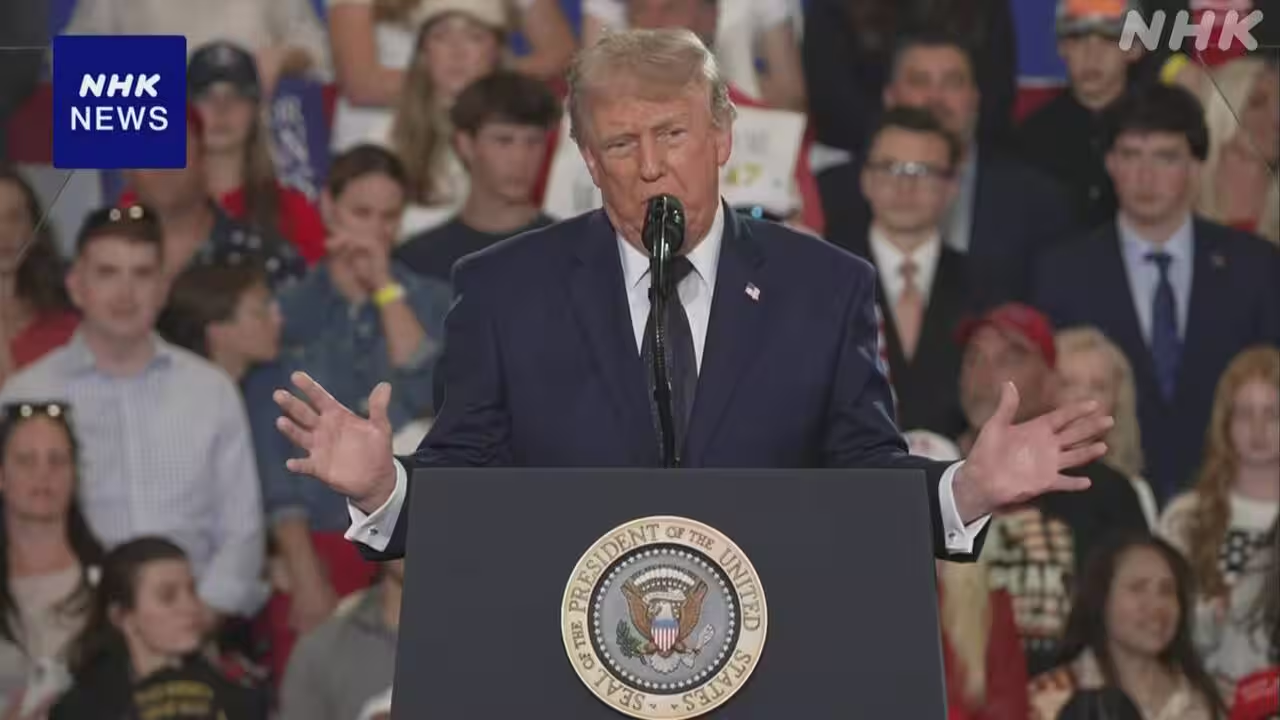
US President Donald Trump stated on 24 May 2026 that negotiations to conclude hostilities with Iran are nearing the final stages of an agreement. The President described the potential accord as being "quite close," a subjective assessment that signals diplomatic momentum while leaving the specific terms of the deal undisclosed.
Both Iran and Pakistan, acting as the mediator in the talks, have acknowledged that progress has been made towards a settlement. However, officials from both nations confirmed that differences of opinion remain, indicating that the agreement is not yet finalised and may still face significant obstacles before implementation.
The diplomatic developments occur against a backdrop of heightened regional tension, particularly concerning the Strait of Hormuz. The United States and Iran have been engaged in broader geopolitical discussions, with the Strait of Hormuz identified as a key area of concern in recent diplomatic engagements. Qatar is also noted as a relevant party in the regional context, though its specific role in the mediation process has not been fully detailed in immediate reports.
This push for an agreement follows a period of significant diplomatic friction. At the recent Non-Proliferation Treaty (NPT) review conference, a final document could not be adopted due to disagreements between the US and Iran. The inability to reach consensus at the NPT conference highlights the deep-seated policy differences that continue to complicate bilateral relations.
The timing of Trump’s comments coincides with a recent US-China summit in Beijing, attended by President Trump and Chinese President Xi Jinping. The summit addressed trade, artificial intelligence, and tensions regarding the Strait of Hormuz, featuring prominent business figures such as Elon Musk, Tim Cook, and Jensen Huang. This summit marks the first visit by an American president to China since 2017, underscoring the complex web of international relations in which the Iran negotiations are situated.
Amidst these external diplomatic efforts, the Trump administration has also experienced internal shifts, with the resignation of the US Director of National Intelligence marking the fourth cabinet change under the current administration. Meanwhile, APEC trade ministers have been discussing the maintenance of supply chain stability for energy and other goods, reflecting ongoing concerns about economic resilience in the region.
The exact timeline for the finalisation of the Iran agreement remains unclear. While the acknowledgment of progress by Tehran and Islamabad suggests a potential breakthrough, the persistence of unresolved differences means that the path to a lasting settlement remains uncertain.