Trump asserts US has secured deal for Greenland security control
The US President claims Washington has reached an agreement with Denmark to establish a significant military footprint in the Arctic territory.
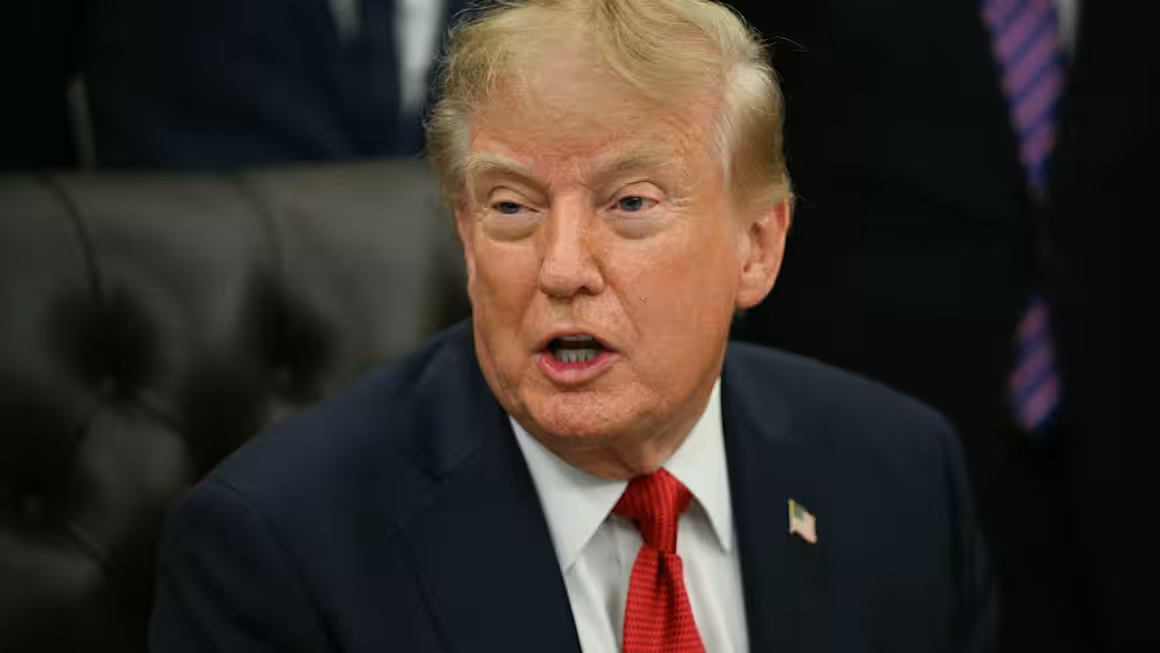
US President Donald Trump has stated that Washington has reached an agreement with Denmark regarding the control of security in Greenland. The announcement, reported by the Financial Times, suggests a shift in the geopolitical landscape of the Arctic region, with the United States set to expand its strategic footprint.
According to the President, the deal involves the development of a large military presence in the territory. While the specific details of the arrangement remain sparse, the claim implies a significant degree of operational influence for the US in an area traditionally under Danish sovereignty.
The statement has introduced a layer of uncertainty for investors and policy watchers, as the nature of the "control" ceded by Denmark has not been fully defined. It is currently unclear whether the agreement pertains to administrative authority, sovereignty, or purely military jurisdiction.
Independent verification from Danish or Greenlandic authorities is yet to be confirmed. Until formal statements are issued by Copenhagen or Nuuk, the deal remains a unilateral claim by the White House. This lack of immediate corroboration mirrors the administration’s broader pattern of assertive policy moves, both domestic and foreign.
The development occurs against a backdrop of domestic economic tensions, where the Federal Reserve recently raised interest rates for the first time since 2023. Despite Trump’s demands for lower rates and previous threats regarding trade, the central bank’s decision has been interpreted by markets as a signal of determination to tame inflation.
For institutions monitoring global risk, the Greenland announcement adds a new variable to the equation. While distinct from the monetary policy debate, it underscores the administration’s willingness to pursue aggressive strategic interests, potentially reshaping alliances and security commitments in the North Atlantic.