Trump and Xi seek stability through economic pragmatism after Beijing summit
A three-day meeting in Beijing has seen the US and China agree to a business-first approach, though divergent official readouts highlight lingering tensions over Taiwan and Iran.
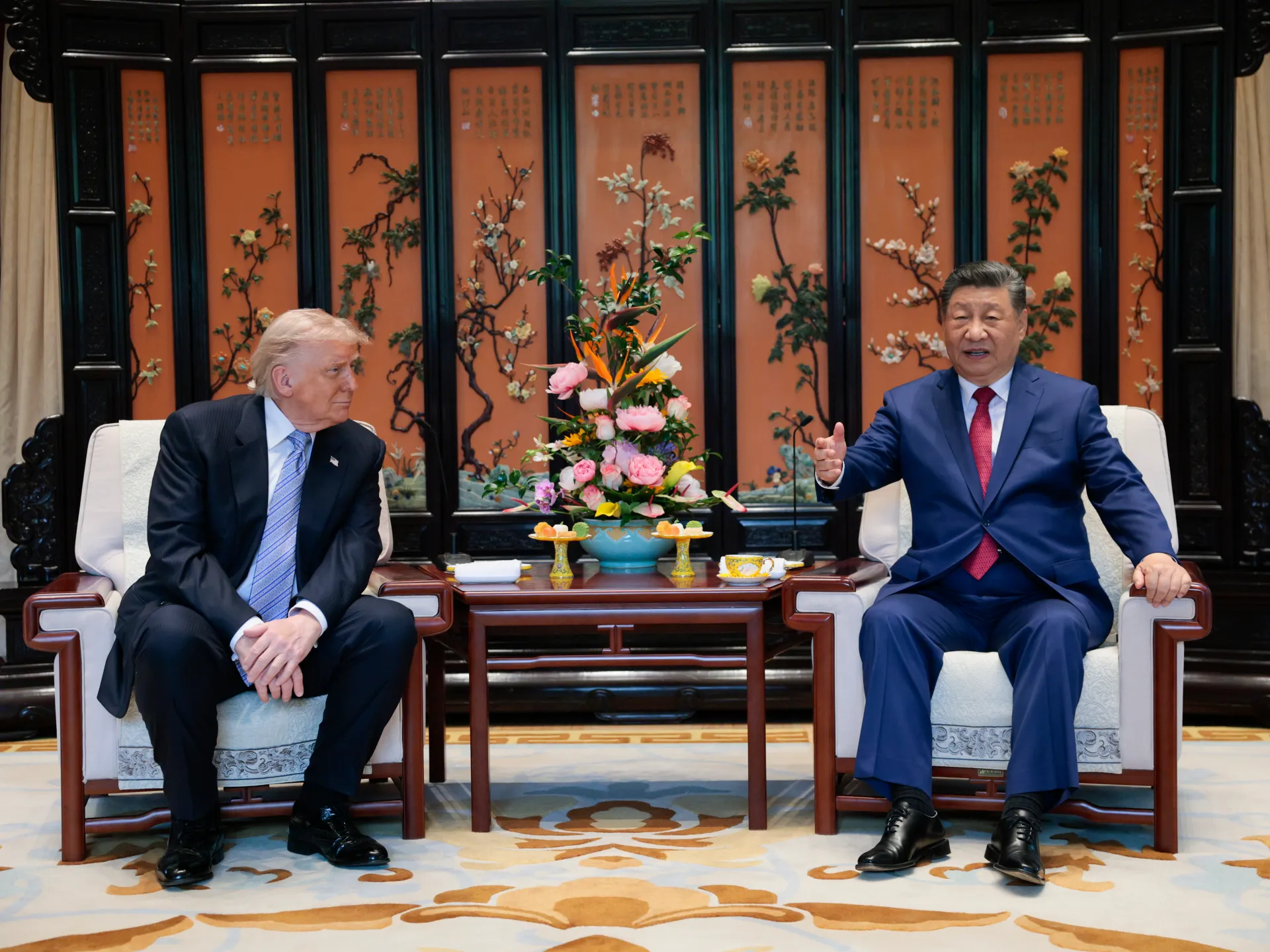
US President Donald Trump and Chinese President Xi Jinping concluded a three-day summit in Beijing, signalling a shift toward a pragmatic, business-focused bilateral relationship. Accompanied by a delegation of prominent American CEOs, including leaders from Apple, Nvidia, BlackRock, and Goldman Sachs, the leaders agreed to enhance economic cooperation, expand market access for US businesses, and increase Chinese investment in US industries. The meeting follows a one-year pause in the US-China trade war, agreed upon six months prior in South Korea, and marks an attempt to stabilise relations after the turmoil of 2025.
Trump praised Xi personally during the talks, stating it was an honour to be his friend and predicting the relationship would be better than ever before. The White House readout emphasised these areas of common ground, focusing on commercial engagement. However, the statement notably omitted any reference to China’s export controls on rare earths, a critical sector where Beijing controls nearly the entire global industry and has recently restricted US access. This omission contrasts with the significant leverage China holds in the tech, defence, and energy supply chains.
On geopolitical matters, the leaders reached a consensus on energy security, agreeing that the Strait of Hormuz must remain open to support the free flow of energy. The strait has been effectively shuttered since the US and Israel launched a war on Iran on February 28. Xi expressed opposition to the militarisation of the strait and indicated interest in purchasing more American oil to reduce China’s dependence on the route. Both nations also agreed that Iran must never possess a nuclear weapon, a stance included in the US readout but entirely absent from the Chinese statement.
Despite the economic overtures, significant differences remain unresolved. Xi described Taiwan as the most important issue in the bilateral relationship, warning that mishandling it could lead to clashes and conflicts. While Beijing objects to Washington’s military support for the island, neither official readout confirmed whether Trump discussed Taiwan or a reportedly pending $14bn arms deal. Analysts suggest the leaders are attempting to compartmentalise relations, separating economic cooperation from geopolitical tensions to manage differences without triggering escalation.
William Yang, a senior analyst at the Crisis Group, noted that Trump’s approach reflects a strategy to focus on areas where both sides can work together without being overshadowed by broader strategic concerns. Xi similarly spoke of establishing a framework for constructive strategic stability, aiming to minimise competition and manage differences. Chucheng Feng of Hutong Research added that for Beijing, the primary goal is to set guardrails against uncontrolled escalations, viewing item-by-item disagreements as secondary to maintaining a stable floor for the relationship.