Trump and Xi conclude Beijing summit with institutional framework but no trade deals
While President Donald Trump described the two-day talks as historic, Beijing withheld confirmation of major purchases, citing mutual benefit and ongoing work on investment mechanisms.
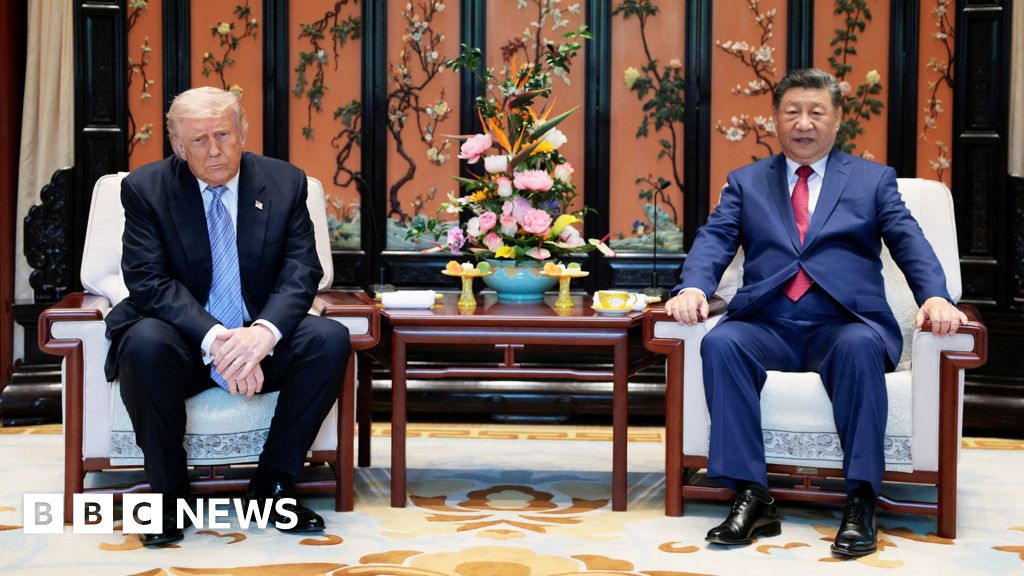
US President Donald Trump and Chinese leader Xi Jinping concluded a two-day summit in Beijing on Friday, describing the discussions as historic and very successful. Despite the presence of a high-profile business delegation and warm rhetoric, no significant trade deals or breakthroughs were officially announced. The leaders agreed to establish a Board of Trade to manage bilateral relations without reopening tariff negotiations, aiming to provide a structured mechanism for future economic engagement.
President Trump claimed in a Fox News interview that China had agreed to invest hundreds of billions of dollars and purchase 200 Boeing aircraft, marking the first such purchase of US-made commercial jets in nearly a decade. However, Beijing’s foreign ministry spokesperson Guo Jiakun did not confirm these specific figures. Instead, he emphasised that the essence of China-US economic relations is mutual benefit and win-win cooperation, stating that both sides must work to implement the important consensus reached by the leaders.
The summit, which began on 14 May 2026, featured prominent technology executives including Tesla CEO Elon Musk and Nvidia CEO Jensen Huang. Huang’s inclusion, despite not being on the original delegation, fuelled speculation that artificial intelligence and semiconductor access were significant agenda items, although AI was not explicitly mentioned in the summit readouts. US Trade Representative Jamieson Greer noted that while export controls were not a major talking point, Beijing continues to push for greater access to advanced technology.
A key focus of the talks was the tariff truce agreed in October, which suspended steep tariff increases on Chinese goods and eased restrictions on rare earth exports. US Trade Representative Jamieson Greer told Bloomberg TV that a decision on extending the truce beyond its November expiry has not yet been made. US Treasury Secretary Scott Bessent expressed expectation of progress on a mechanism to support future investment, though officials cautioned that significant work remains before such announcements can be finalised.
The leaders also addressed the conflict in Iran and the stability of the Strait of Hormuz. Trump stated he would like China’s help in encouraging Iran to stabilise flows through the critical energy artery. The Chinese foreign ministry called for a comprehensive ceasefire and the reopening of shipping lanes but provided no specific commitments. Xi Jinping also reiterated that the Taiwan issue remains the most sensitive point in bilateral relations, warning that mishandling it could lead to conflict.
Trump invited Xi to the White House in September for a second summit, with discussions expected to continue ahead of that meeting. While the visit was defined by ceremonial gestures, including a rare tour of the Zhongnanhai compound, the lack of confirmed commercial deals leaves the economic outlook for both nations uncertain as they navigate ongoing geopolitical and trade tensions.