Transatlantic Strategy Under Stress: US Troop Withdrawal and German Naval Move Deepen Diplomatic Rift
Chancellor Merz and President Trump clash over Iran war strategy as Germany dispatches vessels to the Mediterranean and reduces its US troop footprint
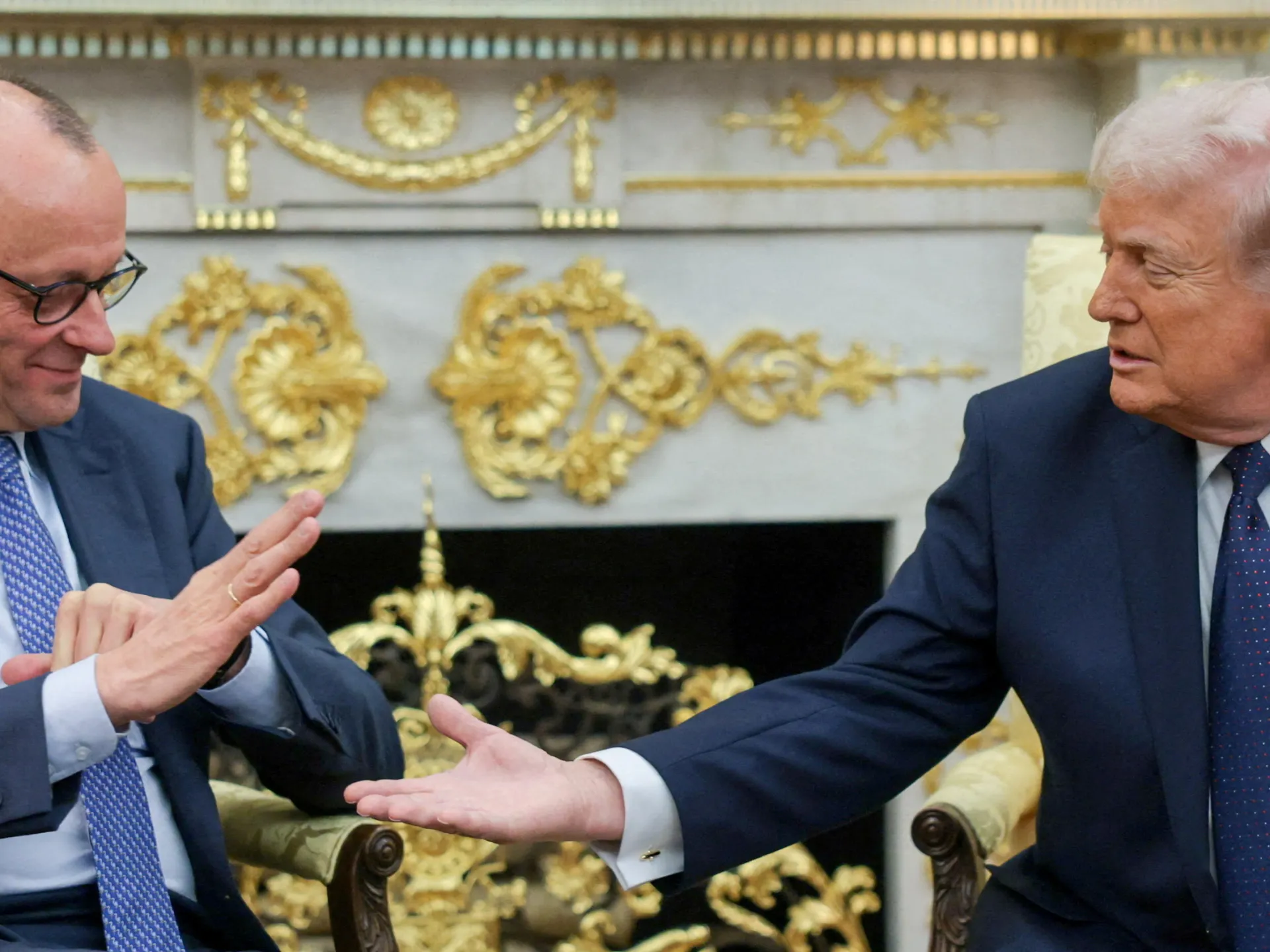
Diplomatic tensions between the United States and Germany have intensified into a broader debate regarding transatlantic strategy, centred on the ongoing conflict in Iran. The rift widened following the announcement of a US troop withdrawal from Germany, which includes the redeployment of a Stryker Brigade from Vilseck, Bavaria. Concurrently, Berlin has moved to assert military independence by dispatching a minesweeper and a replenishment vessel to the Mediterranean to operate near the Strait of Hormuz. While the German government states these vessels will only engage in clearance operations after hostilities end, the move has drawn sharp criticism from opposition politicians who argue that providing military infrastructure to the US campaign renders Germany's claim of neutrality dishonest.
Chancellor Friedrich Merz accused the US of having "no strategy" and being "humiliated" by the failure to reach a deal with Tehran. This diplomatic friction coincides with the US decision to return troop numbers to pre-2022 levels, a move that Republican politicians Roger Wicker and Mike Rogers have expressed "grave concern" over. Although the defence ministry described the withdrawal as "foreseeable", the operational implications remain significant as the alliance navigates a period of realignment in security and defence policy.
Regarding the stationing of long-range weapons, the German defence ministry clarified that there has been no "definitive cancellation" by the US of plans to deploy a battalion with long-range Tomahawk cruise missiles and SM-6 missiles. A spokesperson for the Chancellor's Office emphasised the importance of implementing the development of German systems in Europe, noting that the US had planned episodic deployments of these capabilities starting in 2026. Despite the uncertainty surrounding the missile deployment, the pause in the US active escort mission through the Strait of Hormuz has already impacted regional security postures.
The domestic political fallout in Berlin is mounting as the government faces pressure over the conflict. Lea Reisner, a Left Party politician and member of the parliamentary foreign affairs committee, condemned Germany's role as "dishonesty" rather than neutrality. She argued that a state providing military infrastructure and logistical support cannot credibly describe itself as neutral, particularly while German facilities near Stuttgart have been used to transmit coded communications to Iran. Conversely, CDU lawmaker Jurgen Hardt stated that a combat mission in the Strait of Hormuz is "out of the question" without an international mandate.
Germany aims to field the strongest conventional army on the continent by 2039, with defence spending rising by approximately 130 per cent since 2021. This strategic shift comes as European nations accelerate rearmament and push for greater military independence, a trend accelerated by the Trump administration's National Defense Strategy of January 2026. Analysts suggest that the failure to station the Tomahawks in Germany is particularly consequential, given that Europe does not yet produce cruise missiles with comparable range to those currently planned for deployment.
While other European countries have moved to restrict their involvement in US attacks, Germany has taken no such step, leaving the alliance undergoing what Chancellor Merz described as a "stress test". As the Iranian Foreign Minister arrives in Beijing for initial talks ahead of discussions with Washington, the divergence in transatlantic strategy highlights the growing complexity of managing shared security interests in an era of shifting global priorities.