Tokyo pivots Indo-Pacific strategy toward Southeast Asia with new economic and security framework
Leaders sign six cooperation agreements targeting $60 billion in bilateral trade by 2030 and a $10 billion pledge to secure regional supply chains
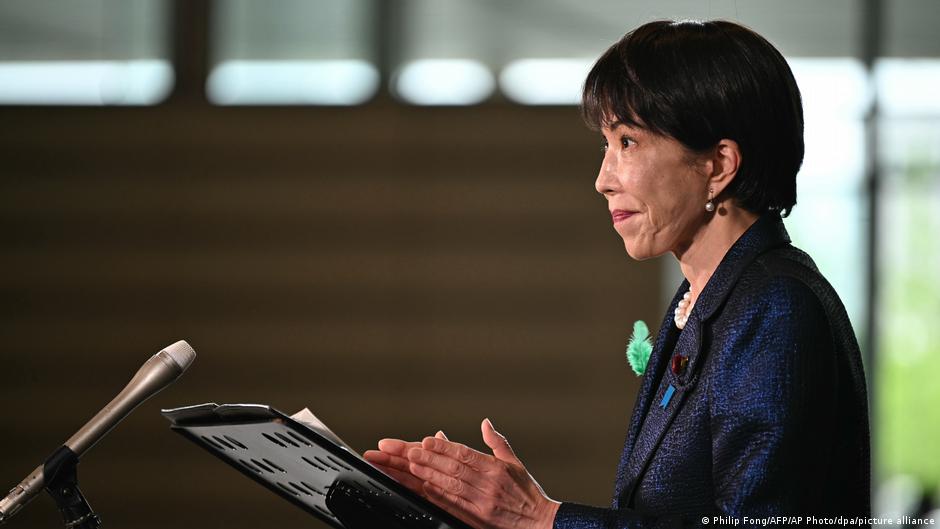
Japanese Prime Minister Sanae Takaichi has announced an updated Free and Open Indo-Pacific (FOIP) strategy during a state visit to Vietnam, marking a distinct shift in Tokyo's regional approach. The new framework moves away from the decade-old emphasis on diplomatic principles to prioritise practical measures regarding energy security, critical minerals, and ASEAN resilience. This reorientation explicitly aims to diversify supply chains away from Chinese dominance, focusing on sectors such as rare earths, semiconductors, and artificial intelligence.
The strategic pivot was formalised through the signing of six cooperation agreements between Takaichi and her Vietnamese counterpart, Le Minh Hung. These deals cover disaster-resilient rural development, climate-resilient infrastructure, and satellite data exchange, alongside targets to raise bilateral trade to $60 billion by 2030 and annual Japanese investment to $5 billion. The agreement also includes a commitment to expand the Comprehensive and Progressive Agreement for Trans-Pacific Partnership, a trade pact Japan helped preserve after the United States withdrew from its earlier version.
A significant component of the updated policy is a $10 billion pledge to assist Asian partners in securing energy resources and strengthening supply chains amid disruptions caused by conflict in the Middle East. Tokyo stated the first project under this initiative would involve support for crude oil procurement for Vietnam's Nghi Son Refinery and Petrochemical Complex. This financial commitment underscores the government's focus on practical economic infrastructure for the age of AI and data, rather than abstract ideological alignment.
The announcement follows a wider diplomatic push by the Japanese administration, with Takaichi attending recent summits in Malaysia and South Korea. Concurrently, Defence Minister Shinjiro Koizumi is visiting Indonesia and the Philippines, while Japan recently signed a new defence agreement with Indonesia. This flurry of activity coincides with the Cabinet's recent revision of defence export rules to end long-standing restrictions on lethal arms exports to approved partner countries.
Experts suggest the updated FOIP strategy reflects a recognition that the strategic environment has changed dramatically since the concept was launched in 2016. With China becoming more assertive and the United States' commitment to the region appearing less predictable, the policy now emphasises helping countries acquire resilience and the capacity to make their own decisions. The approach places greater emphasis on strategic autonomy, acknowledging that Southeast Asian states do not wish to choose between major powers but seek options and leverage.
The shift towards practical measures includes a focus on data security, cyber threats, and the recycling of critical minerals through advanced technology. By framing the strategy around building resilience and economic infrastructure, the government aims to keep the FOIP initiative relevant for ASEAN partners who value options and partners over strict ideological alignment. This marks a departure from previous iterations, which were heavily focused on value-oriented language regarding freedom and the rule of law.