Tiangong Ultra breaks Usain Bolt’s 100m record at World Humanoid Robot Games
A Beijing-developed robot clocked 9.39 seconds in a preliminary heat, surpassing the human world record, though physical instability remains a hurdle for commercial adoption.
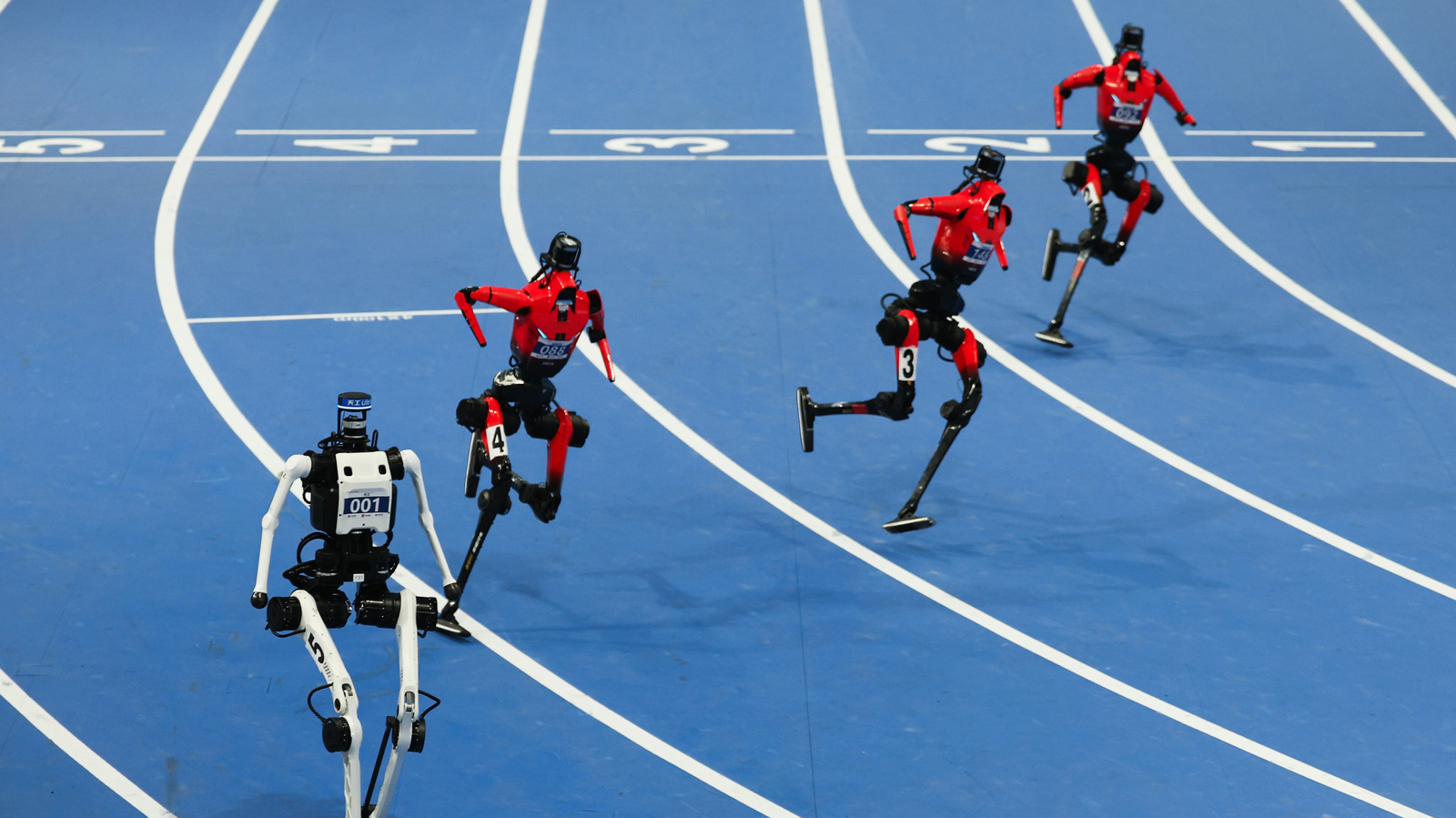
The Tiangong Ultra humanoid robot has completed the 100-metre dash in 9.39 seconds, a time that surpasses Usain Bolt’s human world record of 9.58 seconds set in 2009. The feat was achieved during a preliminary heat at the second annual World Humanoid Robot Games, which commenced in Beijing on 22 August and will run until 26 August.
Developed by the Beijing Humanoid Robot Innovation Center, the Tiangong Ultra outpaced its closest competitor, Honor’s Lightning robot, which finished the sprint in 9.47 seconds. The result marks a significant leap in performance for the category, particularly when compared to the inaugural games last year, where the Tiangong Ultra recorded a time of 21.5 seconds to win the event.
Despite the impressive speed metrics, the machines are not yet considered ready for commercial deployment. Observers noted that the robots faced physical difficulties, with some crashing into pads or requiring human assistance to leave the course after their sprints. This suggests that while raw speed has improved, stability and durability remain key areas for development.
The competition in Beijing extends beyond track and field, hosting thousands of robot participants in events including soccer, table tennis, and boxing. In a separate half-marathon event designed to showcase the capabilities of Chinese companies, Honor’s Lightning robot secured the gold medal with a finish time of 50 minutes and 26 seconds.
This half-marathon time also surpassed another human record, further highlighting the rapid advancement of humanoid robotics in endurance events. The games serve as a critical benchmark for the industry, demonstrating both the potential and the current limitations of these machines in high-stakes environments.
As the event continues, the focus remains on whether these robots can translate their track performance into reliable, commercial-grade applications. The current results indicate a promising trajectory, but the physical mishaps observed on the course suggest that the path to widespread utility is still evolving.