Theban tomb study reveals shift from individual coffins to dense reuse of burial sites
Analysis of tomb 209 in the Theban necropolis shows a transition from elaborate individual interments to vertical superposition of bodies, prioritising ritual integrity over burial containers.
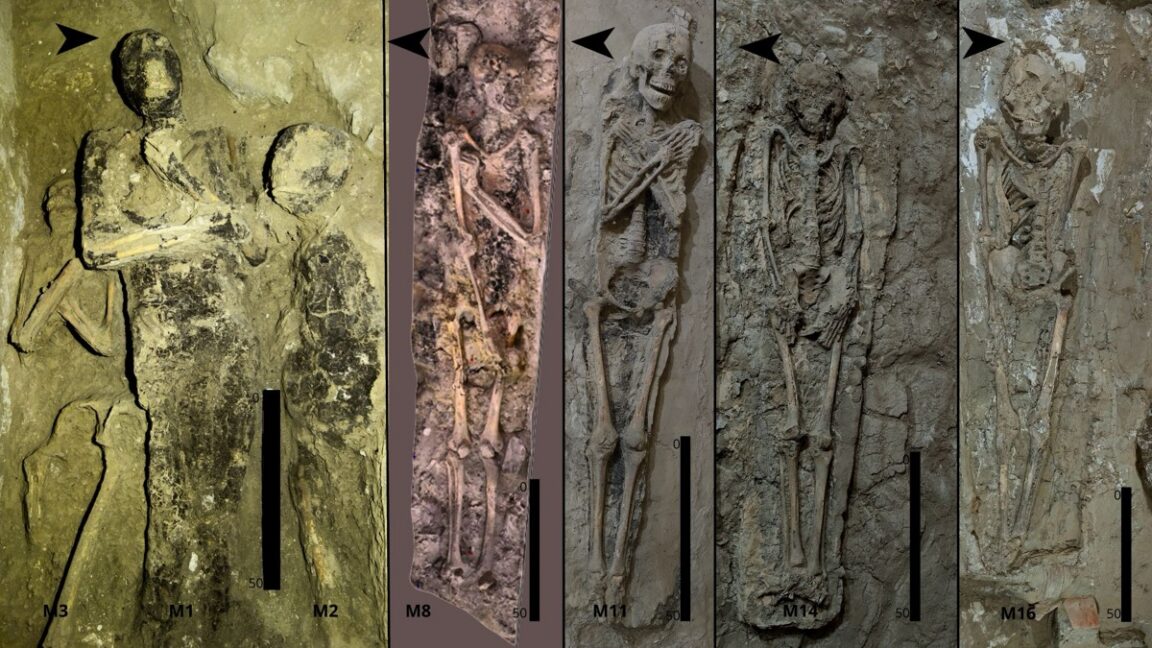
A study published in Frontiers in Environmental Archaeology has analysed tomb 209 in Egypt’s Theban necropolis, documenting a significant evolution in burial practices from the early 25th Dynasty through the Ptolemaic period. The research highlights a transition from individual interments within elaborate coffins to the reuse of existing sites for later mummy interments, resulting in increased burial density and the vertical superposition of remains.
The tomb, originally belonging to Nisemro, a high official of Nubian origin, was situated within an active drainage channel of the Wadi Hatasun. This location exposed the site to repeated flash flooding, creating a complex archaeological record. Researchers utilised an integrated archaeothanatological approach, combining osteological analysis with data on body positioning, coffin usage, and stratigraphic relationships to reconstruct the chronological sequence of burials.
Excavation of Side Chamber 3, a largely undisturbed secondary area, yielded 16 mummified individuals comprising 1,444 bones, alongside one mummified dog. Another chamber contained the disarticulated remains of at least four additional people, consisting of 1,775 bone fragments. Some remains showed evidence of exposure to extreme heat, with temperatures reaching 550 degrees Celsius, particularly affecting crania and lower limbs.
The earliest burials, dating to the 25th Dynasty, featured high-status individuals interred in coffins with funerary nets, amulets, and costly items such as Phoenician amphorae. Over time, the practice shifted towards placing new bodies in areas already occupied by previous mummies. This led to a decline in coffin use, with later burials lacking containers but including upright jars indicative of specific rituals not present in earlier phases.
Co-author Jared Carballo-Perez of the University of La Laguna described the findings as demonstrating a spatial logic that preserved funerary memory. He noted that new depositions were adapted to the presence of previous bodies, indicating neither chaotic accumulation nor a loss of ritual. The authors argue this reflects a broader reconfiguration of the Egyptian funerary system, where ritual integrity and body preservation took precedence over the burial container itself.
The study also observed changes in limb positioning, with earlier burials showing arms stretched out, while later ones had arms folded in. Material culture became increasingly dispersed in later stages, with artifacts such as incense cups and beads found less consistently. The researchers concluded that the tomb functioned as a dynamic mortuary environment, where the progressive transformation of space and materiality constructed funerary continuity over time.
This pattern aligns with broader trends in the Theban necropolis, where prior research indicates approximately 80 percent of tombs from the first millennium BCE contain remains from different time periods in shared spaces. The growing density of deposits reduced the capacity of coffins to organise burial space, shifting the focus towards the symbolic efficacy of the ritual and the integrity of the body.