The institutional fallout of Beckham’s 1998 dismissal
A retrospective on the systemic media pressure and policy shifts surrounding David Beckham’s red card against Argentina
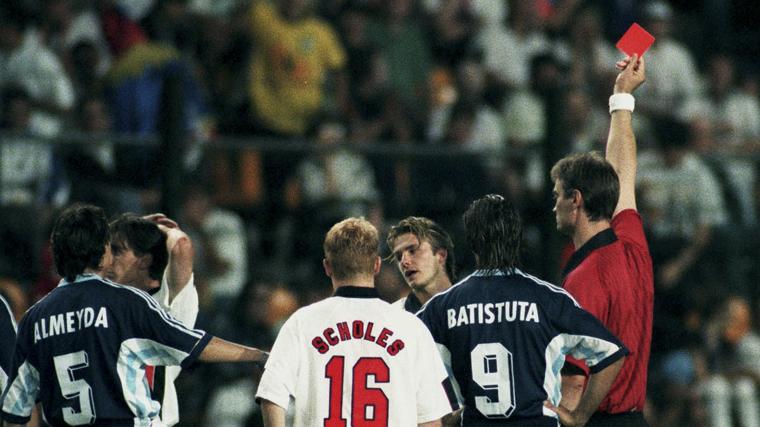
The 1998 World Cup Round of 16 encounter between England and Argentina remains a defining moment in international football governance, primarily due to the institutional and public reaction to David Beckham’s dismissal. The incident, which occurred in the 48th minute, saw Beckham sent off after tripping Diego Simeone following a late challenge. While the on-field decision ended England’s tournament campaign with a 4-3 penalty shootout loss, the broader implications for player welfare and media accountability were only fully realised in the years that followed.
At the time, England entered the tournament as a primary contender under manager Glenn Hoddle, featuring key assets such as Alan Shearer, Michael Owen, and the 23-year-old Beckham. Argentina, boasting talents like Javier Zanetti and Gabriel Batistuta, had already established a psychological edge following the 1986 World Cup. The match itself was highly animated, ending 2-2 after extra time, but the focus quickly shifted from the sporting outcome to the disciplinary consequences for Beckham, who was widely regarded as one of the world’s premier players.
The immediate aftermath revealed a stark disconnect between official sporting bodies and the tabloid press. The Mirror’s headline, “Ten heroic Lions, one stupid boy,” encapsulated the hostile narrative that dominated English media. This institutionalised criticism resulted in significant public hostility, with Beckham facing booing at Manchester United matches and effigies being burned in his honour. The pressure placed on the player highlighted a lack of protective frameworks for athletes facing intense media scrutiny during high-stakes international competitions.
Diego Simeone’s later admission that he deceived the referee added a layer of complexity to the official record. Speaking to The Guardian, Simeone stated, “I happened to be the intelligent one. Beckham did nothing to me,” acknowledging his role in the incident. This revelation, however, did little to mitigate the immediate institutional damage inflicted on Beckham’s reputation or the subsequent mental health toll, which his wife Victoria described as leaving him “clinically depressed” and “in pieces.”
Beckham’s eventual rehabilitation, including helping Manchester United secure the treble in the 1998-99 season and scoring the winning penalty against Argentina in a 2001 qualifier, demonstrated resilience. However, the 1998 incident serves as a critical case study in the need for better support systems for athletes. As noted in the 2023 documentary *Beckham*, the event “changed my life,” underscoring the long-term impact of institutional failure in managing media narratives and player welfare.