Hamas pledges Gaza technocrat transfer as ceasefire stalls and trust evaporates
While the National Committee for the Administration of Gaza remains in Cairo, Gazans report that Hamas-run services persist, underscoring a deepening crisis of governance and public confidence.
Hamas has announced plans to dissolve its civilian administration in Gaza and transfer control to a transitional body of independent technocrats, a move framed as part of a US-brokered peace deal. The designated National Committee for the Administration of Gaza (NCAG), established under the 2025 peace plan and supervised by the Board of Peace, was intended to assume governance duties. However, the committee’s fifteen members remain in Cairo, awaiting Israeli permission to enter the territory to begin their work.
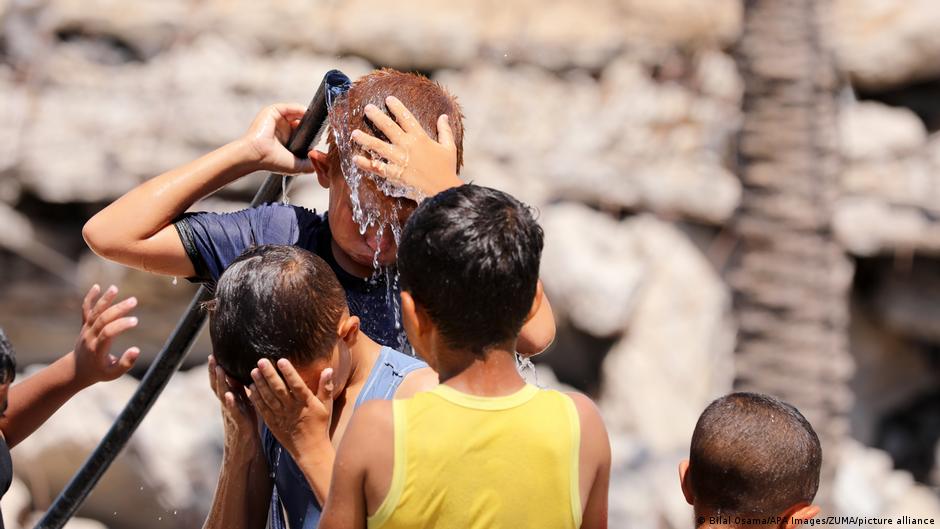
Despite the political announcement, on-the-ground reports indicate that Hamas-run institutions continue to operate without interruption. Eyad Saleh, a 19-year-old student in Gaza City, reported that government offices for services such as university diploma replacements are still staffed by the same employees who worked before the war. Saleh noted that residents have no alternative but to rely on these existing structures, which remain the sole providers of essential services.
Similarly, Na'ama Saeed, a 39-year-old resident with chronic illness, stated that the Ministry of Health remains the only entity authorised to issue medical referrals. She emphasised that if an alternative official body existed, residents would not hesitate to utilise it. Ghassan Khatib, a lecturer at Bir Zeit University, confirmed that no new body has stepped in to take over administration, leaving the status quo intact.
The ceasefire process, initiated in October 2025, has stalled, with both sides blaming each other for violations. According to the Hamas-run Health Ministry, over 1,000 Palestinians have been killed in Israeli attacks since the ceasefire began. Hamas has refused to disarm until Israel halts attacks and withdraws from Gaza, while Israeli Prime Minister Benjamin Netanyahu describes the current military presence as a buffer zone. Hamas retains security control over approximately 30% of the territory.
Tensions have also escalated regarding humanitarian aid. UN Deputy Special Coordinator Ramiz Alakbarov condemned Hamas for allegedly obstructing humanitarian operations, citing an incident where armed men forced their way into a food distribution point in Jabalia. Hamas has denied these allegations, describing the transfer of civilian administration as an attempt to break a deadlock following unsuccessful negotiations in Cairo with mediator Nikolay Mladenov.
Public confidence in political leadership has deteriorated significantly. Polls indicate that 60% of Gazans no longer trust any political factions, including Hamas and Fatah. This growing disillusionment is reflected in the words of Saleh, who expressed that Gaza deserves better than any political faction, citing their collective failure. Without a clear political solution, the daily lives of Gazans remain constrained by military escalation and administrative uncertainty.