The Arsenal Aesthetic: How a Premier League Title Rewired Fan Fashion
As hundreds of thousands gathered for Arsenal’s first Premier League win in 22 years, the parade revealed a shift from traditional match-day wear to bespoke, global, and sustainable expressions of fandom.
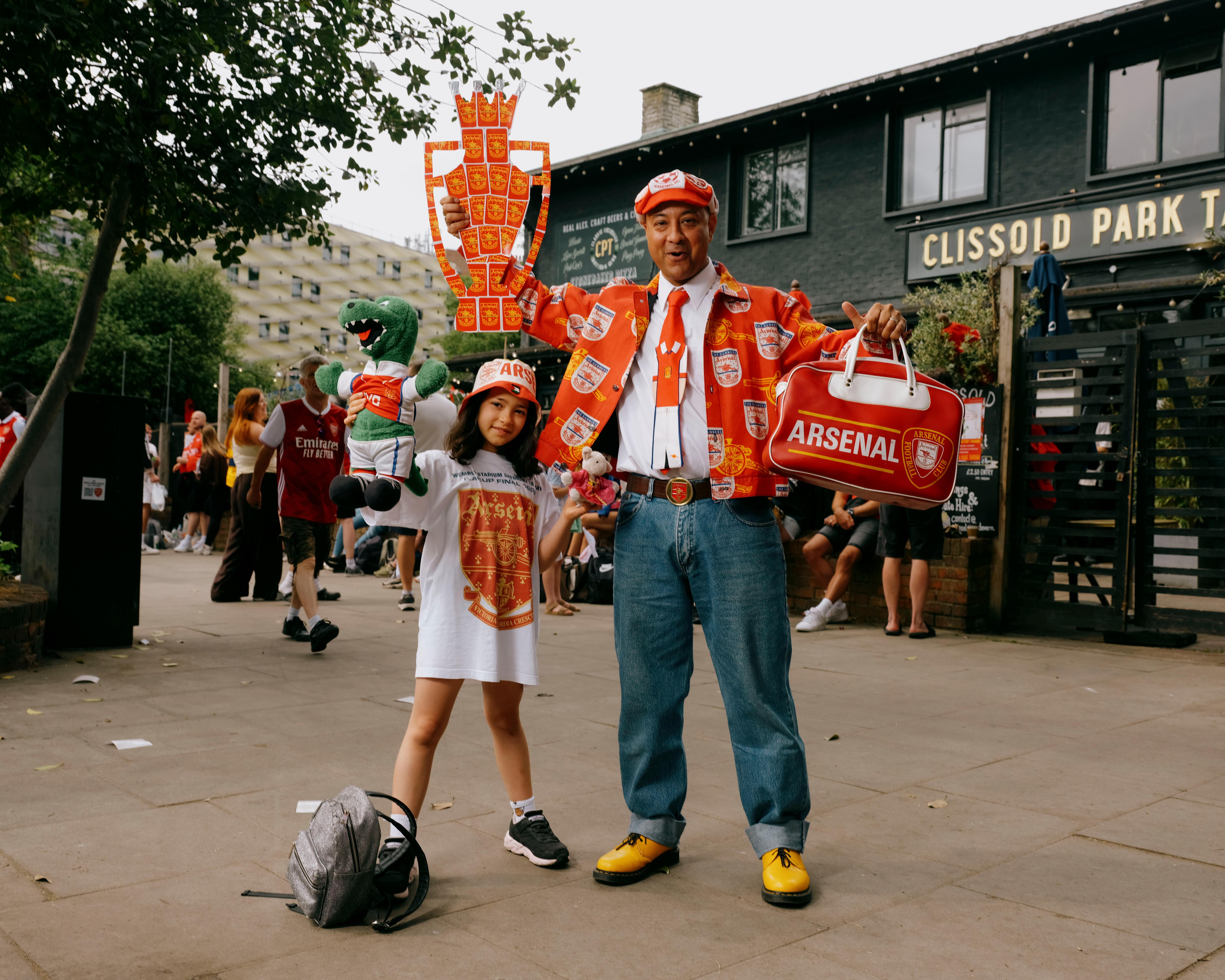
Hundreds of thousands of supporters converged on north London to celebrate Arsenal’s first Premier League title in 22 years, transforming a five-mile route through Islington into a showcase of diverse fan expression. The event, marked by red smoke and party horns, highlighted a departure from standard kit-wearing, with attendees displaying everything from vintage memorabilia and bespoke streetwear to sustainable custom designs. The atmosphere reflected a club at the centre of a cultural moment, where allegiance is demonstrated through individual style rather than uniform conformity.
Shane, known online as Highbury Gunner JVC, exemplified the depth of collector culture, wearing a bespoke jacket made from curtains by designer Joe Brim, finished with an Arsenal medallion and watch. A collector since the 1970s, he paired the jacket with yellow customised Dr Martens and a club tie, noting that his home is like a museum of the club’s history. His ensemble underscored how long-term fans utilise fashion to archive their personal connection to the team, blending high-concept design with deep-rooted loyalty.
International fans brought global perspectives to the Islington streets, illustrating the club’s worldwide reach. Liv Samuels flew in from Orlando, Florida, wearing an Arsenal badge-embossed Hawaiian shirt and trainers bearing his nickname, while Hallin Li arrived from South Korea with a red tote bag from the Arsenal Women’s collaboration with accessories brand Good Squish. Collin Ross Robinson travelled from Atlanta, Georgia, donning a maroon 2006 away kit from the club’s final season at Highbury, challenging the retro status of the 1991-1993 bruised banana shirt as the preferred vintage piece.
Sustainable and DIY aesthetics played a prominent role, with designers repurposing club merchandise into high-fashion statements. Aman Bains wore a zero-waste custom dress from Bristol-based Bees Knees Apparel, fusing a cotton dress with an Arsenal shirt, while Pooja Popat and Nisha Mistry wore asymmetrical dresses designed by British-Pakistani textile artist Hadiyah Hussain, cut from the 2025/26 home and away kits. These pieces, ranging from £50 to £100, signal a growing market for fans seeking to align their environmental values with their sporting passions.
The parade also highlighted the blurring lines between sportswear and women’s streetwear. Charlotte Andrews wore an AWFC classic offset one-shoulder top from The Armoury, suggesting room for disruption in women’s football fashion, while Aurelie Rivkah embraced the trend of cropped training jerseys paired with jorts. Meanwhile, Nicole Gooden wore a Jamaica-patterned shirt released in 2022 as a tribute to island fans, linking club identity to cultural heritage. Long-term residents like Tommy Fallon identified Alan Sunderland’s 1979 red home kit as the pinnacle of style, bridging generations through shared aesthetic appreciation.
The event occurred against a backdrop of broader cultural adoption, including New York Mayor Zohran Mamdani wearing a custom-made Arsenal thobe during Eid al-Adha celebrations. This global resonance allowed parade-goers to experiment with custom get-ups, from Robbie John Allchin’s badge-adorned raving jacket to various interpretations of club colours. The result was a celebration where everyone supported the same thing but expressed it in their own way, reflecting the club’s spirit of roots and culture.