The V&A’s inclusive runway: Sinéad O’Dwyer challenges fashion’s thin ideal
Irish designer Sinéad O’Dwyer presents a size-inclusive show at London’s Victoria and Albert Museum, highlighting the industry’s stall on body diversity amid rising costs and cultural shifts.
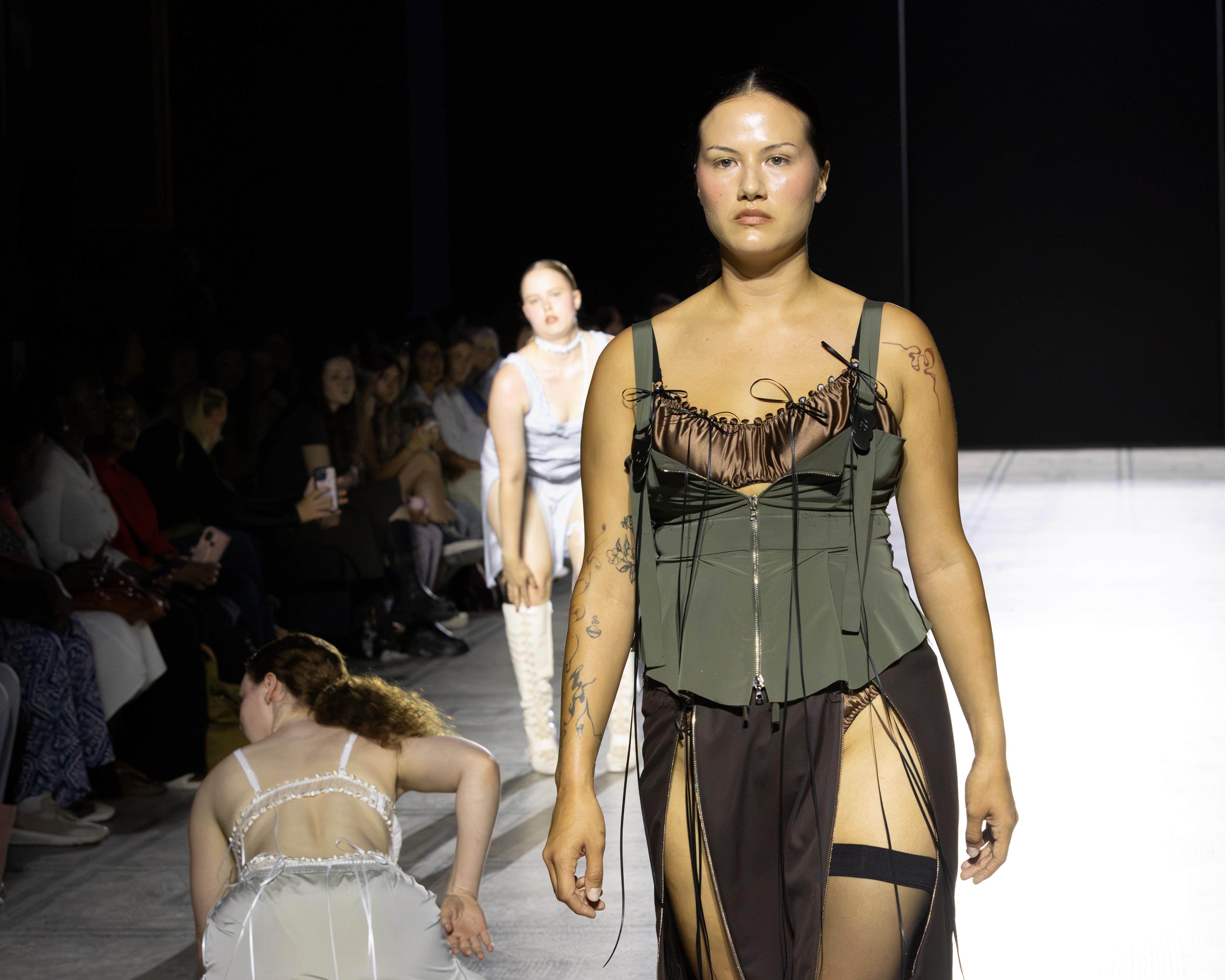
Irish designer Sinéad O’Dwyer presented her Fashion in Motion show at London’s Victoria and Albert Museum on 24 July 2026, offering a stark contrast to the wider fashion industry’s recent stagnation on inclusivity. The event, open to the public with tickets priced at £5, featured models of all shapes and sizes, including plus-size performers. O’Dwyer, who designs to a size 18, used the platform to highlight body diversity, arguing that the luxury fashion system often excludes diverse body types while her brand ethos prioritises accessibility.
The runway cast wore everything from underwear to skirt suits and sequins, accompanied by interpretive dance performances from the band Jeanie and The White Boys. This approach stands in opposition to recent data from the Size Inclusivity Report, which found that 97.6% of models for the autumn/winter 2026 season were straight-size. O’Dwyer, who has won awards and celebrity fans including Cardi B and Björk, has pushed against fashion’s insistence on a thin body type since appearing at London Fashion Week in 2021.
Industry experts have cited manufacturing costs, cultural shifts towards thinness, and the impact of weight-loss drugs as significant barriers to change. Stylist Jeanie Annan-Lewin noted that the current rollback to thinness coincides with broader societal trends, while Vogue Business features director Lucy Maguire pointed to the influence of GLP-1 weight-loss drugs in bringing back a reverence for thinness. Casting director Emma Matell, who worked on O’Dwyer’s show, observed that the industry appears to be returning to a desire for women to take up less space, both metaphorically and physically.
Despite these challenges, London remains the only major fashion week that consistently features more body diversity, although straight-size models still accounted for 92.7% of casts in the most recent season. Designers Mark Fast and Chopova Lowena are expected to present more diverse ranges at their upcoming September shows. Matell described the effort required to maintain inclusivity as a rebellious spirit, stating that being inclusive is the most punk thing a designer can do in the current climate.
The commercial implications of this exclusion are significant. A Vogue Business survey indicated that 34% of mid-size and 68% of plus-size respondents felt alienated by the fashion industry due to their size, compared to 17% of straight-size respondents. Annan-Lewin argued that the industry’s assumption that plus-size consumers lack disposable income is a missed opportunity, while young attendees Elenor Rowland and Orla McEvoy, aged 14, described the V&A event as their first interaction with fashion, noting the positive impact of diverse representation.