Tesla’s Cybercab makes quiet road debut in Austin
The driverless two-seater launched without a livestream or its CEO, marking a pivotal moment for Tesla’s push to redefine itself as an artificial intelligence and robotics company.
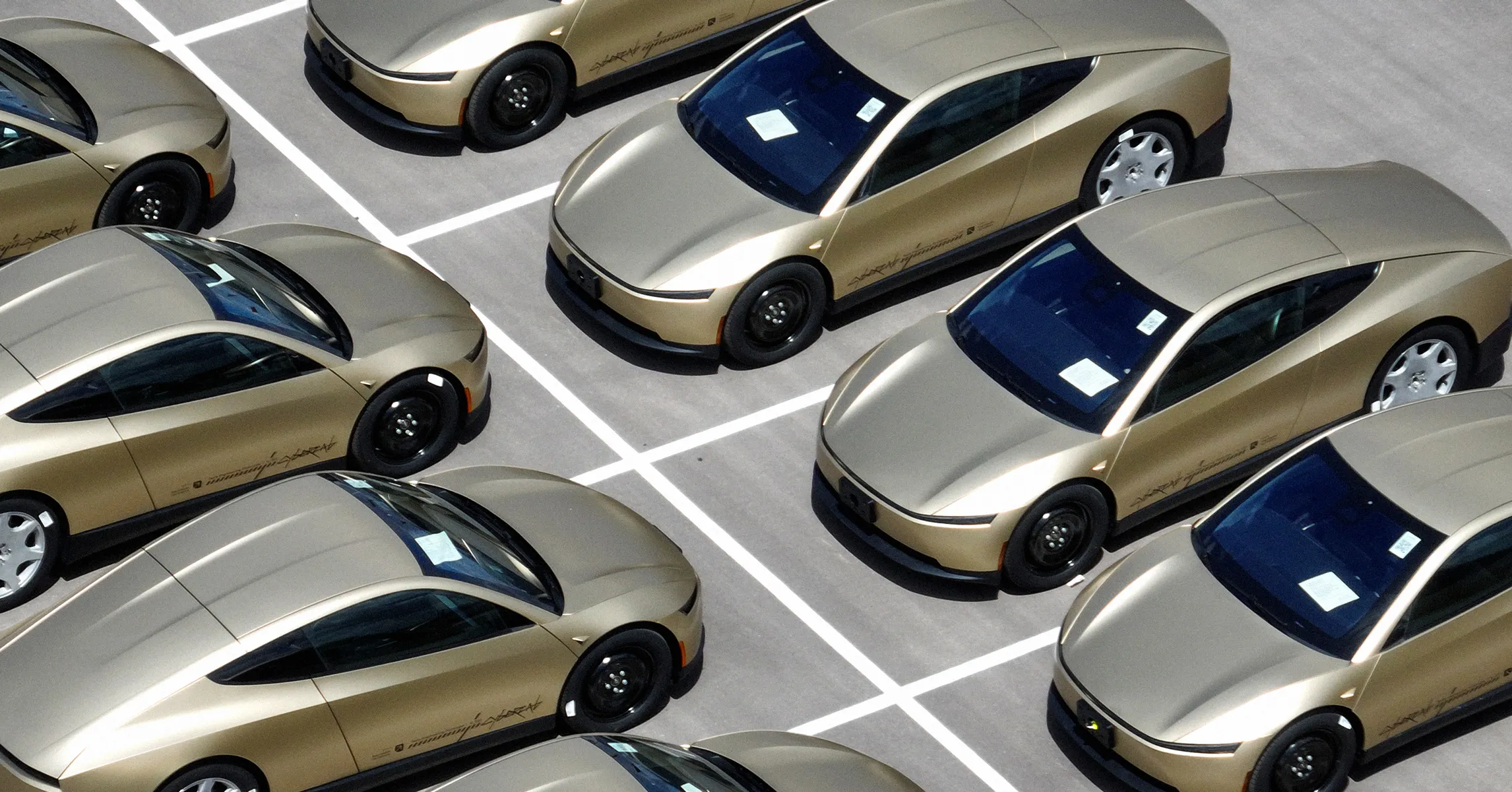
Tesla has marked the road debut of its driverless Cybercab with an invite-only event in Austin, Texas, a notably subdued affair that lacked a livestream and the presence of CEO Elon Musk. Attendees, primarily online influencers, were restricted from posting until hours after the event began, a departure from the high-octane launches typically associated with the company. The matte gold two-seater, which lacks traditional steering wheels or pedals, is now registered on Tesla’s robotaxi network in Texas, with 45 vehicles currently on the road.
The launch underscores Tesla’s strategic pivot away from its identity as a traditional carmaker. Executives have argued that investors should view the company as an artificial intelligence and robotics firm, a repositioning that Musk believes could eventually make Tesla worth three times more than Nvidia. However, the path to this valuation has been marked by missed milestones, including previous predictions about autonomous mileage and fleet size that have yet to materialise.
At the event, Tesla AI software head Ashok Elluswamy announced that the company’s vehicles have collectively travelled one million miles without human drivers. While a significant achievement, this metric trails competitor Waymo, which reached the same milestone in January 2023 and now operates in 14 US metropolitan areas. Tesla’s robotaxi service, which launched in Austin in June of last year using Model Y vehicles with human safety monitors, has since expanded to several cities in Texas and Florida, with permits in Arizona and Nevada.
Regulatory hurdles remain a key challenge for the Cybercab’s wider deployment. Federal safety rules generally require vehicles to have steering wheels and brake pedals, a requirement that purpose-built autonomous vehicles like the Cybercab do not meet. A spokesperson for the National Highway Traffic Safety Administration (NHTSA) stated that Tesla has not yet filed an exemption request, though the agency is in contact with the company. This follows the US government’s recent first-ever exemption for Amazon subsidiary Zoox’s autonomous vehicles.
Tesla’s ambitions extend beyond its own ride-hail network. The company plans to sell the vehicles directly to customers and allow individuals to operate their own fleets, with an interest form recently posted on its website. Engineering director Silvio Brugada highlighted the vehicle’s 22-inch centre console screen, noting that passengers can use the space for entertainment or productivity while wearing seatbelts. The company argues that its reliance on inexpensive cameras, rather than the more costly radar and lidar setups used by competitors, will give it a cost advantage in the self-driving race.