Tehran signals leadership unity as Washington presses on Strait of Hormuz demands
While officials deny reports of resignation talks, analysts suggest strategic decision-making remains concentrated within the Supreme Leader's office and the IRGC
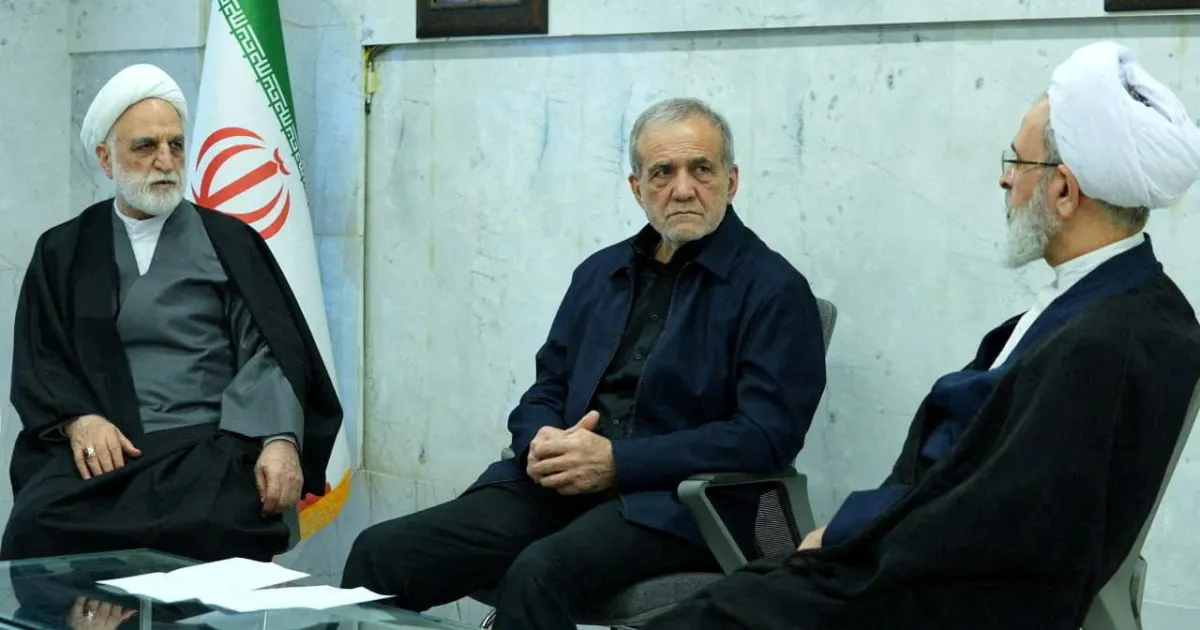
Iranian President Masoud Pezeshkian has announced a positive two-and-a-half-hour meeting with Supreme Leader Mojtaba Khamenei, a move designed to demonstrate unity within the Islamic Republic's leadership structure. This development comes as direct counter-narrative to United States pressure led by President Donald Trump and Secretary of State Marco Rubio, who have publicly alleged fractures in Tehran's command structure during the ongoing disputes over the Strait of Hormuz.
State-linked media outlets have characterised the interaction as fostering an atmosphere of trust, calm, and direct, unmediated dialogue. The announcement marks the first reported audience between the two leaders since Khamenei's selection two months ago following the assassination of his father and other senior figures. Officials emphasise that the meeting was intended to quell speculation regarding internal divisions within the highest echelons of power.
Despite the official narrative of solidarity, reports have surfaced suggesting President Pezeshkian previously considered resigning due to disagreements with Islamic Revolutionary Guard Corps (IRGC) commanders over military operations. The president's chief of staff and deputy for communications have since issued statements to the ISNA news agency denying these claims, labelling them as fake news and asserting that decisions are made in joint meetings rather than through unilateral action.
Analysts note that while the Supreme National Security Council remains a formal institution, strategic decision-making regarding the Strait of Hormuz likely flows through smaller, informal connections linked to the Supreme Leader's office and senior security officials. Experts suggest the IRGC and its security apparatus hold an entrenched central role in strategic deterrence, viewing control of the strait as a core national interest rather than merely an economic chokepoint.
The United States has imposed a naval blockade on Iranian ports and demanded a full halt to uranium enrichment and the extraction of buried highly-enriched uranium. Iranian authorities have expressed deep distrust of these demands, viewing them as capitulation, though some analysts suggest temporary compromises on the nuclear programme may occur to avoid economic strangulation.
Foreign Minister Abbas Araghchi has travelled to China and maintained close contact with Russia, emphasising that Iran's international position has improved post-war. Meanwhile, regional US allies including Bahrain, the UAE, Qatar, and Kuwait are reportedly suffering from the naval blockade, which has negatively impacted their economies alongside Iran.