Takashi administration adopts first 'Fundamental Policy' for economic transformation
The Takashi administration has approved its inaugural 'Fundamental Policy' (Kotatsu Hoshin), marking a strategic shift in economic management aimed at achieving a 'strong economy' through sustained fiscal discipline.
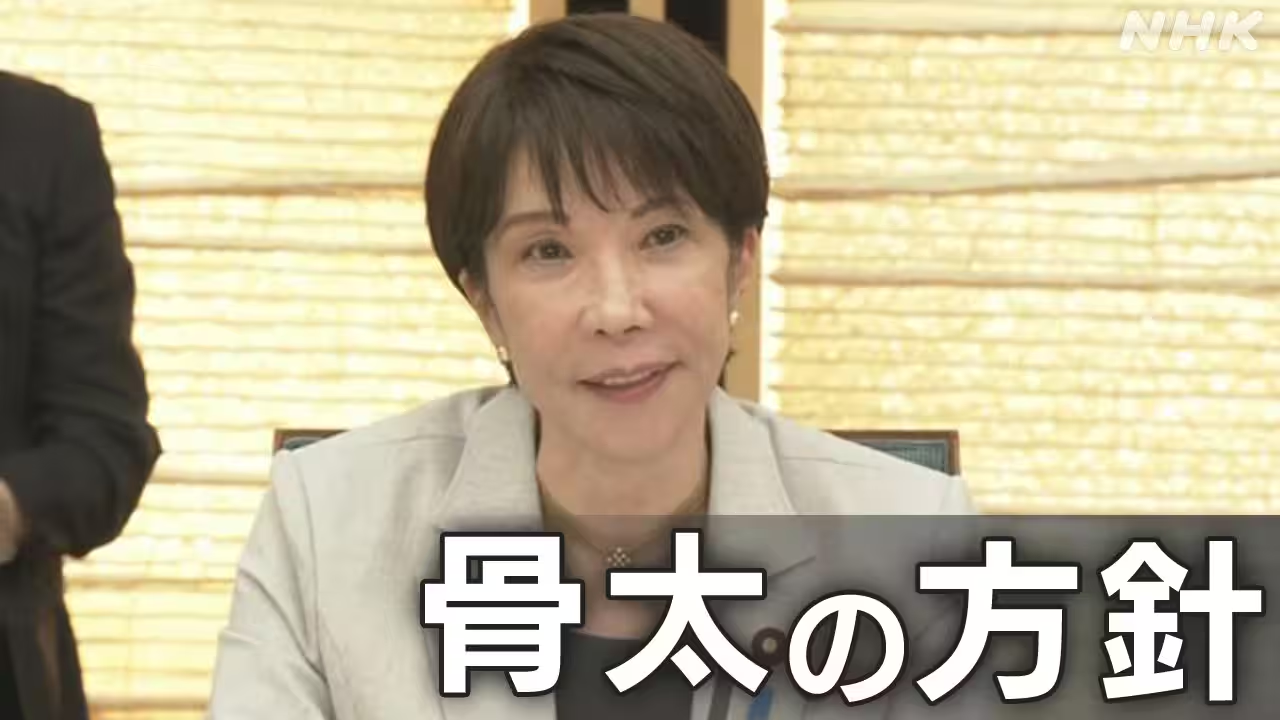
On 21 July 2026, the Takashi administration formally approved its first 'Fundamental Policy' (Kotatsu Hoshin), establishing a new framework for economic and fiscal management. According to NHK News Japan, the government outlined a fundamental shift in its approach to realising a 'strong economy', moving away from the previous reliance on single-year fiscal targets.
The policy sets a specific fiscal objective to stabilise the debt-to-GDP ratio. This marks a departure from short-term metrics, with the administration focusing instead on long-term fiscal sustainability. The document serves as the primary directive for the government’s economic priorities following the recent February general election.
The adoption of this policy coincides with a broader suite of legislative and administrative activities. The government is currently pursuing a 'sub-capital' bill, with legislative efforts ongoing. Additionally, officials have indicated that a decision regarding food consumption tax reductions is expected to be finalised by early August.
These developments follow the February general election, which saw the average asset value of newly elected Diet members reported at 32.78 million yen, an increase of approximately 6 million yen from the previous term. The new economic directive represents the administration’s first major policy statement since that electoral mandate.
While the government has declared a 'fundamental shift' in management, the specific mechanisms for achieving the debt-to-GDP stabilisation target remain detailed within the policy document itself. The administration has positioned this framework as essential for ensuring the long-term viability of public finances while fostering economic growth.