Taiwan President Lai Signals Readiness for US Arms Sales Talks
The US President indicated he would consult Taiwan on arms sales following the US-China summit, prompting Taipei to affirm its willingness to engage.
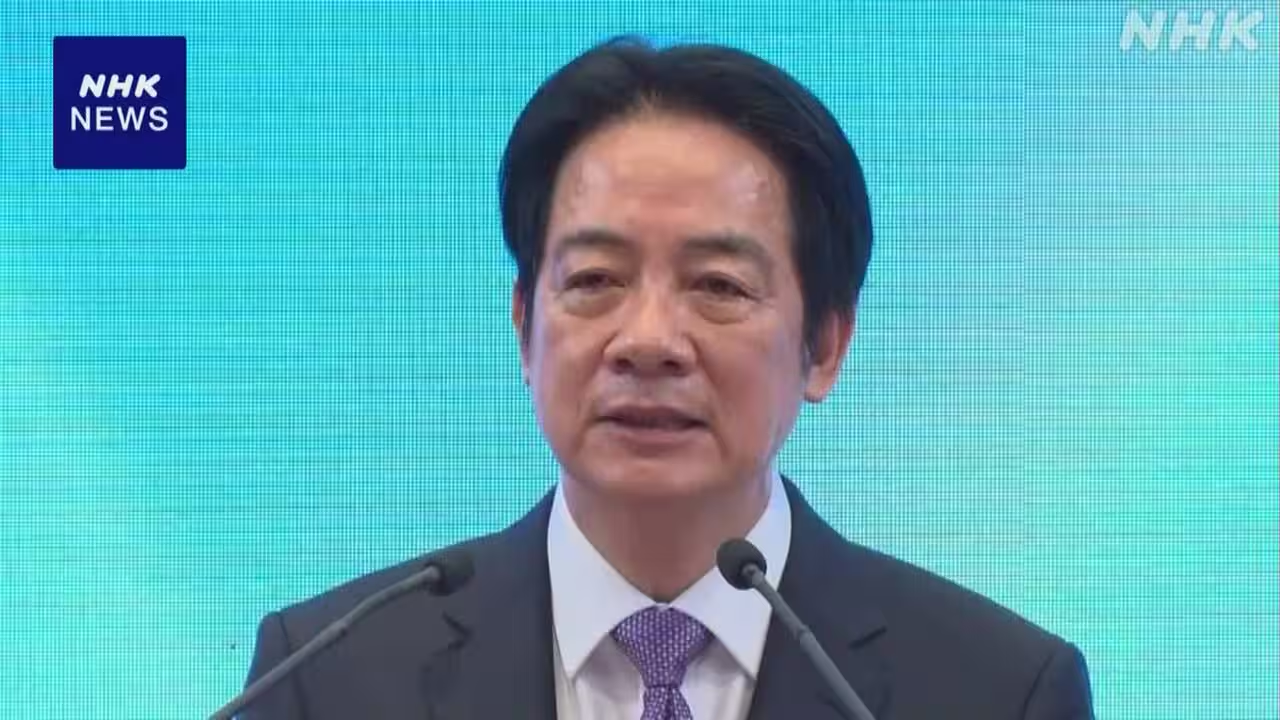
Taiwan President Lai Ching-te has signalled a willingness to hold discussions with the United States regarding arms sales, following comments made by US President Donald Trump. The development emerged after Trump indicated he would consult with Taipei on the matter in the wake of the recent US-China summit.
According to a report by NHK News Japan on 20 May 2026, Lai stated that he has a responsibility to convey the voice of Taiwanese society to the extent possible if the opportunity arises. This response directly addresses Trump’s post-summit stance, which suggested that arms sales could serve as a negotiating lever with Beijing.
The diplomatic shift follows a meeting in Beijing between Trump and Chinese President Xi Jinping. Reports indicate that Xi pressed Washington not to support Taiwan, while Trump urged both sides to cool down tensions. Trump previously indicated that the pace of arms sales would be determined over a short period, linking the issue to broader strategic negotiations.
Lai’s comments come shortly after he marked the second anniversary of his presidency. During that address, he rejected interference from foreign forces, asserting that Taiwan’s destiny must not be held hostage by fear or short-term strategic interests. His government has maintained that US policy on the island remains a critical component of its security framework.
Uncertainty remains regarding the exact nature and timeline of the proposed talks. It is unclear whether the discussions will focus on new agreements or ongoing transactions under the Arms Sales Act. The outcome of the US-China summit and its specific impact on future defence negotiations continues to be subject to diplomatic interpretation.