Syria pivots to strategic neutrality, positioning itself as an energy corridor amid regional conflict
Following the closure of the Strait of Hormuz, the interim government led by Ahmad al-Sharaa aims to leverage its location to facilitate Iraqi oil exports and bypass the blockade, though experts warn internal governance challenges remain a significant hurdle.
Following the onset of the Iran war in late February 2026, Syria's interim government has adopted a policy of strategic neutrality to distance itself from direct involvement in regional hostilities. This approach involves reinforcing borders against weapons smuggling and refraining from filing official United Nations complaints regarding attacks on Syrian airspace, a move interpreted by some analysts as an effort to restore credibility with Washington and Gulf states. The new authorities, which took power after ousting Bashar al-Assad in late 2024, prioritise managing the spillover of conflict rather than engaging directly in the war.
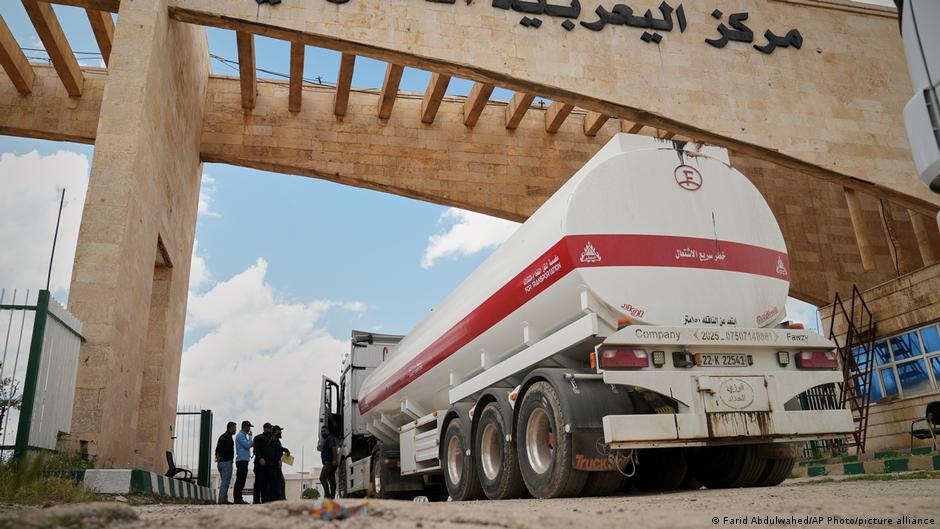
Consequently, Damascus is positioning itself as a vital alternative energy corridor to circumvent the Strait of Hormuz blockade. By reopening its border with Iraq in early April, the country has facilitated the movement of Iraqi oil tankers to Mediterranean ports. This initiative aligns with broader proposals for an overland bridge through Syria, involving thousands of kilometres of pipelines linking Gulf states and Iraq to European markets, a concept supported by a leaked document attributed to US special envoy Tom Barrack.
Diplomatic engagement has intensified alongside these logistical plans. Following a visit to Berlin in March, German Foreign Minister Johann Wadephul described Syria as a strategic hub between Europe, the Gulf states, and the Indo-Pacific. In response to this renewed interest, the European Commission proposed resuming the 1978 cooperation agreement with Syria, leading to a scheduled high-level political dialogue on 11 May. Saudi Arabia has also indicated a preference for routing fiber-optic cables for the East to Med Corridor through Syria rather than Israel.
Despite the enthusiasm from European and Gulf nations, experts caution that realising these economic opportunities depends on resolving significant internal issues. The country faces challenges including fragile governance, the need for infrastructure rehabilitation, and ongoing security threats. Current realities suggest that Syria is struggling to generate sufficient power for its own population, let alone efficiently shipping oil and gas to other nations, raising questions about whether the nation can function as a true hub or merely a transit state.
The shift in Syria's international standing marks a departure from previous descriptions of the nation as a state sponsor of terrorism. However, analysts note that investment interest remains contingent on political stability, regulatory clarity, and security guarantees. Without sustained reform and a credible investment environment, there is a risk that Syria's re-emergence as a regional corridor could remain partial and temporary, overshadowed by the complexities of its transition away from dictatorship and civil war.