Syria caught in the crossfire of Israeli-Turkish strategic rivalry
An Israeli airstrike on a military airfield in Idlib Province has intensified tensions with Turkey, prompting US-mediated talks in Jordan as Damascus struggles to assert sovereignty between two regional powers.
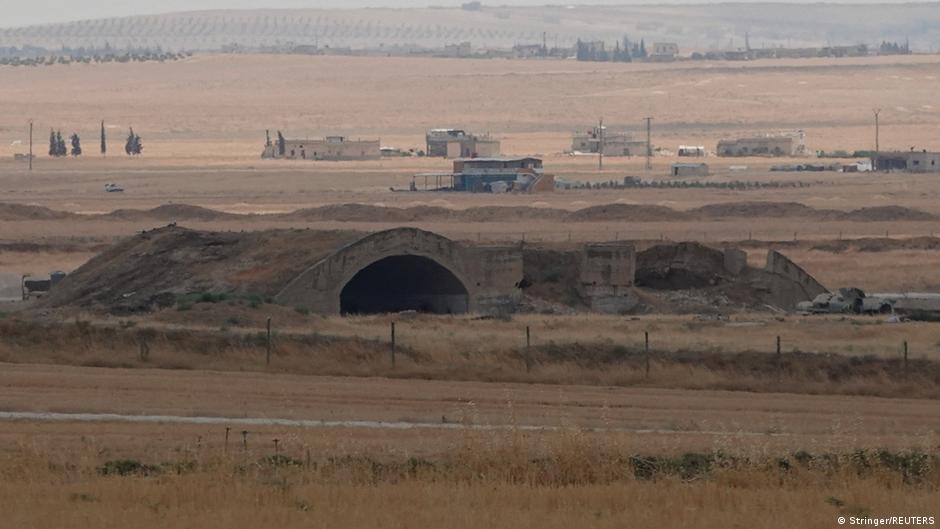
Syria has emerged as a primary theatre for regional rivalry following an Israeli airstrike on the Abu Duhur military airfield in Idlib Province on 18 August 2026. The attack damaged the runway and storage facilities without reported fatalities, but it has significantly heightened tensions between Israel and Turkey. According to Deutsche Welle, the strike was justified by Israel as a response to Syria allowing Turkish troops to use the base, a claim firmly rejected by both Damascus and Ankara.
In an effort to defuse the situation, US-mediated talks between Syrian and Israeli representatives took place in Jordan last weekend. This was the first such meeting in months, aimed at preventing hostilities from spilling over into a broader conflict. The US officially criticised the Israeli attack as an “unnecessary escalation,” a rhetorical stance that signals support for both Ankara and Damascus.
Analysts suggest that Israel views a potential Turkish military presence in Syria as a strategic red line, particularly regarding the corridor for attacks against Iran. While it remains unclear whether a long-term Turkish deployment was imminent at the time of the strike, Turkey had inspected at least three air bases in Syria for potential troop stationing as early as April 2025. The Washington-based think tank Foundation for Defense of Democracies argues that Israel is wary of Ankara using its presence to pressure Israel, given the close relationship between Syrian President Ahmad al-Sharaa and the Turkish leadership.
However, other experts argue that Israel’s actions are part of a broader policy to keep Syria militarily weak. Marcus Schneider, a Middle East analyst at Germany’s Friedrich Ebert Foundation, noted that a sovereign Syria controlling its own airspace would restrict Israel’s military freedom of action. He described the attack as raising questions about the future military order in Syria, suggesting that Israel views Turkey’s growing regional role with concern.
The diplomatic landscape has shifted significantly in recent months. Following the overthrow of Bashar Assad in December 2024, Israel established a security zone north of the Golan Heights. Since then, the US has begun easing sanctions, withdrew its military forces from Syria in early 2026, and officially removed the country from its list of state sponsors of terrorism on 24 August 2026. These moves have complicated the sovereignty dynamics, with Syria now relying primarily on itself amidst competing interests from its powerful neighbours.
Turkey, which supports President al-Sharaa and seeks to expand its regional influence, is also committed to a unified Syria. On 24 August 2026, the commander of the Kurdish-led Syrian Democratic Forces announced the official dissolution of the group, a development that further alters the balance of power in the country’s northeast. As Syria navigates these challenges, experts agree that the outcome will depend on al-Sharaa’s ability to defend Syrian sovereignty against the strategic ambitions of both Israel and Turkey.