Super El Niño drives regional haze crisis as Indonesia’s fires strain public health systems
Drought conditions and decades of land-use change have created a toxic haze affecting millions across the region, with experts warning of a potential carbon release from peatlands.
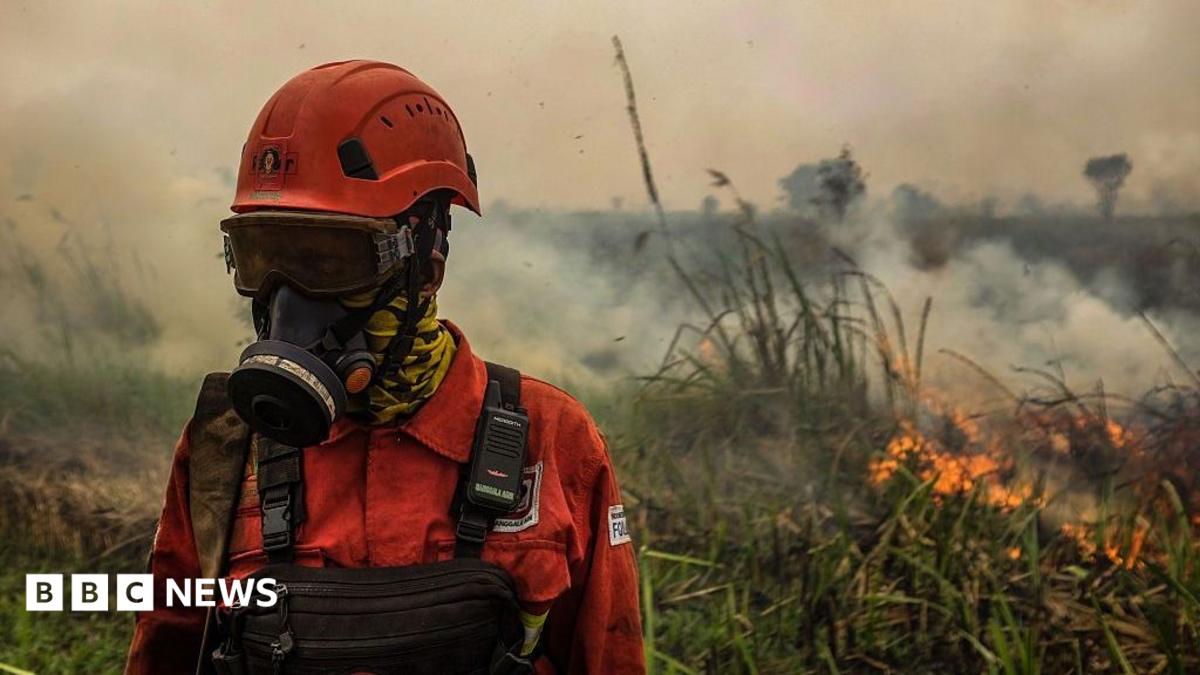
A blanket of toxic haze is enveloping parts of Indonesia and spreading into Malaysia, Singapore, and the Philippines as wildfires continue to burn across Sumatra and Indonesian Borneo. The crisis has been exacerbated by a so-called Super El Niño, which is intensifying drought conditions in the region. Millions of people across South East Asia have been exposed to the smog, with air pollution levels in some areas reaching "acutely unhealthy" status, exceeding World Health Organization recommended levels by more than 15 times.
Indonesia’s Health Ministry recorded over 50,000 cases of respiratory infections linked to land and forest fires between July and August. Of these, more than 12,000 cases involved children under the age of five. In Malaysia, authorities have reported rising cases of asthma and conjunctivitis as smoke drifts across the border, while residents in the Philippine province of Palawan have reported symptoms including itchy eyes, nose, and throat.
The fires, which began in mid-July, are rooted in decades of land-use change dating back to the Suharto era. During that period, vast areas of rainforest and peatland in Kalimantan were opened for logging, plantations, and large-scale development. Environmental groups and researchers allege that some companies use fire to clear land, a practice that makes landscapes more vulnerable to burning. Unlike small-scale, community-managed fires, those linked to large-scale commercial land use are often more difficult to control.
The current situation is particularly concerning because the fires are burning through one of the world’s largest tropical peatland ecosystems. Under normal conditions, these peatlands act as significant carbon reservoirs. However, when drained or burned, they can release carbon rapidly into the atmosphere. Dr Nisa Novita, a peatland researcher at Yayasan Konservasi Alam Nusantara, described these areas as potential "carbon bombs" due to the rapid release of accumulated carbon.
Professor Bambang Hero Saharjo, a forest fire forensics expert from Institut Pertanian Bogor University, noted that last year’s fires, which occurred without El Niño conditions, torched a 359,000-hectare area. Citing research reports, he warned that this year’s El Niño could burn an area as large as 11 million hectares, a scale comparable to Indonesia’s worst wildfire seasons in 1997 and 1998.
Indonesia’s Forestry Minister, Raja Juli Antoni, stated that the battle to extinguish the wildfires is entering a critical phase. He identified September as the peak of the El Niño and described it as the "main fight" for the government. As the season progresses, the interplay between natural drought conditions and human-driven land changes continues to define the scope of the regional environmental and health crisis.