Starmer’s resignation leaves EU-UK security architecture in transition
The European Council has postponed a scheduled summit as analysts assess whether the incoming administration will maintain the pro-European course established under Keir Starmer.
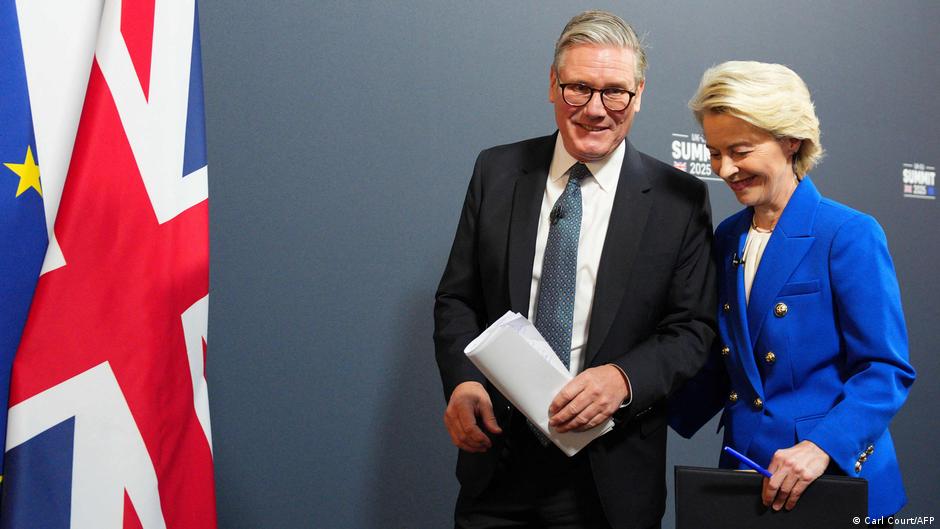
British Prime Minister Keir Starmer announced his resignation on Monday, a move that has drawn expressions of gratitude from European leaders for his steadfast support of Ukraine and his efforts to strengthen European security. European Commission President Ursula von der Leyen stated that European and Ukrainian security is stronger because of Starmer, while French President Emmanuel Macron acknowledged his role in revitalising EU-UK relations. Ukrainian President Volodymyr Zelenskyy also publicly thanked Starmer for his reliability as a partner in the conflict against Russia.
Starmer was a central figure in the "coalition of the willing," an alliance of 35 states providing military aid and long-term defence planning for Ukraine. He also played a key role in the E3 format, coordinating foreign and security policy with France and Germany. According to Olivia O'Sullivan of the Chatham House think tank, this framework has been instrumental in shaping European strategy, particularly in responding to the increasingly unpredictable role of the United States in European security.
A significant achievement of Starmer’s tenure was the establishment of a formal EU-UK Security and Defense Partnership last May. This agreement was designed to facilitate cooperation on Ukraine and other security initiatives, marking a step forward in post-Brexit relations. Starmer had campaigned for a "fresh start" with the EU, achieving progress in areas such as youth mobility, exchange programs, and fisheries.
However, the partnership faced limitations regarding defence funding. The UK secured only limited access to the EU’s €150 billion SAFE (Security Action for Europe) programme because it refused to pay a participation fee. O'Sullivan noted that while Starmer struggled to meet his self-imposed military spending targets, this remains a challenge for his successor. The UK’s exclusion from full participation in the SAFE programme highlights the ongoing tensions in the financial aspects of the new security architecture.
The European Council has postponed a scheduled summit with the UK, originally set for July 22, pending the leadership transition. Antonio Costa, president of the European Council, confirmed the delay, indicating that the EU is waiting for a new British leader to drive forward the post-Brexit relationship. Analysts suggest that Andy Burnham, the former mayor of Manchester, is the likely successor and is considered broadly pro-European.
Despite expectations that Burnham may maintain Starmer’s course on Ukraine and EU relations, uncertainty remains regarding his prioritisation of foreign policy. O'Sullivan observed that Burnham has tended to focus most on domestic affairs, making it difficult to predict whether he will prioritise international security in the same manner as his predecessor. The continuity of the UK’s strategic role in Europe now depends on how the new administration navigates these complex institutional frameworks.