SpaceX to slash Florida launch cadence as Starlink shifts to West Coast
The world’s busiest spaceport is set to see a significant drop in activity as SpaceX moves Starlink missions to California until its next-generation Starship vehicle arrives in Florida.
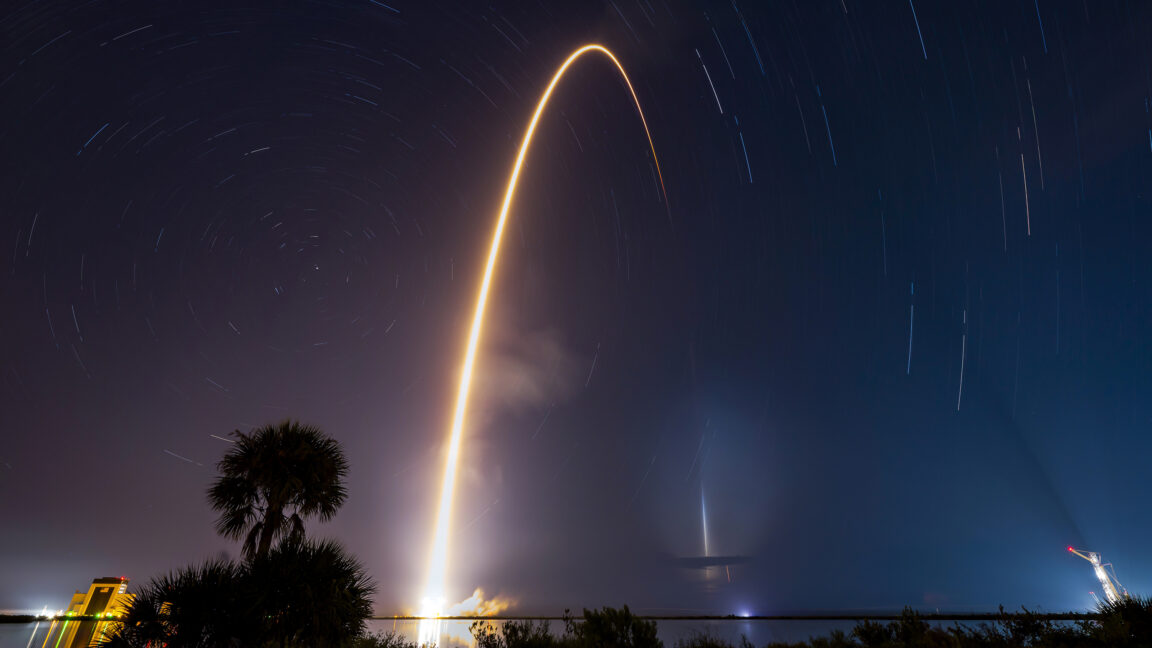
SpaceX has confirmed a substantial reduction in launch activity from Florida’s Space Coast, marking a shift in the operational strategy of the world’s busiest spaceport. The company’s monthly launch rate is expected to fall from eight or nine flights to approximately two for the remainder of the year, and potentially longer. This adjustment follows a decision to relocate Starlink satellite missions to the firm’s West Coast facility at Vandenberg Space Force Base in California.
Kiko Dontchev, SpaceX’s vice president of launch, stated that the Falcon 9 launch conducted on Tuesday was the final planned Starlink mission from Cape Canaveral until Starship operations commence in Florida. Since January, SpaceX has already increased its launch volume from Vandenberg, a trend that will accelerate as the company prepares for its next phase of deployment. The move effectively pauses the high-frequency Falcon 9 cadence that has defined the Florida spaceport for the past decade.
The Florida spaceport, which combines Cape Canaveral Space Force Station and Kennedy Space Center, has led the world in launch volume since 2015. Last year alone, 165 Falcon 9 rockets launched from the region, with approximately 75 per cent of those missions carrying Starlink satellites. In total, SpaceX has conducted around 260 Starlink missions from Florida using the Falcon 9. The Tuesday launch also set a new fleet record, marking the 37th flight for a specific Falcon 9 first-stage booster.
With Starlink operations moving to the West Coast, future Falcon 9 and Falcon Heavy launches from Florida will primarily focus on customer payloads. The next scheduled mission is a Falcon Heavy launch on 30 August, carrying NASA’s Nancy Grace Roman Space Telescope from Launch Complex 39A at Kennedy Space Center. This will be followed by a Falcon 9 mission in mid-September to deliver a four-person crew to the International Space Station.
SpaceX aims to begin launching Starship and Super Heavy boosters from Kennedy Space Center by the end of 2026. However, industry observers consider a mid-2027 debut more likely, given the remaining site preparation work and the logistics of transporting Starships from the company’s factory in South Texas. Starship is designed to launch up to 60 Starlink Version 3 satellites, which are larger and heavier than the current models.
The transition raises questions for investors and institutional customers regarding long-term launch service availability. Officials plan to phase out the Falcon 9 for commercial missions in favour of Starship, a move that has prompted concerns about the reliability of launch services after 2028. In the interim, SpaceX plans to use Starship Flight 14, potentially as soon as next month, to deploy the first Starlink Version 3 satellites from Starbase, Texas.