SpaceX Starship V3 achieves splashdown in mostly successful debut
The Starship V3 vehicle reached 121 miles before landing in the Indian Ocean, marking a significant milestone for NASA’s lunar ambitions despite booster losses.
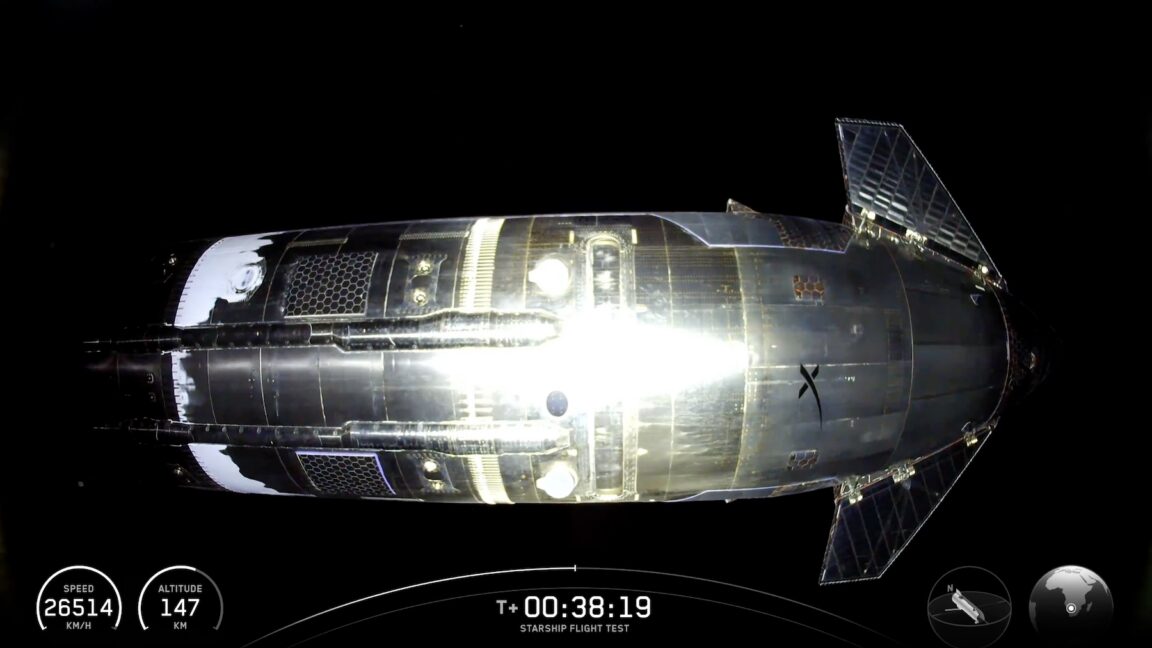
SpaceX conducted the inaugural test flight of its upgraded Starship V3 rocket from the Starbase facility in South Texas on Friday. The launch occurred at 5:30 pm CDT (22:30 UTC), with the 124-metre-tall vehicle clearing the launch tower and heading east over the Gulf of Mexico. The flight reached a maximum altitude of 121 miles (195 kilometers) before splashing down on target in the Indian Ocean, northwest of Australia, approximately one hour after liftoff.
The mission demonstrated a functional heat shield, intact aerodynamic flaps, and a successful payload deployment mechanism for Starlink satellites. SpaceX officials appeared pleased with the performance, with CEO Elon Musk and President Gwynne Shotwell congratulating the engineering team on social media. NASA Administrator Jared Isaacman was present in Texas to witness the launch, describing it as a "hell of a V3 Starship launch" as the agency relies on the vehicle for future human-rated Moon landings.
Starship V3 fared better on its debut than the first flights of Starship V1 and V2 in 2023 and 2025, both of which broke apart during launch. The vehicle executed banking maneuvers simulating future return paths to Starbase, culminating in a dramatic flip from horizontal to vertical. A final landing burn downshifted from three to two, then to a single engine as the rocket settled to a gentle water landing. Drones and buoy cameras recorded live views of the on-target splashdown before the ship tipped over and exploded in a fireball.
Earlier in the flight, SpaceX demonstrated Starship V3’s improved payload deployment mechanism, tailored for releasing flat-packed Starlink Internet satellites. The system deployed 20 mockups of next-generation Starlink satellites, plus two spacecraft fitted with flashlights and cameras to inspect Starship’s exterior in space. All of this worked perfectly as the ship soared to its maximum altitude in darkness over the South Atlantic Ocean. SpaceX states this version can haul up to 100 metric tons of payload into low-Earth orbit, more than double the capacity of Starship V2.
Something caused two Raptor engines—one of 33 on the Super Heavy booster and one of six on Starship itself—to fail during Friday’s launch sequence. This flight marked the first use of the company’s upgraded Raptor 3, a redesign with higher thrust and improved efficiency. Both stages proved their engine-out capability, with the ship compensating by burning its remaining engines longer to maintain its planned trajectory. However, the Super Heavy booster failed to execute a controlled splashdown and impacted the Gulf of Mexico.
A planned in-space engine relight was cancelled following the ascent engine failure. This omission likely prevents SpaceX from attempting a full orbital flight of Starship on the next launch. Officials want to ensure they can guide Starship back to Earth before putting a vehicle into orbit because an unguided reentry could endanger the public with falling debris. The gap of more than seven months between this flight and the last was the longest interval between Starship flights since the program’s first full-scale launch in April 2023.
The results from Friday’s flight show there is still room for improvement, particularly regarding the Raptor 3 engine. However, the performance of the heat shield and the ship’s resilience to an engine failure provided encouraging data for engineers. SpaceX has more ships and boosters on track for test flights later this summer, with plans to eventually attempt to bring Starship back to the launch site in Texas for a catch by giant mechanical arms on the launch tower.
