Colossal Biosciences hatches chicks in artificial shells; Smile mission launches amid Europa data doubts
Colossal Biosciences reports 26 chicks hatched from 3D-printed shells, while the European Space Agency and Chinese Academy of Sciences launch the Smile spacecraft to study Earth’s magnetic shield.
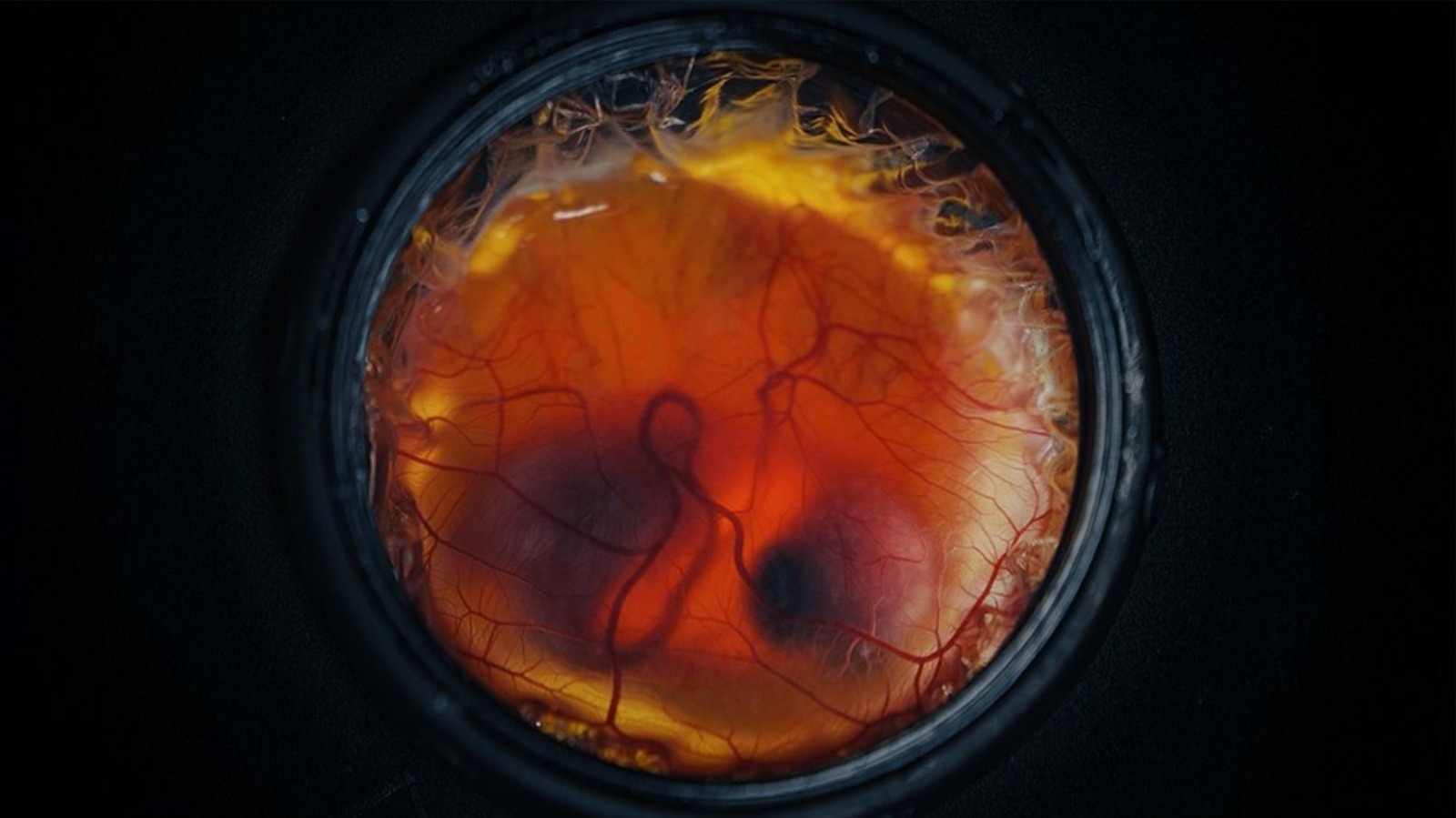
Colossal Biosciences has announced the hatching of 26 chicks from 3D-printed artificial eggshells, marking a procedural milestone in its de-extinction programme for the South Island giant moa and the dodo. The biotech firm stated that the embryos were sourced from eggs laid by real hens within 24 to 48 hours of laying. The artificial shells, which utilise a semi-permeable silicone-based membrane lattice and a rigid support cup, serve strictly as later-stage incubation vessels rather than the point of genetic intervention.
The company noted that no living species can serve as a surrogate for the entire process given the moa’s egg size, which is roughly eight times that of an emu. Consequently, Colossal is considering the Nicobar pigeon as a potential surrogate egg-producer for the dodo project, while the emu or tinamou are being evaluated for the moa. Critics, including evolutionary biologist Vincent Lynch, have questioned the classification of the technology, arguing that because the biological components originate from a living bird, the device is an artificial eggshell rather than a fully artificial egg.
In space news, the European Space Agency and the Chinese Academy of Sciences launched the Smile spacecraft on May 19 atop a Vega-C rocket from French Guiana. The Solar wind Magnetosphere Ionosphere Link Explorer is equipped with an X-ray camera, an ultraviolet camera, a light ion analyser, and a magnetometer to study Earth’s magnetic shield and auroras. The mission is expected to begin data collection in July, with instruments capable of observing northern lights in ultraviolet for stretches of 45 minutes.
Meanwhile, a reanalysis of 14 years of Hubble Space Telescope data has cast doubt on previous findings regarding water vapour plumes on Jupiter’s moon Europa. Led by Dr Lorenz Roth of the KTH Royal Institute of Technology, the study reduced the statistical confidence in the existence of these plumes from 99.9% to less than 90%. The researchers attributed the previous conclusions to statistical noise and uncertainties in the Hubble’s image placement relative to Europa’s centre, noting that a displacement of even a pixel or two could alter data interpretation.
Despite the reduced confidence in the Hubble data, the possibility of plumes remains, and NASA’s Europa Clipper mission is scheduled to reach Jupiter in April 2030 for its first flyby in 2031. In parallel developments, SpaceX’s Starship V3 completed its first largely successful test flight, while the US government is reportedly opening bids for the management of the Jet Propulsion Laboratory and taking equity stakes in quantum computing firms including IBM.