NASA releases high-resolution imagery from Psyche spacecraft’s Mars flyby
New images captured during a gravity-assist maneuver reveal details of the Huygens crater and the Martian south pole as the spacecraft continues its six-year journey.
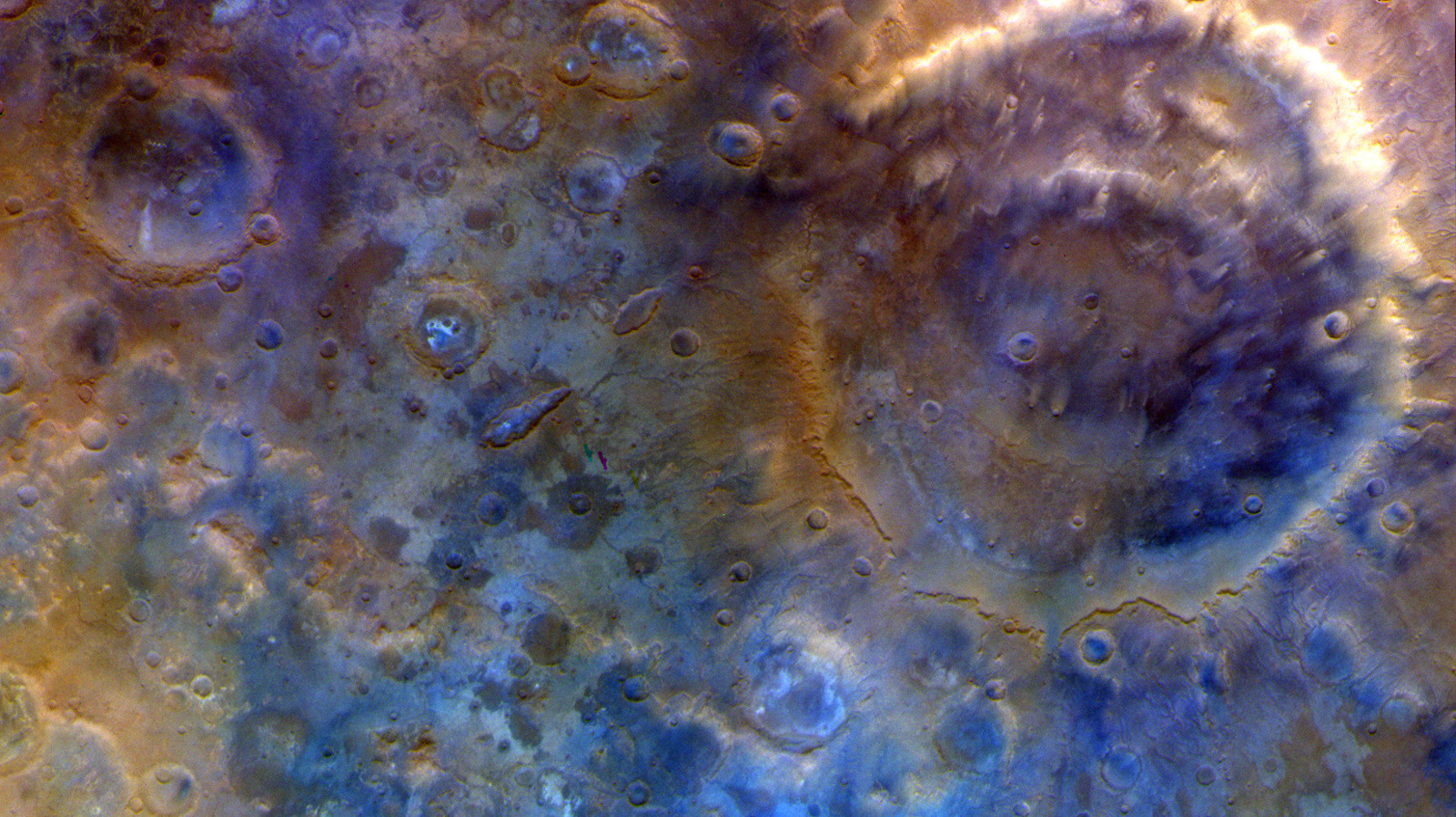
NASA has released a series of images captured by the Psyche spacecraft during a gravity-assist flyby of Mars, marking a significant milestone in its mission to the metallic asteroid 16 Psyche. The images were taken as the spacecraft passed within 2,800 miles of the Martian surface, a trajectory that brought it closer to the planet than its own moons. This flyby was a critical manoeuvre designed to alter the spacecraft’s trajectory and conserve fuel for the remainder of its journey.
Among the released imagery is a view of the Huygens double-ring crater, which measures 290 miles in diameter. The image was captured shortly after the spacecraft’s closest approach to the planet. According to NASA, the varied colours visible in the photograph result from differences in the composition of dust, sand, and bedrock. The agency noted that these colours were enhanced to make the compositional differences more pronounced for analysis.
The spacecraft also captured a high-resolution photograph of the Martian south pole. This image highlights vast fields of water ice that remain frozen year-round, appearing as a bright spot against the surrounding terrain. Prior to these close-up shots, Psyche recorded a crescent view of the planet as it approached from a high altitude. NASA explained that the crescent appeared brighter and extended farther than the surface itself due to sunlight reflected by the planet’s dusty atmosphere.
Launched in October 2023, the Psyche mission is a six-year journey to 16 Psyche, the largest known metallic asteroid in the solar system. Following the Mars flyby, the spacecraft will resume using its solar-electric propulsion system to continue towards its destination. The mission is expected to arrive at the asteroid in 2029, where it will spend two years orbiting and observing the body.
Scientists believe that data collected from 16 Psyche could provide valuable insights into the formation of Earth’s core. As the only mission dedicated to exploring a metallic world, Psyche aims to shed light on the early history of the solar system and the processes that shaped terrestrial planets.
