SpaceX files for $1.77tn Nasdaq listing, bypassing traditional pricing model
The US Securities and Exchange Commission filing reveals a fixed share price of $135 and a dual-class structure, marking a significant departure from standard initial public offering protocols.
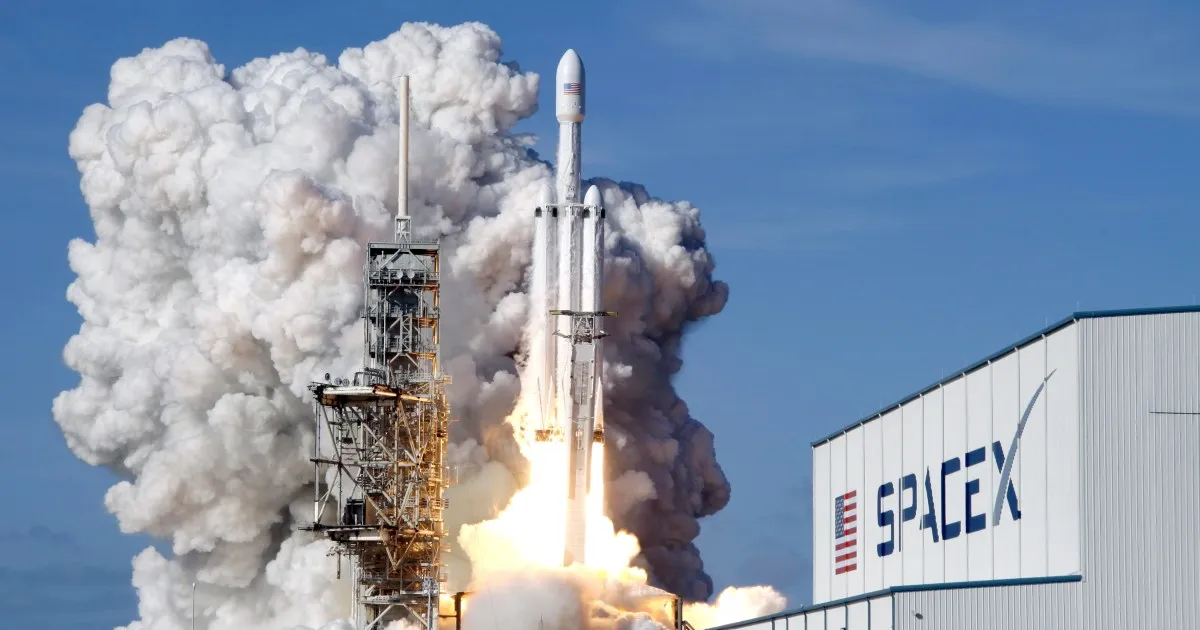
Elon Musk’s aerospace firm, SpaceX, has formally filed with the US Securities and Exchange Commission to list on the Nasdaq stock exchange, targeting a debut date of June 12, 2026. The company aims for an initial valuation of approximately $1.77 trillion, a move that would position it as the world’s seventh-largest company by market capitalisation, surpassing Tesla and Meta. The filing outlines a plan to sell 555.6 million shares at a fixed price of $135 each, raising approximately $75 billion in capital.
In a deviation from standard market practice, SpaceX has set a specific share price prior to the investor roadshow. Typically, companies preparing for a public listing announce a preliminary price range subject to adjustment based on investor demand. Market analysts suggest this fixed pricing reflects Musk’s control over deal terms and a high degree of confidence in investor appetite, with some investment products already pricing the company’s end-of-first-day market capitalisation at $2.2 trillion.
The transaction is expected to eclipse Saudi Aramco’s 2019 debut, which raised $26 billion at a $1.7 trillion valuation. However, experts note a fundamental difference in the underlying financial metrics. While Aramco’s valuation was anchored in demonstrated profitability, SpaceX’s valuation rests on potential future growth. The company reported net losses of $4.9 billion in 2025 and $4.3 billion in the first quarter of 2026, with trailing annual revenue of less than $20 billion.
Despite the losses, Elon Musk, who holds a 42 percent stake, is poised to become the world’s first trillionaire upon the listing. To maintain governance stability, Musk will retain effective control through a dual-class stock structure that grants him 82 percent of the voting rights. This structure ensures that certain shares carry 10 votes instead of one, insulating Musk’s strategic direction from public shareholder pressure.
Founded in 2002, SpaceX designs rockets and spacecraft for NASA and private clients, while also operating internet services and artificial intelligence divisions through its Starlink and xAI units. Musk has previously articulated ambitions to establish a self-sustaining city on Mars, a goal that analysts warn could divert cash flows away from immediate profitability. The listing serves as a critical test of investor confidence in this long-term vision, drawing parallels to Tesla’s early years as a loss-making entity that only achieved decisive market separation after turning profitable in 2013.