South Korea-US drills proceed despite Trump’s last-minute order to scale back
President Donald Trump cited respect for North Korean leader Kim Jong-un as the reason for the order, but the Pentagon and Seoul’s defence ministry have maintained the operational timeline.
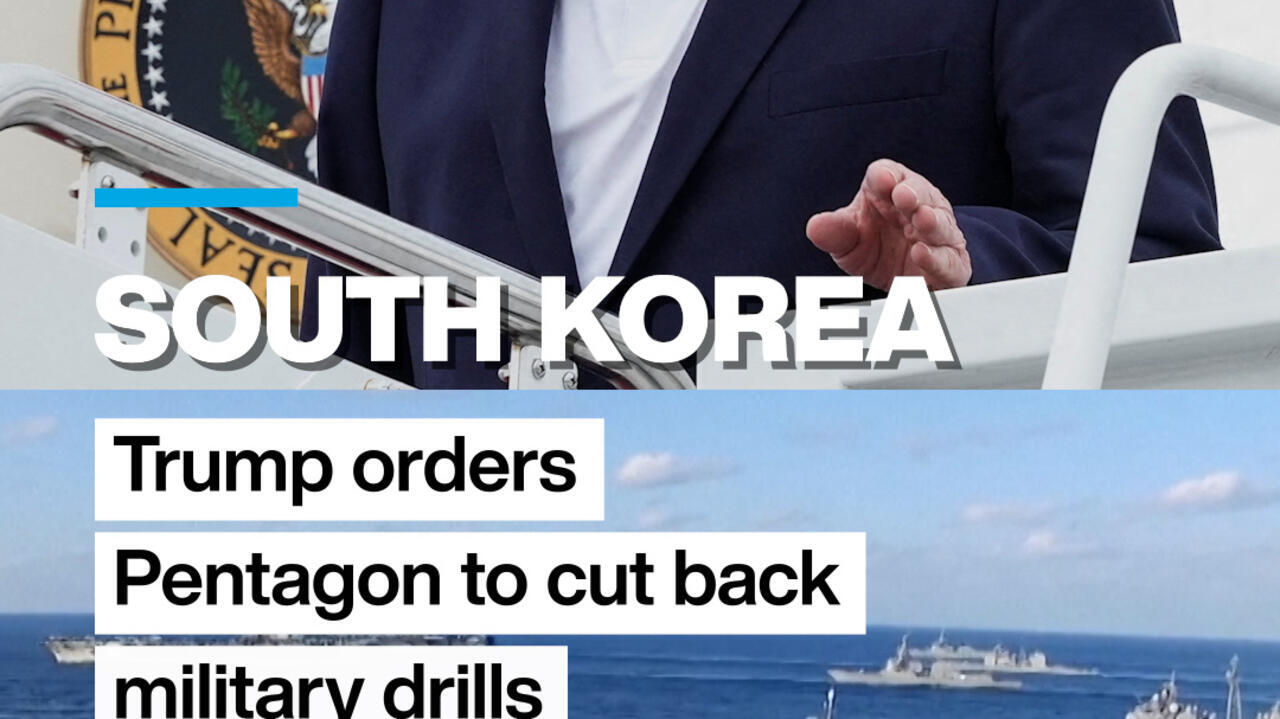
Joint military drills between South Korea and US troops proceeded as planned on Monday, defying a directive from US President Donald Trump to scale back the exercises. The order was issued just hours before the scheduled commencement of the exercises, creating an immediate divergence between political rhetoric and military execution.
President Trump stated that he had directed the Pentagon to reduce the scope of the drills out of respect for North Korean leader Kim Jong-un. This latest instruction follows previous reports in which Trump had ordered a substantial reduction in the exercises, characterising them as "inappropriate and hostile" and alleging that the South Korean government had refused to assist in a conflict involving Iran.
Despite the President’s statements, the operational reality on the ground remained unchanged. The joint exercises, which were previously reported to be an 11-day event, continued according to their original schedule. This adherence to the timetable aligns with earlier statements from South Korea’s defence ministry, which had affirmed its intention to proceed with the drills as notified, regardless of political pressure from Washington.
The situation highlights the complex interplay between executive policy shifts and established military protocols within the US-Republic of Korea alliance. While the White House framed the cutback as a diplomatic gesture towards Pyongyang, the continued execution of the drills suggests that the Pentagon and its allied partners prioritised the pre-existing operational commitments over the last-minute political directive.
The specific operational details of the "scale back" measures versus the earlier "substantial reduction" remain unclear. However, the fact that the drills went ahead as planned indicates that the military apparatus did not interpret the President’s order as a cancellation or a significant halt to the planned activities.
This development adds another layer of uncertainty to the region’s security landscape, particularly given the concurrent tensions involving North Korea and the broader geopolitical context. The disconnect between the President’s public statements and the actual conduct of the military exercises underscores the challenges of managing alliance dynamics through abrupt policy reversals.